A motorcycle backpack earns its keep when it disappears into the ride. It should hold your rain layer, gloves, lunch, tools, or work gear without pulling at your shoulders, catching wind, or turning into a loose load at highway speed. Knowing how to choose a motorcycle backpack starts with being honest about what you carry and how far you ride.
A small bag that stays planted is better than an oversized pack flapping behind you. Cruiser riders, commuters, and weekend road warriors do not all need the same setup. Buy for your actual miles, not the one big trip you might take once a year.
How to Choose a Motorcycle Backpack by Ride Type
Start with the kind of riding you do most. For a short commute or a run across town, a low-profile backpack with enough room for daily essentials is usually the right call. You want easy access, a compact shape, and straps that stay out of the wind.
For day rides, step up to a medium-capacity pack that can carry a water bottle, extra gloves, a light layer, sunglasses, charging gear, and a few personal items. This is the sweet spot for many riders because it has enough room without becoming a heavy brick on your back.
Long-distance riders need to think differently. A backpack can handle the items you want close at hand, but it should not carry everything. Heavy clothes, tools, and spare gear belong in motorcycle luggage whenever possible. Saddlebags, sissy bar bags, and larger luggage keep weight off your shoulders and make all-day riding less punishing.
If you regularly carry a laptop, camera gear, or paperwork, look for a dedicated padded compartment. That protection matters, but do not mistake padding for a license to overload the bag. A loaded pack changes how you feel in the saddle and can get uncomfortable fast.
Keep the Profile Tight and the Load Stable
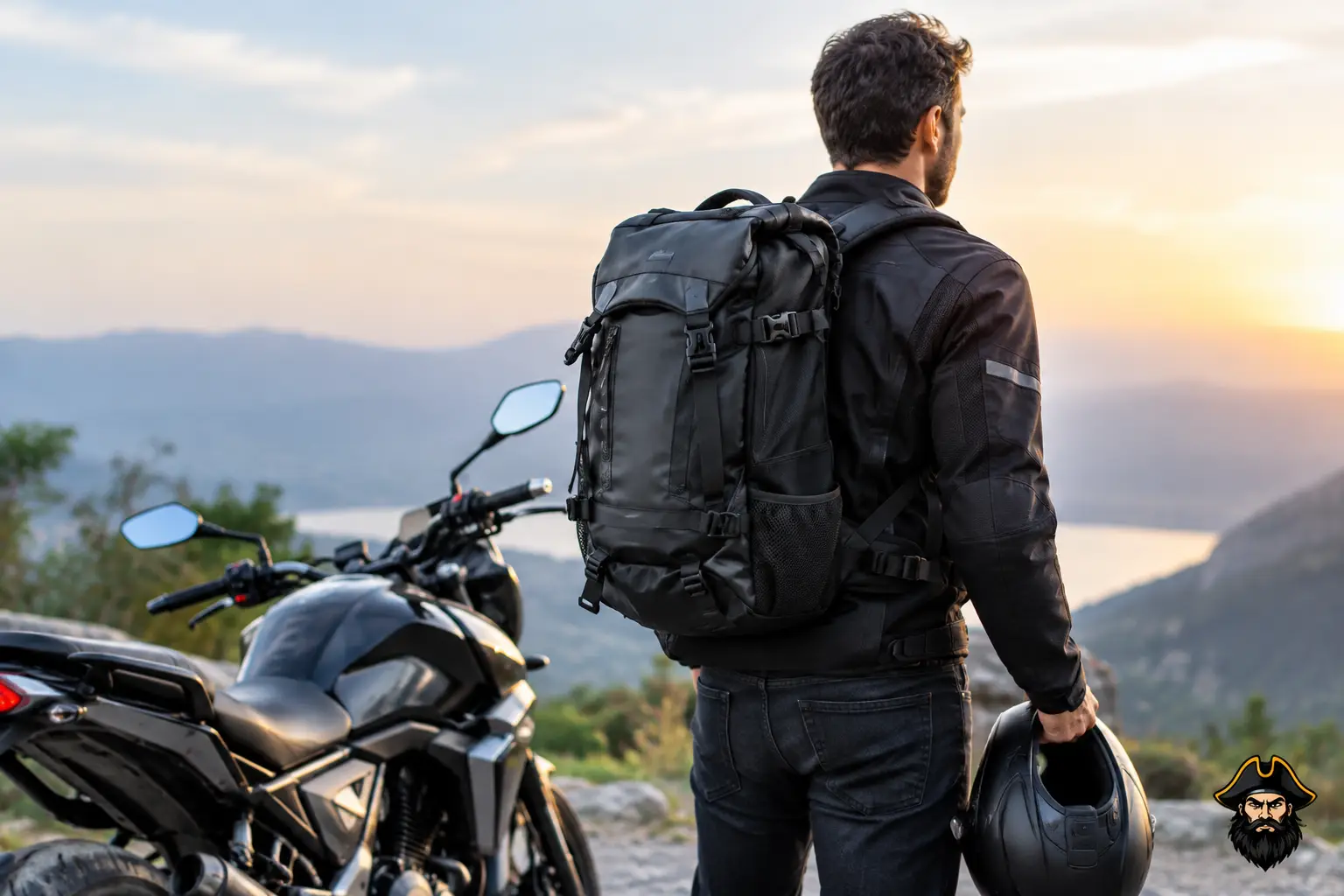
A motorcycle backpack should sit close to your body. Tall, wide, overstuffed bags catch more wind and move around when you turn your head, lean into curves, or ride through rough pavement. A clean, tapered profile is usually a better choice than a giant hiking-style pack.
The shoulder straps need to be broad enough to spread weight without digging in. Adjustable chest straps help keep the pack from sliding side to side, while a waist strap can stabilize a larger bag. Make sure any loose strap ends can be secured. A strap whipping in the wind is annoying at best and a distraction at worst.
Pay attention to the back panel, too. Breathable mesh and light padding make a difference in hot weather, especially over a leather jacket or riding shirt. More padding is not always better, though. A bulky back panel can push the bag away from your body and make it feel unstable.
Before your first real ride, load the pack with the gear you expect to carry and move around in your normal riding apparel. Reach for the bars, turn your head, and sit on the bike. The bag should not restrict your shoulders or interfere with your jacket collar, vest, or helmet movement.
Choose Materials That Can Take Road Weather
Motorcycle gear gets hit with bugs, dust, sudden rain, gas-station grime, and sun. A backpack made for daily life may look good in a parking lot, then quit on you after a few wet rides. Look for tough outer fabric, reinforced stitching, dependable zippers, and hardware that does not feel flimsy in your hands.
Water resistance is useful for light rain and road spray. Waterproof construction is better if you ride through frequent storms or carry electronics. The trade-off is that fully waterproof bags can cost more and may have fewer quick-access pockets. A separate rain cover is a practical middle ground, but it only works if you are willing to stop and put it on before the weather gets ugly.
Zippers deserve extra attention. They are often the first part of a cheap bag to fail. Larger zipper pulls are easier to use with gloves, and storm flaps help keep water out. For valuables, choose compartments that close securely and are positioned against your back rather than exposed on the outside of the bag.
Leather can bring serious biker style to a luggage setup, but the job matters. A leather backpack or bag should use quality leather, solid seams, and reliable closures, not thin fashion material that looks worn out after one season. Leather motorcycle luggage pairs naturally with a vest, boots, and a good riding jacket, but it still needs care when rain is part of the forecast.
Organize for Quick Stops, Not Just Storage
The best motorcycle backpack is not simply the one with the biggest main compartment. It should let you find the small stuff without dumping everything on a gas-station counter. Think about what you use during a normal ride: wallet, keys, phone, earplugs, sunglasses, toll tag, water, gloves, and a light rain layer.
A few well-placed pockets beat a dozen tiny compartments you will never use. An exterior pocket can be convenient for quick stops, but do not put anything critical there unless it closes securely. Keep heavier items low and close to your back. Put softer items, like a hoodie or rain layer, around anything that could poke or shift.
Hard, sharp, or bulky objects need special thought. Tools, locks, and loose metal items should be secured in their own pouch or moved to the bike. In a fall, you do not want hard gear pressed between your back and the pavement. This is one reason motorcycle luggage is the smarter choice for heavier cargo.
For toll roads, a bar-mounted toll pass holder can be more practical than digging through a backpack at a booth. Blackbeard’s Motorcycle Gear, an American rider-gear company, offers a rugged toll pass holder designed to stay put without scratching your bars, keeping your pass accessible and your pockets less cluttered.
Match the Bag to Your Riding Gear
Your backpack does not ride alone. It has to work with your jacket, vest, gloves, and boots. A thick leather jacket can change how shoulder straps feel, while a vest with patches or a back graphic may make certain bag shapes less comfortable. If you ride in different seasons, account for the extra room winter layers take up.
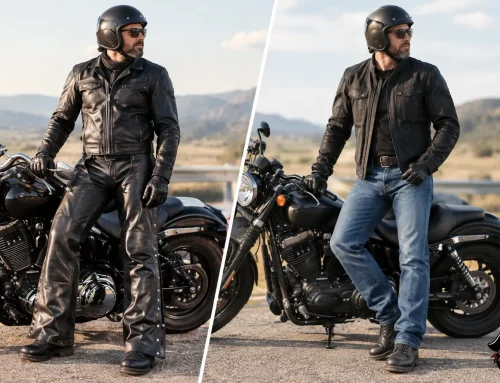
Riders who prefer classic leather need gear that holds up to the same standard. Quality leather jackets, vests, gloves, and boots are built for road use and biker style, not costume-rack looks. A bag should complement that setup, whether you choose clean black textile for a low-key daily ride or leather luggage for a traditional cruiser profile.
Do not overlook visibility. Black may be the classic biker color, but reflective trim or a removable reflective panel can help make you more noticeable after dark. You do not have to sacrifice your style to add a little smart road function.
Know When a Backpack Is the Wrong Tool
There is no prize for carrying every pound on your shoulders. If your typical load includes a full tool roll, extra boots, several layers, groceries, or overnight gear, mount the weight on the motorcycle. Saddlebags and larger luggage are made for that job.
A backpack is best for compact, lightweight items you may need before reaching your destination. It is also a solid option when you want to keep your bike clean and uncluttered for a short ride. The right answer depends on your bike, your cargo, and how long you plan to stay in the saddle.
Choose the pack that stays tight, carries only what you need, and handles the weather you actually ride through. When it does its job right, you will spend less time fighting your gear and more time watching the road roll out ahead.