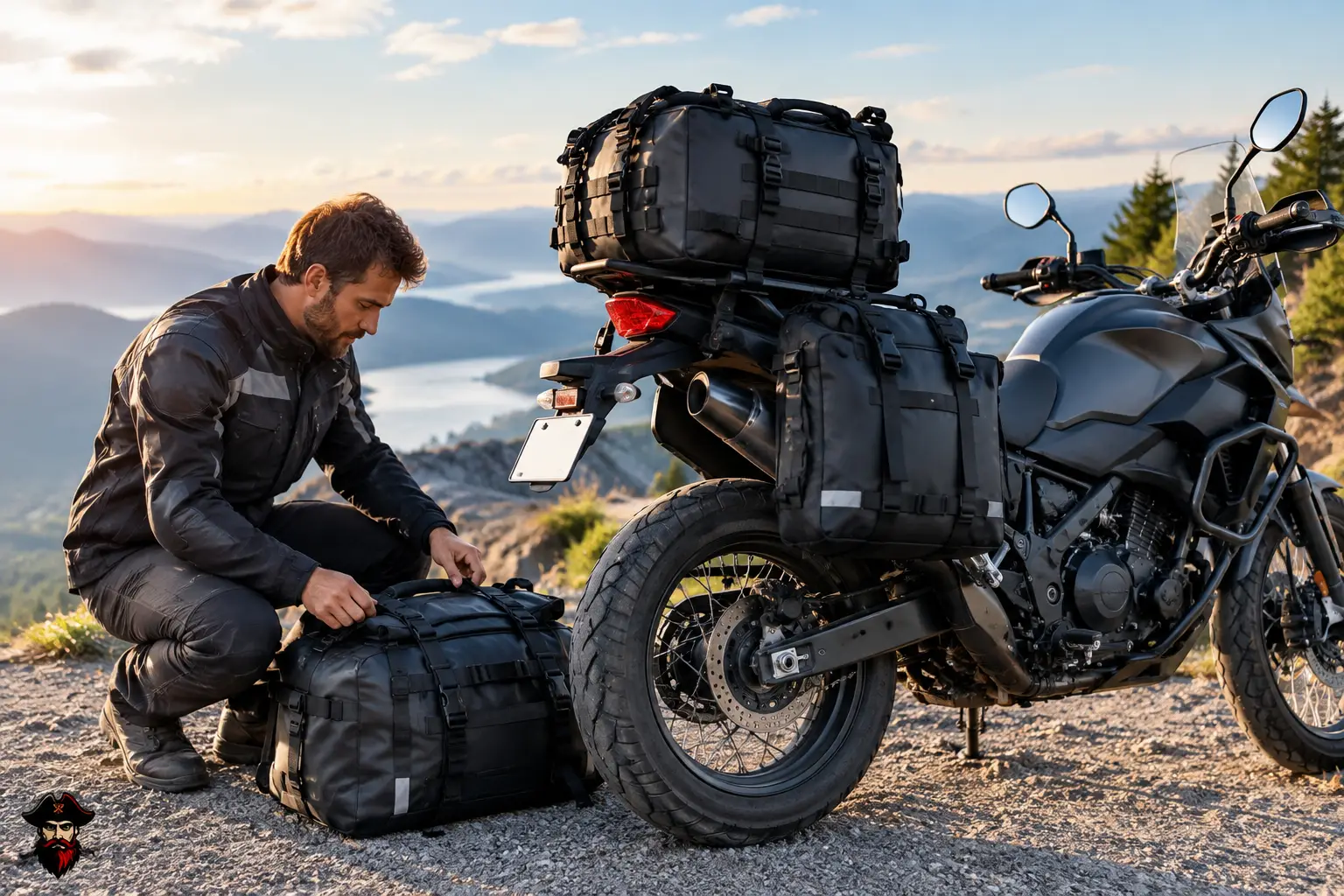
A bag that looks right in a product photo can become a headache the first time it crowds your passenger seat, drags near the pipes, or leaves your rain gear at home. This biker luggage sizing guide cuts through the guesswork. Choose luggage around what you actually carry, how long you ride, and the hard clearance limits on your motorcycle – not just the biggest capacity on the page.
For cruiser, chopper, and Harley-style riders, luggage has to earn its place. It needs to hold up to weather, vibration, and long highway miles while keeping your bike’s stance clean. A slim leather tool bag may be exactly right for a bar-hopper. A two-up weekend run calls for a very different setup.
Start With the Ride, Not the Bag
The fastest way to buy too much or too little luggage is to start with dimensions alone. Begin with the trip. A daily commute needs room for a lock, gloves, a water bottle, a light layer, and the small items that do not belong in your pockets. A day ride adds rain gear, a basic tool roll, sunglasses, and maybe lunch. An overnight ride adds clothing, toiletries, chargers, and often a second pair of gloves or boots.
Think in packed gear, not wishful thinking. Lay out what you carry on a typical ride, then put it in a box or duffel and measure the filled space. That gives you a more honest target than guessing from a liter number. Soft gear compresses. Leather jackets, hoodies, and spare footwear do not compress much, and they eat capacity fast.
As a practical starting point, 3 to 8 liters handles essentials and tools, 10 to 20 liters works for commuting and day rides, and 20 to 35 liters can cover a lean overnight trip. For multi-day travel, a pair of saddlebags plus a tail bag is usually more useful than one oversized bag. Splitting the load keeps heavy items lower and makes it easier to find what you need at a gas stop.
Measure the Motorcycle Before You Buy
A luggage bag does not fit because it is labeled universal. Universal means the mounting system may work on many bikes. It does not guarantee clearance, passenger room, or a clean install.
Measure the usable mounting area with a tape measure. For saddlebags, check the distance from the back of the rider seat to the rear turn signals, then measure down toward the exhaust and rear axle area. For a tail bag, measure the flat section of passenger seat or luggage rack it will sit on. For a handlebar or fork bag, measure between cables, the headlight, and any windshield hardware.
Do these checks with the bike on level ground. If you ride with a passenger, loaded suspension, or lowered suspension, account for that too. Bags sit closer to the rear tire when suspension compresses. A bag that clears in the garage can rub on a rough road with a full load.
Clearance Is a Safety Issue
Keep luggage well away from hot exhaust, moving wheels, belt or chain components, brake hardware, and turn signals. Do not count on a thin heat shield or a loose strap to solve a bad fit. Heat can damage leather, melt synthetic panels, and ruin what is packed inside.
Check both sides of the motorcycle. Exhaust routing often makes one side more restrictive than the other. Matching bags may look balanced, but the practical answer may be a heat shield, a support bracket, a narrower bag, or a different mounting position. Function comes first.
Do Not Forget Seat and Passenger Space
A tail bag can be a smart way to add capacity without changing the profile of your bike, but it usually takes passenger space. If you regularly ride two-up, saddlebag capacity matters more. If you ride solo and want quick-on, quick-off storage, a tail bag or sissy bar bag may be the better move.
A sissy bar bag can carry serious gear, but measure its width against the backrest and rack. An overstuffed bag can hang past the rack, shift in crosswinds, or interfere with turn signals. Use the rack as the foundation, not an afterthought.
Choose the Right Shape for What You Carry
Capacity is only half the story. Bag shape decides whether your gear fits without fighting it.
Long, narrow tool bags are built for tool rolls, registration papers, small rain covers, and roadside basics. They are a clean choice when you want storage without changing the bike’s look. They are not a substitute for a day bag. Trying to force a hoodie or bottled drink into one is a fast way to stress the zipper and distort the bag.
Medium saddlebags are the workhorses for cruisers. Their boxier shape handles folded layers, rain gear, gloves, a lock, small purchases, and road-trip supplies. Look at the interior opening, not just the exterior measurements. A bag can have respectable outside dimensions but a narrow opening that makes packing bulky gear frustrating.
Large throw-over or hard-mounted saddlebags are built for riders who pack for distance. They make sense when you need clothing, cold-weather layers, tools, and travel supplies without piling everything behind your back. The trade-off is width and weight. Wide bags can affect lane filtering where legal, parking clearance, and how easily you move the bike around a garage.
Tail bags and sissy bar bags work best for soft, bulky items: a sweatshirt, rain suit, packed clothes, or extra gloves. Put dense gear such as tools, water, and locks in lower bags whenever possible. High-mounted weight can make a loaded bike feel less planted, especially when leaning through curves or riding in wind.
The Biker Luggage Sizing Guide to Weight and Mounting
A bag’s listed capacity does not tell you how it behaves when loaded. Twenty liters of clothing is light. Twenty liters of tools, drinks, and hardware can be heavy enough to strain straps and shift the bike’s feel.
Keep dense weight low, centered, and secured. If you use saddlebags, balance the left and right sides as closely as you can. You do not need a scale at every stop, but one bag packed with tools and the other packed with a T-shirt is poor practice. On a tail bag, place the heaviest items closest to the seat and rack, not at the outer edge.
Mounting matters just as much as size. Throw-over saddlebags are flexible and convenient, but the yoke must sit flat and be secured so the bags cannot migrate toward the wheel. Hard-mounted bags offer a more fixed position and often cleaner support, but they require a bike-specific plan and more install time. Strap-mounted bags are quick, but every strap needs to be checked after the first few miles and again after rough roads.
Do not trust a bag because it felt tight in the driveway. Load it, compress the suspension, turn the bars fully if the bag is forward-mounted, and inspect every potential contact point. Then take a short ride and recheck. Leather settles, straps stretch, and packed loads shift.
Buy for Your Normal Ride, Add Capacity for Big Trips
Most riders do not need expedition-sized luggage every day. Big bags look tough, but empty oversized luggage can rattle, sag, and make quick errands less convenient. A better setup is often a permanent small bag for essentials, plus removable saddlebags or a sissy bar bag for longer runs.
This approach also protects your gear investment. A quality leather bag should keep its shape and finish, not spend every weekday overloaded with items you rarely use. Blackbeard’s Motorcycle Gear carries road-ready motorcycle luggage alongside tough leather jackets, vests, gloves, boots, and practical accessories built for riders who want their gear to work as hard as it looks.
Weather should influence your size choice as well. If a bag is not fully waterproof, leave room for a separate rain cover or waterproof inner bags. Packing every inch with clothing leaves no margin when weather turns. Roll clothing tight, keep electronics in protected pouches, and put the items you need at fuel stops near the top.
Make the Final Fit Check
Before your first long ride, load the bag as you would for the road. Confirm that lights and license plates remain visible, straps cannot reach the wheel or exhaust, and nothing blocks normal access to the seat, fuel cap, or controls. Check that pockets, buckles, and zippers can be opened while the bag is mounted.
Then ask one final question: will this setup still make sense after a full day in the saddle? The right luggage is not the biggest bag or the cheapest bag. It is the setup that carries your real gear securely, keeps the bike balanced, and lets you ride without constantly checking what is flapping behind you. Pack with purpose, leave a little room for the unexpected, and let the road decide what earns a permanent spot on your bike.