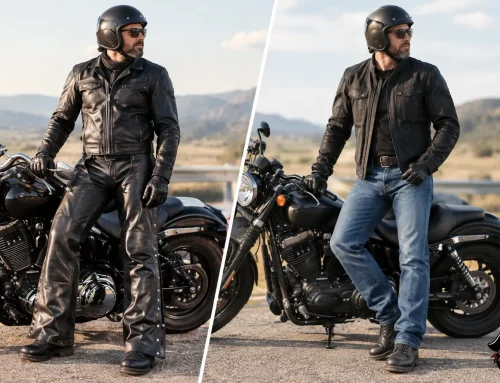
Some gear earns its place the first time you throw a leg over the bike. Leather vests do that fast. They bring the look riders want, but they also solve real problems on the road – easy layering, quick access to carry essentials, and solid comfort when a full jacket feels like too much.
For cruiser riders, chopper riders, and anyone who wants their gear to look right at the gas stop and hold up at highway speed, a vest is not filler. It is one of the hardest-working pieces in the lineup. The trick is choosing one built for riding, not just for standing around looking like a rider.
Why leather vests still matter
A good leather vest sits in the sweet spot between style and function. It gives you that classic biker profile without boxing you in like a heavier jacket can on hot days. When the weather shifts, it layers clean over a riding shirt, hoodie, flannel, or long sleeve thermal. That kind of flexibility matters when you are leaving early, getting home late, or riding through changing conditions.
There is also the storage factor. Riders carry more than they used to – phone, wallet, registration, shades, gloves, keys, sometimes a small carry setup where legal and appropriate. A vest with the right pocket layout keeps your everyday gear close without stuffing your jeans or overloading a saddlebag for a short ride.
Then there is the identity piece. Leather has always been part of biker culture because it looks honest. It shows miles. It breaks in. It picks up character instead of looking worn out. A quality vest does not try too hard. It just belongs on the bike.
What separates riding leather vests from fashion vests
Not every leather vest is built for the road. That difference shows up fast once you wear one at speed.
A fashion vest might look decent on a hanger, but weak leather, thin liners, poor armhole cuts, and cheap snaps usually tell the story. It may bunch when you reach for the bars, flap in the wind, or feel stiff in all the wrong places. That is wasted money.
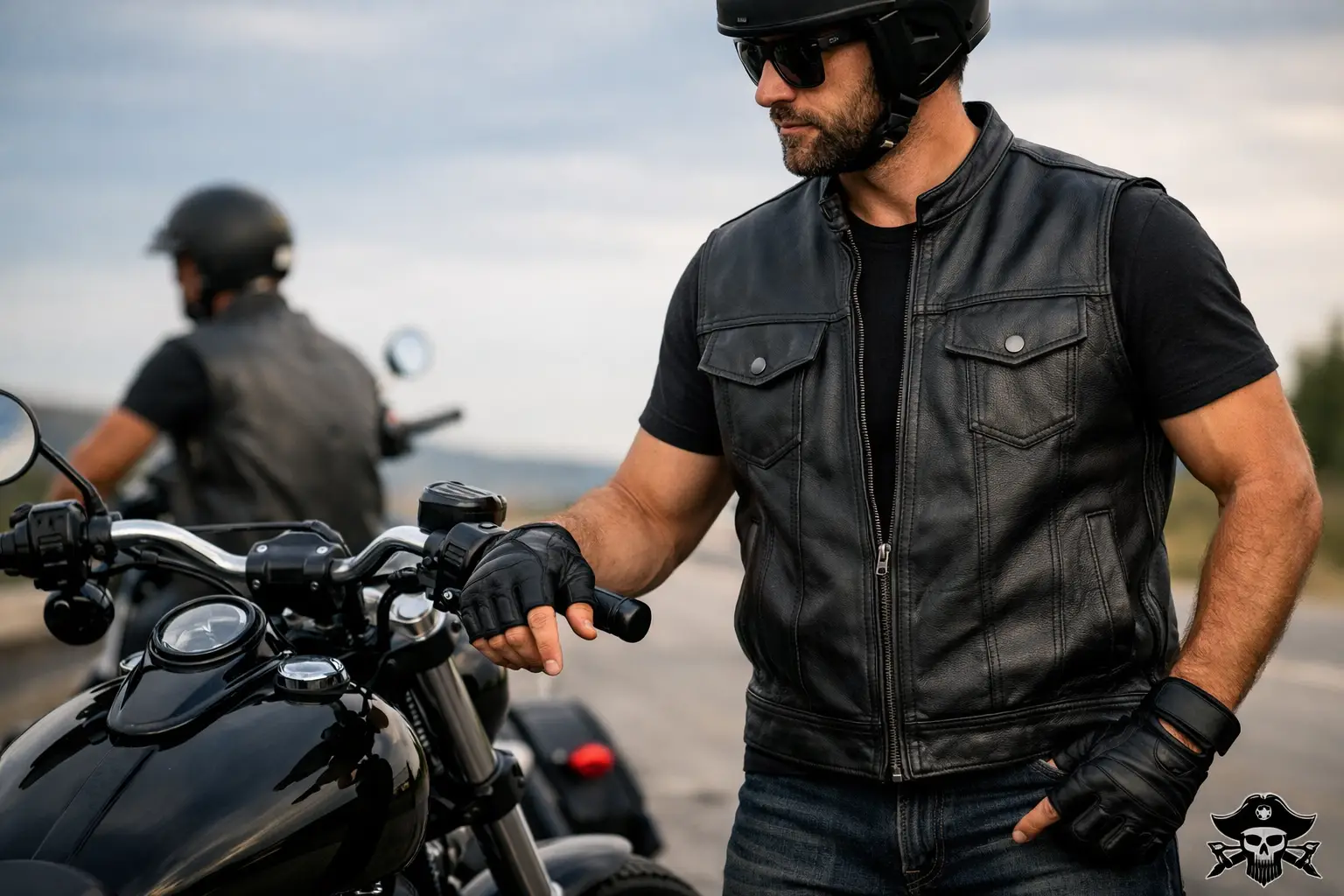
Riding leather vests are cut with movement in mind. The leather should feel substantial without turning the vest into armor plating. You want a shape that sits close enough to avoid excess flap but still leaves room to layer underneath. Hardware matters too. Strong snaps, durable zippers, reinforced seams, and well-placed interior pockets are not extras. They are what make the vest useful ride after ride.
If you are shopping road gear, look hard at build quality first. The cleanest style means nothing if the vest quits on you after one season.
How leather vests should fit
Fit makes or breaks the vest. Too loose and it shifts around, catches air, and loses the sharp profile that makes a leather vest work. Too tight and it limits movement, especially across the chest and shoulders when your hands are on the bars.
The best fit usually feels close through the torso without squeezing. You should be able to zip or snap it comfortably over a T-shirt, but also have enough room to layer over a lightweight shirt or hoodie when needed. Riders often prefer a trim look, but going too aggressive on size can backfire if you actually plan to wear the thing on the road.
Length matters too. A vest that runs too long can bunch when seated. Too short and it looks off, especially over jeans and a belt. The right cut lands clean and stays balanced when you are in riding position, not just standing in front of a mirror.
This is where quality brands stand out. Better patterning gives you a vest that looks tough without fighting your body every time you ride.
Features worth paying for in leather vests
Some features sell the vest. Others just raise the price. Knowing the difference helps you buy smarter.
Conceal carry pockets are a big one for many riders. If that matters to you, the pocket needs to be easy to access and actually stable, not just stitched in as an afterthought. Interior storage pockets are just as useful for gloves, documents, or your phone. A vest with smart storage becomes part of your daily setup, not just your weekend look.
Side laces or adjustable panels can help with layering and comfort, especially if your weight shifts through the year or you ride in different seasons. Some riders love the extra flexibility and old-school style. Others want a cleaner, more modern profile. That call comes down to preference.
A lined interior adds comfort and helps the vest slide over your shirt without grabbing. A back panel built for patches is another big draw in biker culture. If you ride with a club or simply want room for your own setup, that feature matters. If not, you may care more about a cleaner back and lighter feel.
The best feature set depends on how you ride. Daily riders usually care more about pockets, hardware, and comfort. Event riders and weekend cruisers may lean harder into style. Most want both, and there is nothing wrong with that.
Choosing the right style for your ride
Leather vests come in a few core looks, and each one sends a different message.
The classic snap-front vest is old-school biker all the way. It is simple, direct, and easy to wear. This style works if you want something traditional that looks right with jeans, boots, and a black riding shirt.
The club-style vest has become a favorite for riders who want a sharper, more modern cut. It often uses a zip front with a covered snap placket, cleaner lines, and better pocket setups. For many riders, this is the best blend of road function and hard-edged style.
A braided or detailed vest leans heavier into custom look and visual attitude. That can work great if it matches your bike and the rest of your gear. But there is a trade-off. Extra trim can push the vest toward costume if the build quality is not there. Strong leather and clean construction keep it looking legit.
If you ride often, go with the style you will actually reach for every week. The best vest is not the one that looks cool once. It is the one that becomes part of your standard kit.
When to wear leather vests instead of a jacket
A vest is not a replacement for every ride. It fills a specific lane, and that is why it earns its keep.
On warm days, a leather vest gives you coverage and storage without the full weight of a jacket. During spring and fall, it becomes a strong layering piece that helps you adjust without changing your whole setup. Throw it over a riding flannel or heavier shirt and you have a flexible combo that works for a lot of miles.
That said, there are rides where a full jacket still makes more sense. Longer highway runs, colder weather, or rougher conditions call for more coverage. No smart rider confuses a vest with a cure-all. The better approach is building a gear setup where each piece has a job.
That is one reason riders keep coming back to leather vests. They are easy to work into the rotation. They do not replace everything. They just pull more weight than most people expect.
Why quality leather is worth it
Cheap leather tells on itself. It feels flat, wears badly, and rarely improves with age. Good leather does the opposite. It starts strong, breaks in over time, and keeps its structure while taking on the kind of wear that gives it character.
That is especially important with vests, because they sit out front. Every bad cut, weak panel, or flimsy snap is easy to spot. A quality vest holds its shape, keeps its color, and looks better after miles instead of worse.
For riders who care about value, this matters. Spending less up front only works if the vest lasts. If you have to replace it after one hard season, you did not save anything. You just bought twice.
That is why serious riders shop brands known for biker leathers, not generic fashion labels trying to borrow the look. At Blackbeard’s Motorcycle Gear, that difference matters because riders want leather that performs, fits right, and backs up the image with real road use.
Leather vests and the full biker look
A vest does not work alone. It hits hardest when the rest of your gear makes sense with it.
Pair it with a solid riding shirt, broken-in boots, and gloves that look like they belong on the same machine. Keep the colors straightforward unless your whole setup leans custom. Black remains the standard for a reason – it matches almost everything, hides wear well, and always looks road-ready.
If you run patches, pins, or a chain wallet, the vest becomes part of your signature. If you prefer a cleaner setup, it can still carry the look without shouting. That range is part of the appeal. Leather vests can read classic, stripped-down, aggressive, or club-focused depending on the cut and how you wear them.
The main thing is authenticity. Riders can spot forced style a mile away. Buy the vest that fits your bike, your gear, and the way you actually ride.
A good leather vest should feel like it was waiting for your next ride, not your next costume change.