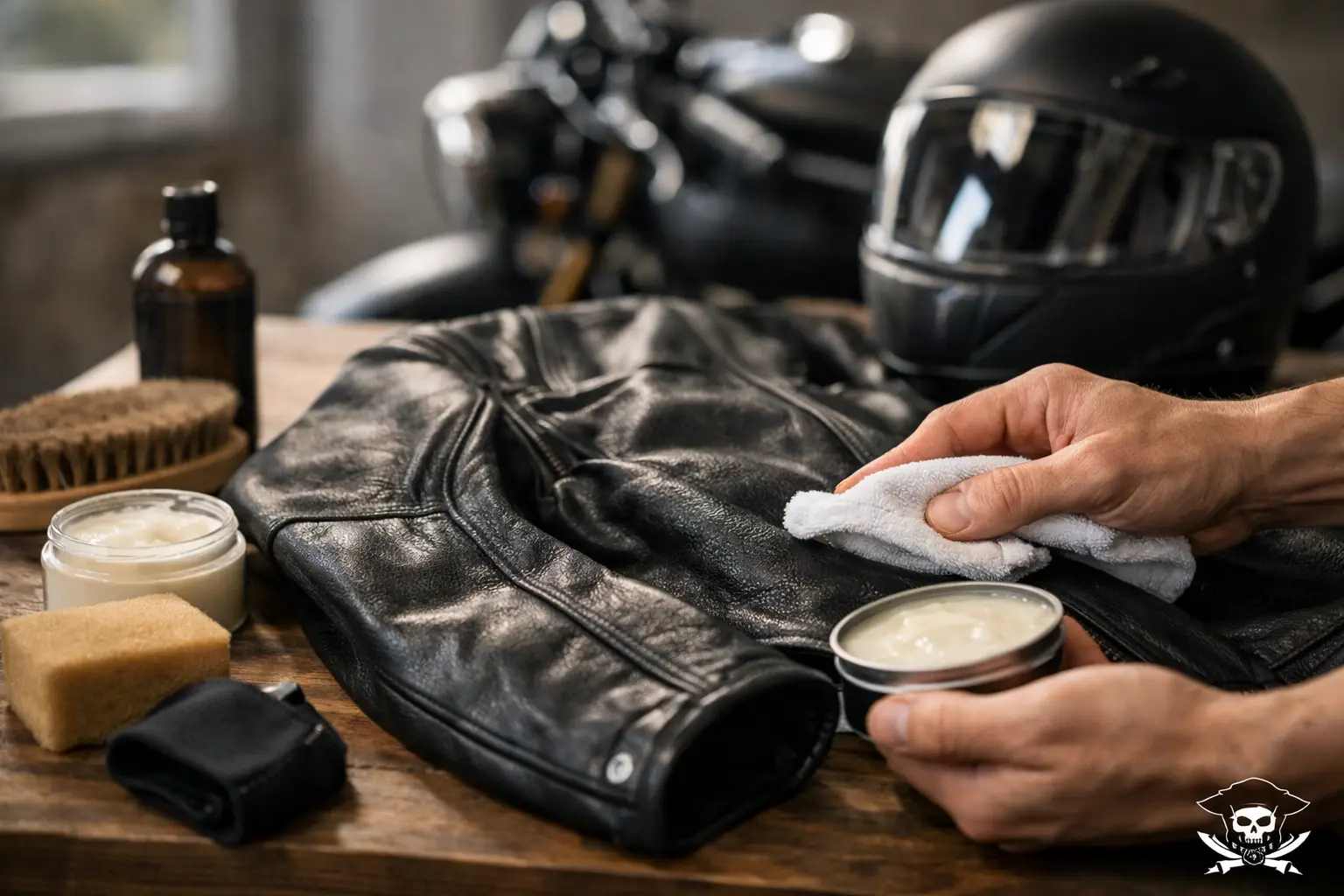
Your jacket takes sun, sweat, road grit, and rain every time you roll out. That broken-in look is earned, but cracked leather, dried seams, and salt stains are not. A solid motorcycle leather care guide helps you keep your gear looking tough, fitting right, and holding up for the long haul.
Good leather is not cheap throwaway gear. A quality riding jacket, vest, pair of gloves, or boots should age with character, not fall apart because it got neglected in a garage corner. If you ride in real weather and put real miles on your gear, maintenance is part of ownership.
Why motorcycle leather care matters
Leather is durable, but it is still skin. It dries out, absorbs moisture, picks up oils, and reacts to heat. On a bike, it deals with more abuse than fashion leather ever will. Wind exposure, UV, bug splatter, sweat at the collar and cuffs, and road grime all wear it down faster.
When riders skip care, the damage usually shows up in the same places first. Elbows stiffen. Boots start looking chalky. Gloves lose flexibility. A vest gets dry around the arm openings. Then come the bigger problems – cracking, fading, shrinking, and weakened stitching around stress points.
The upside is simple. Regular upkeep does not take much time, and it protects the look and function you paid for. A well-kept leather jacket still looks road-ready years later. A neglected one starts looking tired long before it should.
The motorcycle leather care guide basics
If you only remember one thing from this motorcycle leather care guide, remember this: clean first, condition second, store smart. Riders get into trouble when they dump conditioner onto dirty leather or try to dry wet gear with direct heat.
Leather care is not about making everything shiny. It is about preserving suppleness, strength, and finish. Some gear should stay matte and rugged. Some has an oil-rich pull-up look. Some boots are meant to show wear. The goal is not to erase character. The goal is to stop preventable damage.
Start with the right kind of cleaning
For most motorcycle leather, less is more. Use a soft cloth slightly dampened with water to remove surface dust, bug residue, and light grime. If the gear is dirtier than that, use a leather cleaner made for finished riding leather. Work in small areas and do not soak the material.
What you should not use matters just as much. Dish soap, household cleaners, bleach, and anything heavy with solvents can strip the finish and dry the leather out fast. Saddle soap gets recommended a lot, but it depends on the item. It can work on some heavier boots and work-style leather, but it is often too harsh for softer jackets, gloves, and lined vests.
If your jacket has a removable liner, pull it out before cleaning the shell. If not, avoid over-wetting the inside. Wet liners take forever to dry and can leave the whole piece smelling musty.
Conditioning keeps leather from turning brittle
Once the leather is clean and fully dry, apply conditioner lightly. This is where riders often overdo it. More product does not mean more protection. Too much can leave leather greasy, darken it unevenly, or soften it more than you want.
Use a small amount on a clean cloth and work it in with light pressure. Let it absorb, then buff off any excess. Pay extra attention to high-flex zones like elbows, knees, glove fingers, boot ankles, and areas around zippers and pocket seams.
How often should you condition? It depends on your climate and how often you ride. Dry heat, intense sun, and frequent use mean more upkeep. A jacket worn every week in hot southern weather may need conditioning every few months. A vest used more casually in mild weather may need much less.
How to care for different leather riding gear
Not every piece gets treated the same way. Boots, gloves, jackets, and bags all take different abuse and wear patterns.
Leather jackets and riding shirts
Jackets usually need the most attention because they catch the most wind, sun, and bug impact. Wipe them down after long rides, especially if you rode through dust, rain, or highway grime. Clean the collar and cuffs more often than the rest because those spots collect body oils and sweat.
If your jacket has armor pockets, zip vents, or multiple panels, clean around those seams carefully. Dirt likes to settle there. Conditioning should stay light, especially on performance-oriented leather where you want structure, not a limp feel.
Vests
Vests are simpler, but they still need care. Sweat around the neck and arm openings can dry leather out over time, especially in summer. A quick wipe-down after hot-weather rides goes a long way.
Because many vests are worn often and stored carelessly, shape loss is common. Do not leave one folded over a chair or tossed in a saddlebag for weeks. Hang it properly and keep it from getting crushed under heavier gear.
Gloves
Leather gloves take constant flexing and a lot of sweat. That makes them prime candidates for stiffness if they are ignored. Clean them gently and condition sparingly so they stay flexible without getting slippery.
If the inside is damp after a ride, let them air dry naturally. Do not set them on a heater, in front of a vent, or out in direct sun all afternoon. Fast drying is hard on leather and even harder on glove shape.
Boots
Boots live in the worst conditions – road splash, oil spots, mud, heat from pavement, and repeated creasing. Brush off dirt before it grinds in. Clean the welt, seams, and around the sole edge where grime builds up.
Boot leather usually tolerates a little more structure-focused care than jackets do, but even here, you do not want to overload conditioner. For riding boots, the goal is durable and weather-ready, not mushy. If they get soaked, stuff them loosely with paper to help absorb moisture and let them dry at room temperature.
Saddlebags and luggage
Leather bags and luggage often get forgotten because they are not worn on the body. That is a mistake. Sun exposure, road dust, and moisture hit them hard, and if the leather dries out, the bag can lose shape and start cracking around stress points.
Clean the outside regularly and check straps, buckles, and mounting points. Bags need conditioning too, but go easy near hardware and stitched load-bearing areas. If you use your luggage on weekend runs and longer trips, routine care keeps it looking sharp instead of beat up.
What to do when leather gets wet
Rain happens. The wrong response is what ruins gear.
If your leather gets wet, blot off the surface moisture with a dry towel and let it dry naturally in a room with airflow. Keep it away from hair dryers, radiators, heaters, and direct sunlight. Once it is fully dry, check the feel. If it seems stiffer than normal, apply a light coat of conditioner.
If the gear got drenched, be patient. Rushing the drying process can shrink leather or leave it stiff and warped. That is especially true for gloves and boots.
Storage mistakes that wreck good leather
A lot of leather damage happens off the bike. Riders spend good money on quality gear, then hang it in a humid garage, stuff it in a plastic bin, or leave it in a hot trunk.
Store leather in a cool, dry place with some airflow. Use a sturdy hanger for jackets and vests so the shoulders keep their shape. Do not seal leather in plastic for long-term storage. It needs to breathe.
If you are putting gear away for the season, clean it first. Dirt, sweat, and road salts left sitting for months do more damage than most riders realize. A quick wipe-down and light conditioning before storage can save you from opening the closet to dry, tired-looking gear later.
When patina is good and when damage is not
Real riders like leather that looks lived in. Scuffs, creases, and a little fade can add character. That part is personal. Some want a cleaner showroom look, while others want their jacket to tell its own road story.
But there is a line between patina and neglect. Soft fading can look great. Deep cracking at the elbows does not. Broken-in boots are one thing. Dry leather splitting around the ankle is another. A quality piece should look tougher with age, not weaker.
That is why buying better leather in the first place matters. Top-quality riding leathers hold up better, respond better to care, and keep their shape longer. If your gear is built for the road, proper maintenance helps it stay that way.
Leather care is not fussy and it is not complicated. It is just part of respecting the gear you ride in. Keep it clean, keep it conditioned, and do not store it like an afterthought. Your jacket, vest, gloves, boots, and bags will look better, feel better, and stay ready for the next ride.