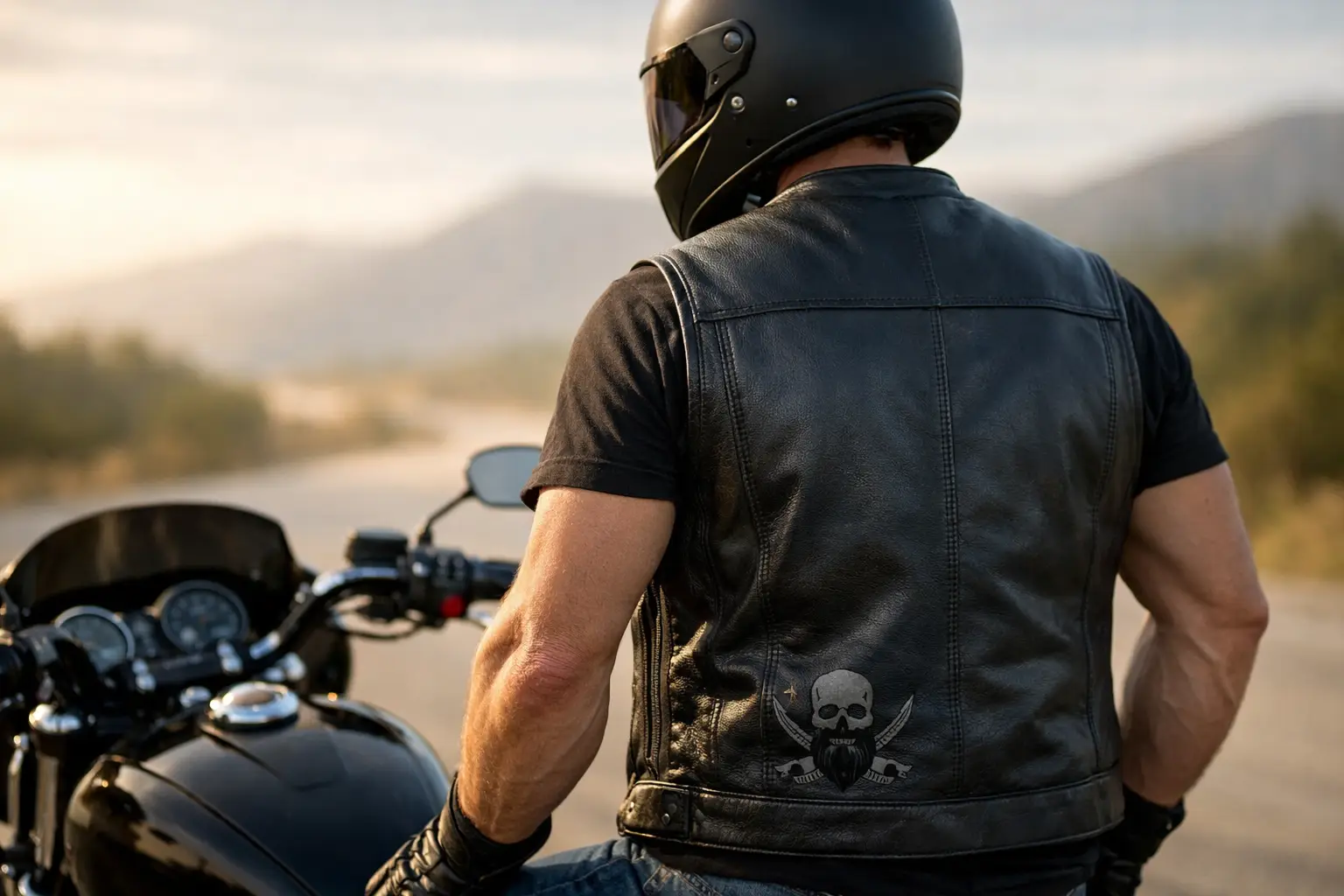
You can spot a bad vest before the kickstand is up. It bunches at the shoulders, rides high when you reach for the bars, feels cheap in the hand, and starts looking tired long before the riding season does. A solid motorcycle vest buying guide should help you avoid that mistake fast, because the right vest is not just about looks. It is about comfort on the bike, storage you will actually use, and road-ready leather that holds its shape.
For a lot of riders, the vest is part of the uniform. It carries your style, your colors, and your presence. But if you buy based on looks alone, you can end up with something that works for a photo and fails on a long ride. Good gear has to do both.
What a motorcycle vest buying guide should actually cover
A vest seems simple until you start comparing them. One looks heavy and premium but may run hot in summer. Another feels light and flexible but may not give you the structure or durability you want. The real difference comes down to leather quality, cut, closure style, pocket layout, liner setup, and how the vest sits when you are in a riding position.
That is why the best buy is rarely the one with the flashiest trim. It is the one that matches how you ride. If you put down highway miles every weekend, your priorities will be different from someone wearing a vest mainly for local runs, rallies, and everyday biker style.
Start with the leather
If you want a vest that feels right and lasts, leather is where the decision starts. Cheap material gives itself away quickly. It can feel stiff in the wrong way, overly thin, or coated so heavily that it looks flat and fake. Better leather has weight, grain, and character. It breaks in instead of breaking down.
Cowhide is a common favorite for good reason. It is durable, substantial, and gives that classic biker look many riders want. It stands up well to regular use and keeps its shape over time. If your priority is a tougher, traditional vest with real road presence, cowhide is usually the safe bet.
Buffalo leather can also appeal to riders who want a rugged look with a little extra texture. It often has a bold finish and a sturdy feel. The trade-off is that some riders may find it a bit heavier or less flexible at first. That usually matters less if you prefer a hard-wearing vest over a soft, broken-in feel right out of the box.
Soft milled leather works well for riders who want comfort earlier. It tends to move easier and feel less rigid from day one. The trade-off is simple – softness feels great, but you still want enough body in the leather that the vest does not sag or lose structure after regular wear.
Fit matters more than most riders think
A vest can be premium leather and still be the wrong buy if the cut is off. Too loose, and it flaps, shifts, and looks sloppy. Too tight, and it binds across the chest or shoulders, especially when you are reaching forward on the bike.
The right fit should feel close without pinching. You want room to move, room for a shirt or hoodie underneath if that is how you ride, and enough length that the vest does not creep up every time you settle into the saddle. A lot of riders forget to think about seated fit. Standing in front of a mirror is not the same as leaning into the bars.
Pay attention to the arm openings too. If they are cut wrong, the vest can rub, gap, or sit awkwardly over your riding shirt or jacket. A good vest should feel natural across the shoulders and clean through the torso. It should look sharp standing still and stay comfortable when the miles stack up.
Club style or classic side lace
This is one of the biggest style and function choices in any motorcycle vest buying guide. Club style vests usually have a cleaner front, a shorter collar or banded collar, and a more modern biker look. Many riders like them because they sit clean, layer well, and often come loaded with practical pocket layouts.
Classic side lace vests bring that old-school look a lot of cruiser riders still want. The laces can give you some adjustment through the body, which helps if layering flexibility matters. They also bring a more traditional road style that stands out at bike nights and rallies.
Neither is automatically better. It depends on your look and how you wear your gear. If you want sleek and stripped down, club style makes sense. If you want the heritage biker feel with a little adjustability, side lace still earns its place.
Closures, liners, and the details that make a difference
A vest gets used hard, so the hardware matters. Snaps should feel secure and easy to work, even with gloves off in a parking lot or at a fuel stop. Weak snaps get old fast. If the vest includes a zipper under the snap front, that can give you a cleaner seal and a more secure fit at speed.
Liners deserve more attention than they get. A basic mesh or smooth inner lining helps the vest slide on easier over a shirt or flannel. Some riders prefer a vest with a concealed carry pocket setup or extra interior storage, which can be useful if you want more than just the standard outside chest and hand pockets. What matters most is that the inside layout fits your real use, not some feature list that sounds good online.
Look closely at stitching too. Clean seams, reinforced stress points, and consistent construction usually tell you a lot about whether the vest is built to last. If the thread work looks rushed, the rest of the build may be too.
Pockets are not a small thing
A vest with bad storage becomes annoying in a hurry. Chest pockets can be great for quick access, but they need to be placed well and close securely. Lower hand pockets are useful off the bike, but interior storage often matters more when you ride.
If you carry your phone, wallet, papers, or small essentials, think through where those items will actually sit. Too many pockets can be clutter. Too few can make the vest less practical than it should be. The sweet spot is a layout that keeps your basics secure without turning the vest bulky.
This is where a lot of quality leather vests stand apart. They are built for riders, not just styled like rider gear. That means better placement, stronger closures, and storage that makes sense on the road.
Matching the vest to your riding style
Not every rider needs the same vest. If you mostly ride in warmer weather, a lighter leather build may be the better move, especially if you want airflow and less bulk. If you ride through changing conditions or layer often, a heavier vest with a more structured build may serve you better.
Cruiser and Harley-style riders often want a vest with real attitude – black leather, clean lines, strong pocket layout, and enough substance to hold patches well. If that is your lane, go for leather that has enough weight and backbone to carry the look without feeling flimsy.
For riders who treat the vest as both gear and everyday wear, comfort becomes a bigger piece of the decision. In that case, soft leather, a smooth liner, and a versatile cut may matter just as much as the traditional biker profile.
Don’t buy only for the first week
A vest that feels fine for ten minutes can be the wrong pick after a full day. Leather breaks in, but it should not need a miracle to become wearable. Think about how the vest will age, how it will hold its shape, and whether the design will still work once it becomes part of your regular rotation.
This is where buying quality pays off. Better leather, stronger hardware, and cleaner construction cost more for a reason. You are not just paying for appearance. You are paying for a vest that can keep showing up ride after ride without looking worn out too soon.
At Blackbeard’s Motorcycle Gear, that is the difference worth chasing – leather that looks tough, fits right, and earns its place every time you throw a leg over the bike.
The smartest way to choose your vest
If you are deciding between a few options, strip the choice down to what matters most. Start with leather quality, then fit, then the features you will actually use. Style matters, no question, but style backed by cheap material is a short-term win and a long-term disappointment.
A good vest should feel like part of your ride, not an accessory you tolerate. It should carry the right look, sit right on the bike, and hold up to real use. Buy for the miles ahead, not just the first impression. That is the vest you will keep reaching for.