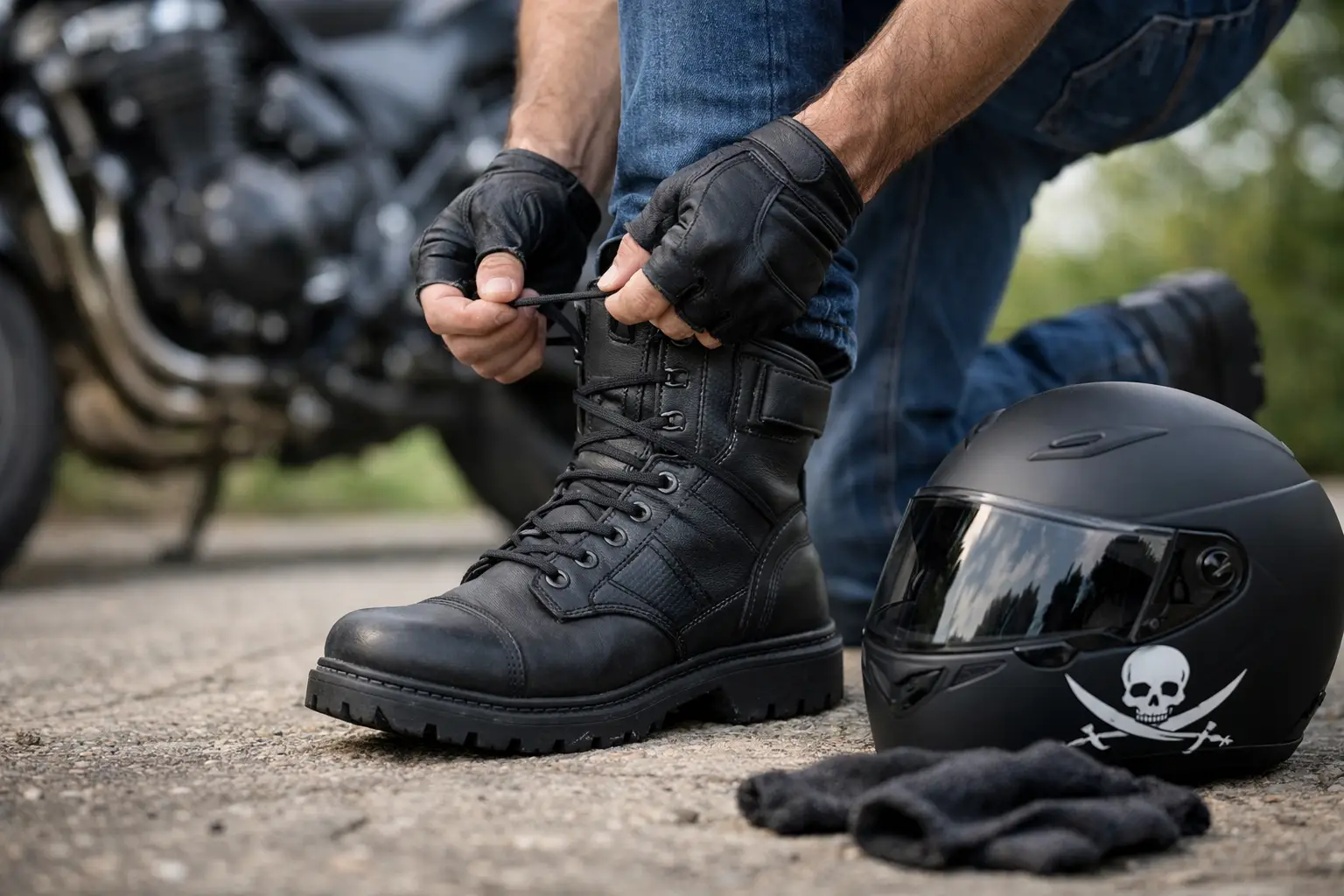
A stiff new pair of boots can make the first ride feel longer than it is. If you’re wondering how to break in motorcycle boots without chewing up your heels or wrecking good leather, the answer is simple – use heat carefully, wear them in short rounds, and let the leather flex the way it was built to flex.
Why motorcycle boots feel so stiff at first
Good motorcycle boots are supposed to feel tougher than sneakers. That stiffness comes from heavier leather, reinforced toe boxes, built-up ankle support, oil-resistant soles, and construction meant to hold up on pegs, pavement, and long miles. A boot that feels solid out of the box usually has more road-ready structure than one that folds up like a casual shoe.
That said, stiff should not mean painful in all the wrong places. You want resistance, not hot spots that raise blisters in ten minutes. The break-in process is really about teaching the leather and the boot’s internal shape to match your foot, your ankle movement, and the way you shift, stop, and walk.
How to break in motorcycle boots without damaging them
The fastest way is not always the best way. If you soak boots, blast them with high heat, or force them to bend where they are not meant to bend, you can dry out the leather, weaken stitching, and shorten the life of the boot. For riders buying quality leather gear, that is money wasted.
Start indoors. Put on the socks you actually ride in, lace or zip the boots the way you normally would, and wear them around the house for 30 to 60 minutes at a time. This sounds basic because it is basic, and it works. Short sessions let the boot warm up from body heat and start relaxing without turning one rough afternoon into a blister problem.
After a couple of indoor sessions, move to short walks outside. Keep it light at first – a quick errand, a short garage session, or an easy walk around the block. The goal is repeated flex, not punishment. Leather responds better to steady wear than one marathon day.
Use thick socks, but do not overdo it
One of the easiest tricks is to wear slightly thicker socks for the first few wears. That creates a little extra stretch in the right areas and adds protection where boots usually rub first, especially around the heel and ankle collar. If the boots are already very snug, go easy. Socks that are too bulky can create pressure points instead of solving them.
It depends on the fit you started with. If the boot is just firm and new, thicker socks help. If your toes are already cramped or the width feels wrong, no break-in trick is going to fix a truly bad fit. Leather can give some, but not a full size worth of mistakes.
A little heat helps, a lot of heat ruins leather
If you want to speed things up, use gentle warmth. A hair dryer on low for 20 to 30 seconds over stiff zones can help soften the leather before you wear the boots around the house. Focus on the ankle flex point, tongue, and upper around the instep – not the sole glue, not the stitching for extended periods, and definitely not one spot until it gets hot.
Once the leather is warm, walk in the boots immediately. Flex your feet naturally. Sit on your bike if you can and move through the motions of planting your foot, shifting, and working the rear brake. This helps the boot shape itself to real riding movement, not just walking movement.
Skip ovens, radiators, campfires, and leaving boots in a hot car all day. Those shortcuts can dry leather fast and make a solid pair crack before its time.
Condition the leather if it feels dry and stubborn
Some full-grain leather boots break in smoother with a light leather conditioner. The key word is light. You are not trying to soak the boot or make it floppy. You are trying to keep the leather from fighting every flex.
Use a conditioner made for leather footwear, apply a small amount, and work it into the stiff outer areas. Let it absorb before wearing the boots. If your boots have a specific finish, waterproof membrane, or manufacturer care instructions, follow those first. Some products can darken the leather or change the surface look, so test a small area if appearance matters to you.
For riders who care about both road function and biker style, this matters. A quality leather boot should break in and still look sharp. The goal is a worn-in fit, not a beat-up appearance.
Where motorcycle boots usually need the most break-in
Most riders feel it in four spots first: the heel, the ankle, the instep, and the toe flex area. Heel slip is common when the boot is new, but it should settle down as the boot molds to your foot. Sharp rubbing at the back of the heel, though, needs attention right away with better socks, shorter wear sessions, or a heel bandage before it becomes a blister.
Ankle stiffness is also normal, especially on taller boots with added support. This gets better with repeated motion and a little controlled warmth. The instep can feel tight on boots with sturdy uppers or zipper designs. That usually eases up, but numbness or tingling is a sign the boot may be too tight.
The toe flex area is where riders often make a mistake. They try to force the front of the boot to crease hard with their hands. Let walking and riding do that job. Boots need to flex with your foot, but they also need to keep structure in the toe and shifter area.
Short rides beat all-day rides
Once your boots feel decent indoors and on short walks, take them on a short ride. Around town is better than a full-day run. You want enough time to feel how they work on the controls, but not so much that one hot spot becomes a serious problem halfway from home.
This stage matters because motorcycle boots break in differently when riding than when walking. Peg position, shift action, floorboards versus mids, and how often you stop all change where the pressure lands. A boot that feels fine in the garage can still press your ankle weirdly on the bike.
After a few short rides, most quality boots start feeling noticeably better. The leather loosens where it should, the collar stops feeling so rigid, and your movements feel less mechanical.
What not to do when breaking in boots
There are a few bad ideas that keep getting passed around. Soaking boots in water is one of them. Wet leather can stretch, sure, but it can also dry unevenly, stiffen back up, and lose some of the finish that made the boots worth buying in the first place.
Freezing bags of water inside the boots is another gamble. It can put stress on seams and does not shape the boot to your actual foot. Bending the boots aggressively by hand is also a poor move. You can create odd crease lines and weaken the upper before the boots ever see a real ride.
The smarter approach is slower, but not slow. Wear, warm, condition if needed, and repeat.
When break-in pain means the fit is wrong
Not every painful boot just needs more time. If your toes are jammed into the front, if the width is crushing the sides of your feet, or if your arch feels wrong from the first minute to the last, that is not a break-in issue. That is a fit issue.
A proper motorcycle boot should feel secure and supportive from day one, even if it is stiff. You should not expect numb toes, sharp sidewall pain, or constant heel lift that makes the boot feel loose and unstable. Leather gives some, but it does not perform miracles.
That is why buying from a gear shop that understands fit, function, and real riding use makes a difference. Blackbeard’s Motorcycle Gear focuses on road-ready leather products that look right and wear hard, which matters when you want gear that earns its place instead of ending up in the closet.
How long does it take to break in motorcycle boots?
For most riders, expect a few days to a couple of weeks of regular wear. Softer leather and shorter boots usually break in faster. Heavier leather, taller shafts, waterproof liners, and more reinforcement can take longer. That is the trade-off. Boots built for more protection and durability usually need more patience up front.
The payoff is worth it. Once they are broken in properly, good motorcycle boots stop feeling like gear you are enduring and start feeling like part of the ride.
If you want the best result, do not rush the leather past what it was built to do. Put in the wear, treat the material right, and let the boots become yours one ride at a time.