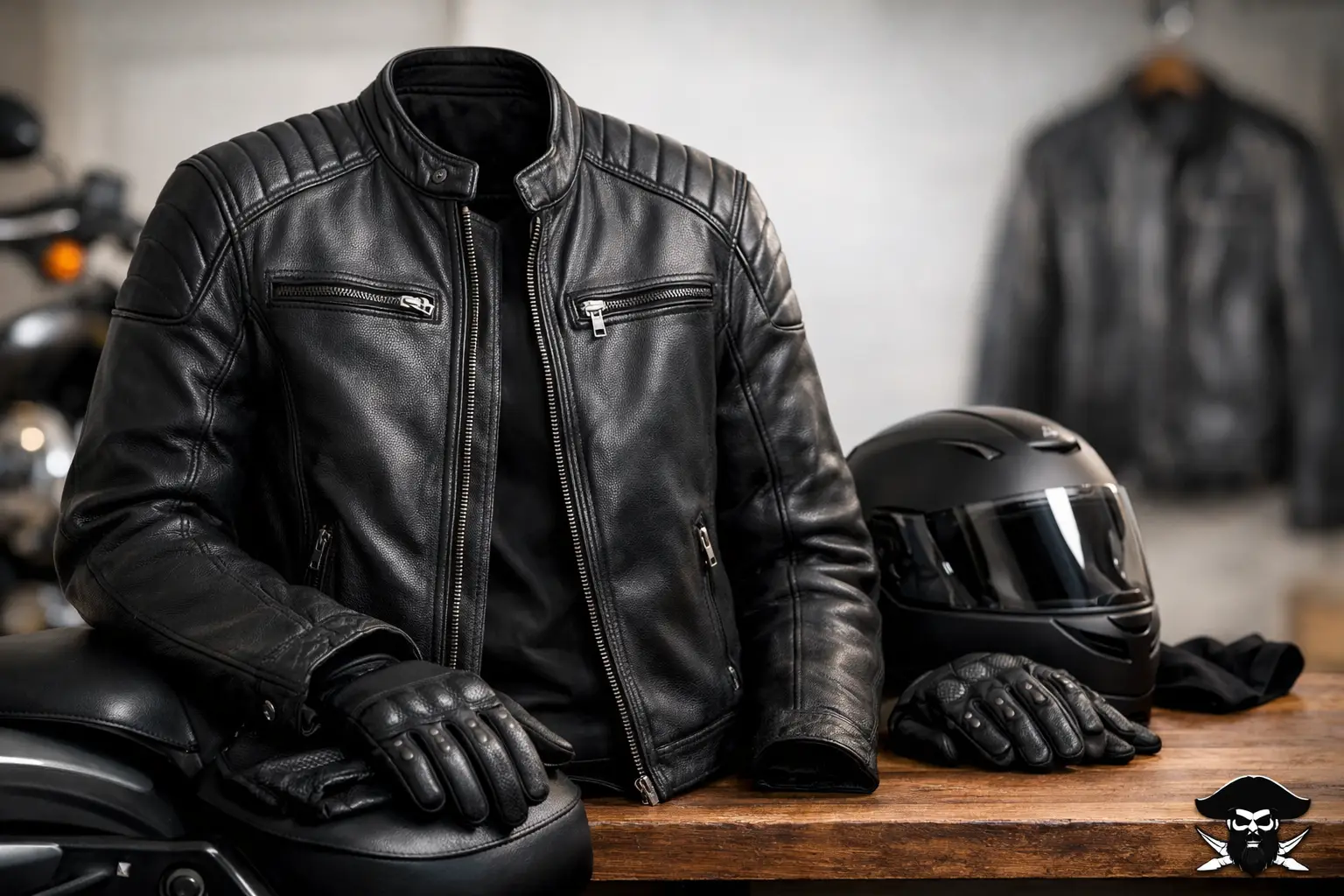
A leather jacket can look mean on a hanger and still let you down at 70 mph. That is why a real motorcycle leather jacket buying guide needs to do more than talk about style. It needs to help you sort out protection, comfort, road fit, and value so you do not end up with a jacket that looks right in the mirror but rides wrong on the bike.
What a good riding jacket actually needs to do
A motorcycle jacket has two jobs. First, it has to hold up when the ride gets rough, whether that means wind fatigue, road grime, light rain, or a slide. Second, it has to feel right in the saddle. If it binds across the shoulders, balloons in the chest, or rides up your back, you will notice it every mile.
That is where many buyers get tripped up. They shop like they are buying fashion leather, not riding gear. A fashion jacket can get away with thin hides, softer construction, and a trim cut that only works while standing. A real riding jacket needs stronger leather, cleaner stitching, better hardware, and a shape that makes sense with your arms forward on the bars.
Motorcycle leather jacket buying guide: start with the leather
Not all leather wears the same, and not all of it feels the same on the road. If you want that classic biker look with serious durability, cowhide is the standard for a reason. It is tough, abrasion resistant, and built for riders who want a jacket that breaks in over time and keeps earning its keep.
Buffalo leather is another strong option if you like a rugged feel with a little more character in the grain. It often has a beefier hand, which many cruiser and V-twin riders appreciate. Lambskin feels softer and lighter right away, but it is usually chosen more for comfort and style than for hard road duty. That does not make it a bad buy. It just means you should match the leather to the way you actually ride.
Leather thickness matters too. Heavier leather generally means better abrasion resistance, but there is a trade-off. Thick jackets can feel stiff at first and run hotter in warm weather. If you ride long distances, in mixed conditions, or through shoulder seasons, that heavier build often pays off. If your riding is mostly short hops and casual weekend use, you may prefer something a little lighter and easier to move in.
The cut matters more than most riders expect
A jacket can be made from top-quality leather and still be wrong for your ride if the cut is off. Cruiser riders usually lean toward classic styles like the asymmetrical moto jacket, snap-down collar, side laces, and a slightly longer body. That look never goes out of style, but function still matters.
Look closely at shoulder room, sleeve length, and back coverage. On a bike, your arms are forward, not hanging straight down. That means sleeves need enough length to keep your wrists covered in riding position. The back should stay down instead of creeping up and exposing your beltline. Bi-swing backs, action shoulders, stretch panels, and side adjustment laces can make a big difference here.
A trim fit is fine. A restrictive fit is not. If the jacket is too tight through the chest and shoulders, fatigue sets in fast. If it is too loose, the armor can shift and the whole jacket starts flapping in the wind. The sweet spot is secure without feeling boxed in.
Armor and impact protection are worth the extra look
This is where a lot of jackets separate into two camps: leather that is just leather, and leather that is built to ride. If you want more than road style, check for armor pockets or included armor at the shoulders, elbows, and back. Even if a jacket looks traditional, modern protection features can be built in without ruining the biker feel.
Some riders prefer a cleaner, old-school jacket with no visible tech. Fair enough. But removable armor gives you options. You can keep the classic look while adding impact coverage when the ride calls for it. If a jacket has no armor support at all, understand what you are buying. That may still work for certain riders, but it is not the same as a purpose-built protective jacket.
Hardware, stitching, and build quality tell the truth
Product photos can hide a lot. Construction details usually do not. Zippers should feel heavy-duty, not flimsy. Snaps should close cleanly. Seams should be straight and reinforced in high-stress areas. Cheap hardware fails early, and bad stitching shows up fast once the jacket starts seeing real miles.
Pay attention to the lining as well. A good liner adds comfort and helps the jacket wear better over layers. Some jackets include zip-out thermal liners, which are a smart buy if you ride in cooler weather or want one jacket to cover more of the season. Mesh or vented linings can help with airflow when temperatures climb.
Pockets matter too, especially if you actually use your gear. Deep hand pockets, secure interior storage, and easy-access chest pockets can make a jacket far more useful day to day. It is a small detail until you are at a gas stop trying to keep your phone, wallet, and gloves under control.
Motorcycle leather jacket buying guide for weather and season
No leather jacket does everything perfectly. That is just the truth. If you ride in cold weather, leather blocks wind well and gives you that solid, planted feel many riders want. Add a thermal liner and you get even more range. But in peak summer heat, even a quality leather jacket can feel warm unless it has vents, perforation, or lighter construction.
This is where you need to be honest about your riding season. If you mostly ride spring through fall, a vented leather jacket or one with zippered airflow panels may be the better move. If you ride early mornings, late evenings, or cooler states, a heavier jacket with a removable liner gives you more flexibility.
There is always a trade-off between airflow and coverage. More venting usually means less of that tank-like feel. More leather and heavier construction usually mean better wind blocking and road toughness, but less comfort in stop-and-go summer traffic. Buy for your real conditions, not the one perfect day you are picturing.
Style counts, but it should still earn its place
Let us be real. Biker gear is not just about utility. Riders want road presence. A sharp leather jacket says something before the bike even fires up. Classic black leather, club-style details, side laces, braided trim, antique-finish hardware, and clean paneling all have their place.
But style should support the ride, not get in the way of it. Fringe, loose accessories, or fashion-heavy cuts may look good online but feel less practical once you are in motion. The best jackets hit both marks. They carry the right biker identity while still giving you real-world function.
That balance is where strong brands in the leather space stand out. A well-built jacket from a rider-focused lineup gives you the look you came for without shorting you on durability, comfort, or useful features.
Value is not the same as buying the cheapest jacket
A bargain jacket that wears out fast is not a bargain. Neither is an overpriced piece that leans on a name but skimps on features. Real value comes from getting quality leather, dependable construction, and road-ready design at a price that makes sense.
That is why it helps to compare what is actually included. Does the jacket offer armor support, a removable liner, concealed carry pockets, adjustable fit features, and quality hardware? Or are you paying for a label and a good photo? Riders who know what to look for usually spot the difference fast.
If you are shopping online, product descriptions should do more than say premium leather and leave it there. You want specifics. Leather type, liner setup, closure details, pocket count, venting, and rider-focused features all help you buy with more confidence. Blackbeard’s Motorcycle Gear leans into that practical side of the purchase, which matters when you want less guesswork and more jacket for the money.
The right jacket is the one you will keep reaching for
The best motorcycle leather jacket is not always the heaviest, the most expensive, or the most loaded with features. It is the one that fits your ride, your climate, and your style without making compromises you will regret after the first few trips.
If you want the short version, buy leather built for the road, not just the look. Check the cut in riding position, pay attention to armor and liner options, and do not ignore the small details like zippers, vents, and pockets. A strong jacket should feel like part of the ride, not something you are fighting against.
When you find one that looks right, feels right, and is built right, you will know. And once that leather breaks in and starts wearing your miles, it stops being just another piece of gear.