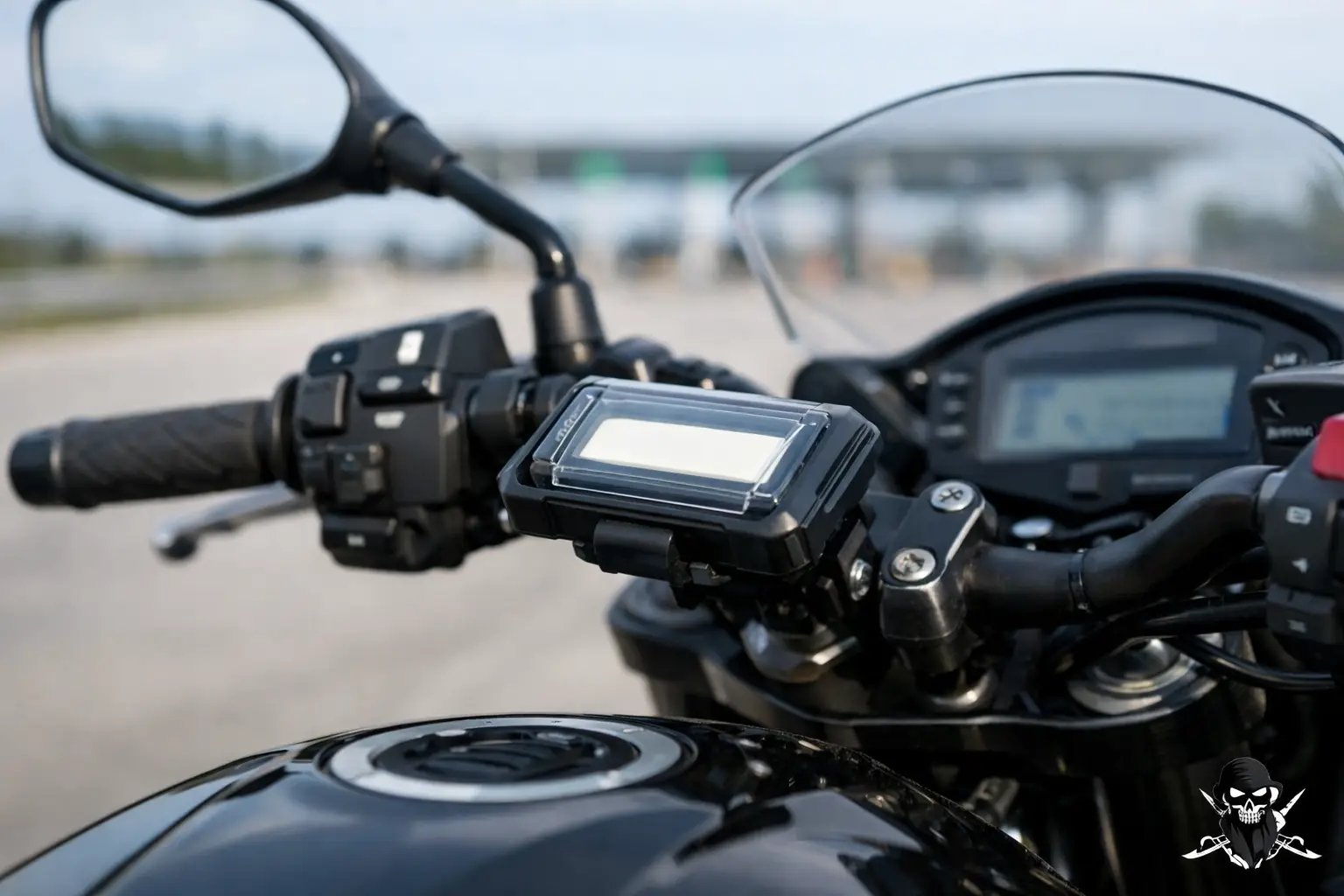
A toll booth is no place to dig through your leather jacket, pull off a glove, or balance a loose transponder on the tank. Knowing how to use a toll pass holder on a motorcycle keeps your ride moving, protects your pass from weather and theft, and saves you from fumbling when traffic stacks up behind you.
A good holder gives your toll transponder a fixed home where it can be read clearly without getting in the way of your controls. Get the placement right once, check that it is secure, and you can roll through toll points with both hands where they belong.
Start With the Right Toll Pass and Holder
Before mounting anything, make sure your toll account and transponder are approved for motorcycle use in the states where you ride. Some toll agencies use a windshield-mounted sticker, while others issue a portable hard-case transponder. A standard car pass may work on a bike, but the agency may have specific placement instructions or motorcycle account settings that affect how your vehicle is charged.
Read the instructions that came with the pass first. If the agency requires the transponder to remain inside a vehicle or mounted in a specific location, follow its rules. A holder cannot override toll authority requirements.
For a portable transponder, choose a motorcycle toll pass holder built for the job. It should hold the unit snugly, close securely, and mount without chewing up your handlebars or leaving metal edges against your paint. Cheap improvised mounts can rattle loose, scratch your bars, or put the pass where a scanner cannot pick it up.
The Blackbeard’s Motorcycle Toll Pass Holder is made for riders who want a rugged, simple setup that will not scratch the bars. That matters on a clean cruiser, a stripped-down chopper, or any bike where exposed hardware is part of the look.
How to Use a Toll Pass Holder Step by Step
The basic process is simple: confirm your pass is active, install it in the holder in the correct orientation, mount the holder where it is visible to toll equipment, then test the setup on a local toll route.
Check the transponder orientation
Most hard-case transponders have a front, back, top, or arrow marking. Put it into the holder according to the toll agency’s instructions. Do not assume that any direction will scan equally well. Radio-frequency transponders are designed to communicate from a particular face, and flipping one around may reduce reliable reads.
If your pass has a barcode, number, or label, do not cover it with tape, leather, foil, or decorative patches. Keep the holder clean enough that you can identify the pass if customer service asks for its number.
Choose a smart mounting location
For most motorcycles, a handlebar location near the center clamp or risers is practical. It keeps the pass upright, visible, and within easy reach without blocking the speedometer, ignition, brake reservoir, clutch cable, or switch housings.
Do a full lock-to-lock steering check before tightening the mount. Turn the bars all the way left and right. Watch for contact with the tank, fairing, windshield, cables, and brake lines. What looks fine in the garage can become a problem at full steering lock or over rough pavement.
Avoid mounting the holder low on the frame, inside a saddlebag, behind a thick metal panel, or directly against a large metal accessory. Those locations may interfere with the signal, make the pass hard to access, or leave it exposed to road spray. A tank bag can be convenient for some riders, but it is not always the best permanent spot because the pass moves when the bag comes off.
Install the holder without damaging your bars
Clean the handlebar area with a soft cloth so grit does not get trapped under the mount. Open the clamp or strap, set it around the bar, and position it before you fully tighten anything. If your holder includes a protective liner or rubber insert, make sure it sits flat between the holder and the bar.
Tighten the hardware until the holder cannot rotate under normal hand pressure. Do not crank down so hard that you deform the clamp, damage the finish, or strip the fasteners. Motorcycle vibration is real, but overtightening is not the answer. A properly designed holder should stay put without turning the install into a wrestling match.
After mounting, give the holder a deliberate shake. Check that the lid or closure is fully engaged and that the transponder cannot slide free. Then check the view from the rider’s seat. You should still have a clear sightline to your gauges and warning lights.
Ride through the toll correctly
Approach the toll lane at the posted speed and stay alert for motorcycle-specific signs. Keep a safe distance from the vehicle ahead, especially at open-road toll points where traffic may brake suddenly. Do not wave the holder around or remove the pass while rolling. The reader should detect it from its mounted position.
If the gate does not open or the toll system does not register your pass, do not force your way through. Use the call button, follow posted instructions, or continue through a designated pay-by-plate lane if one is available. Write down the toll location and time when it is safe to stop, then contact the toll agency. Trying to fix a missed scan while stopped in a live lane creates more trouble than the toll itself.
Placement Depends on Your Motorcycle Setup
There is no single perfect location for every bike. A bare-bar cruiser has different space and cable routing than a touring bike with a large fairing. Riders with tall risers may have room near the center, while riders with packed handlebars may need a cleaner spot beside the gauge cluster.
If you run a windshield, do not automatically assume the pass belongs behind it. Some windshields use hardware or tint that can affect visibility and signal performance. Follow the toll agency’s directions, and choose the location that leaves the holder protected without blocking your view.
Motorcycle luggage changes the equation too. A pass tucked into a quick-release bag is easy to lose track of when you remove the bag at a fuel stop. Mounting the holder to the bike means your toll setup stays with the bike, whether you are running light for a day ride or loading up for a long weekend.
Keep Your Pass Secure on Long Rides
A toll pass holder is small equipment, but it deserves the same routine check you give your gloves, boots, and straps before a ride. Inspect the holder after heavy rain, rough roads, long highway runs, or any time the bike takes a bump in a parking lot.
Look for a loose mount, cracked body, worn liner, damaged latch, or moisture inside the holder. Wipe off bugs and grime so the closure can seat properly. If the transponder is removable, verify it is still active in your toll account after a long period of nonuse or after changing license plates.
Theft is another reason to use a secure holder instead of leaving a pass loose in an open bag. A mounted holder will not make a transponder impossible to steal, but it does keep it less exposed and less likely to disappear when you are grabbing gear at a stop. If you park for extended periods in an unsecured area, take the pass with you if it can be removed easily.
Common Toll Pass Holder Mistakes
The most common mistake is mounting the pass before confirming the toll agency’s instructions. The next is placing it where it blocks the gauges or hits the tank at full steering lock. Both are easy to avoid with five minutes of planning.
Another mistake is treating the holder like a universal storage tube. Do not pack it with receipts, coins, keys, or extra cards. The holder is designed to keep the transponder stable and readable. Extra clutter can interfere with the closure and make a quick inspection harder.
Finally, do not ignore a missed read. One failed toll scan could be a lane issue. Repeated failures usually mean the transponder is inactive, mounted backward, blocked by material, or positioned poorly. Fix the cause before your next road trip instead of hoping the next toll gantry catches it.
A solid toll pass holder is a small upgrade that earns its keep every time the road crosses a bridge, turnpike, or express lane. Mount it clean, keep it secure, and let your bike handle the miles without turning every toll into a roadside scramble.