A duffel bag can make a weekend ride feel wide open – or turn into a loose, flapping headache before you reach the county line. This motorcycle duffel bag guide is for riders who need dependable storage without loading their bike down with bulky hard luggage. Whether you ride a stripped-down chopper, a cruiser built for highway miles, or a touring machine that still needs extra room, the right bag has to stay put, keep gear protected, and look like it belongs on the bike.
A motorcycle duffel is not just a gym bag with straps. Road vibration, rain, wind pressure, exhaust heat, and quick fuel stops all expose weak materials and sloppy mounting. Buy for the ride you actually take, not the one you imagine taking once a year.
Start With the Right Duffel Bag Capacity
Capacity is the first decision because it controls everything else: bag size, mounting location, weight, and how much the bike’s handling changes. For an overnight ride, a compact duffel generally handles a change of clothes, toiletries, gloves, and a light layer. A two- or three-day run calls for more room, especially if you pack riding apparel, boots, or cold-weather layers.
Bigger is not automatically better. An oversized bag invites overpacking, sits higher behind the rider, and catches more wind. It can also block a passenger seat or interfere with a backrest. For most cruiser riders, a medium roll bag or duffel mounted across the rear seat or luggage rack is the practical sweet spot. It carries enough for a short trip while keeping the load tight and low.
Think about the items that do not compress. Boots take space. A leather jacket may be worn rather than packed, but extra layers, rain gear, and spare gloves add up fast. If your trips include camping equipment, a duffel can work as part of a larger luggage setup, but do not expect one bag to carry a tent, sleeping kit, cookware, clothes, and tools without becoming a heavy, awkward load.
A quick capacity reality check
Before buying, place the gear you normally carry on the floor and pack it into a household duffel or storage tote of a similar size. This shows whether you need a compact overnight bag, a medium weekend bag, or a larger touring duffel. It also keeps you from paying for space you will never use.
Weather Protection Is Worth Paying For
A good-looking bag is not much good if your spare shirt, paperwork, and electronics are soaked after one hard rain. Water resistance and true waterproof construction are different things. Water-resistant fabric can handle light rain and road spray for a while. A waterproof motorcycle duffel uses sealed seams, coated materials, roll-top closures, or an included rain cover to keep water out during sustained weather.
It depends on where and how you ride. If your bike mostly sees local rides in good weather, a heavy-duty water-resistant bag may be enough. If you run interstate miles, ride through changing conditions, or take trips where there is no easy place to dry out, move up to waterproof protection. A rain cover is useful, but it is one more item to keep track of and it can flap or tear at speed. Built-in weather protection is the cleaner answer.
Look closely at zippers and closures. Standard zipper teeth are a common entry point for water. Covered zippers, storm flaps, roll-top designs, and sealed seams offer better protection. Also consider the bag’s base. A reinforced bottom keeps the duffel from sagging into rack edges and gives it a fighting chance when it is set down on wet pavement, gravel, or a gas-station island.
Secure Mounting Matters More Than Extra Pockets
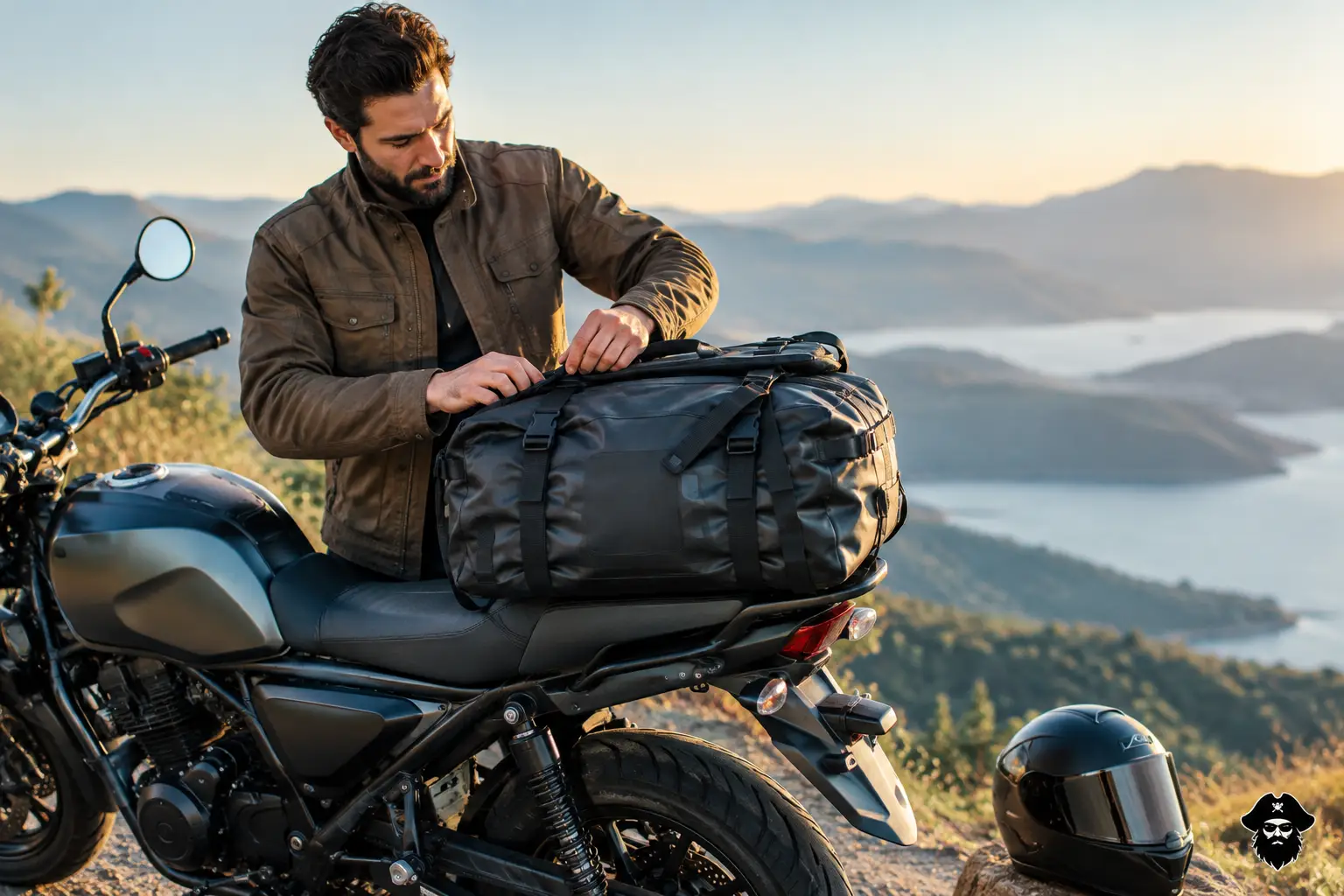
A motorcycle bag is only as good as the mounting system holding it to the bike. The bag should attach with adjustable straps that cinch down firmly and have enough length for your rack, sissy bar, or rear seat. Quick-release buckles are convenient at a hotel or campsite, but the straps still need solid anchor points and a way to manage loose ends.
Mount the duffel as low and centered as possible. A load that leans to one side can affect balance, particularly when you are moving slowly, turning into a parking spot, or riding in crosswinds. Keep the weight forward when you can, rather than hanging it far off the rear fender. If you carry tools, locks, or other dense gear, place those items at the bottom and close to the bike.
After mounting the bag, grab it with both hands and shake it hard. If it shifts, slides, or rocks, it is not ready for the highway. Check that straps cannot reach the rear wheel, belt, chain, brake components, or exhaust. Heat is a real problem on cruisers. A bag that hangs near hot pipes can be damaged quickly, and so can the gear inside it.
Do not trust bungee cords alone
Bungee cords are fine as backup retention for a light rain cover or a small loose item. They are not a complete mounting system for a loaded duffel. Hooks can come loose, cords stretch, and a bag that launches at highway speed creates danger for you and everyone behind you. Use integrated straps or quality tie-down straps designed to stay tensioned.
Pack for Access, Not Just for Space
The best motorcycle luggage keeps the items you need within reach. Put rain gear, a warm layer, sunglasses, chargers, and anything needed at a fuel stop near the top or in an external pocket. Save the bottom of the bag for clothing, toiletries, and items that can stay packed until the end of the day.
Use smaller packing pouches inside the duffel to separate clean clothes from dirty gear and to keep small items from disappearing into the bottom. A simple waterproof pouch is smart for registration, insurance documents, cash, and electronics. Even a weatherproof bag can be opened during rain, dropped in a puddle, or exposed when you unload it.
Do not pack every available inch. Leave a little space so the zipper or closure is not under constant strain. An overstuffed duffel is harder to secure, harder to close, and more likely to lose its shape in the wind. It also makes a quick stop frustrating when you have to unpack half the bag to find one pair of gloves.
Match the Bag to Your Riding Setup
A duffel bag works especially well for riders who want flexible storage they can remove quickly. It fits naturally with a sissy bar, rear rack, passenger seat, or saddlebag setup. A rider with hard saddlebags may use a duffel for overflow on longer trips. A rider with no permanent luggage may make it the main storage piece for weekend runs.
Style matters too. Black textile bags often blend in with almost any motorcycle, while leather duffels and roll bags bring a classic cruiser look that matches a leather vest, jacket, and boots. Leather has serious road presence and can last for years with proper care, but it needs more attention around rain than coated synthetic materials. There is no wrong choice – pick the material that fits your weather exposure, maintenance habits, and bike’s character.
If you carry a toll pass, keep it where it belongs instead of burying it under clothes in a rear bag. A secure handlebar-mounted toll pass holder keeps it ready at the gate and keeps your luggage packed for travel gear. Small details like that make a long ride less of a hassle.
Check Your Load Before Every Ride
Straps settle after the first few miles, especially when a new bag is loaded full. Stop early on a longer ride and check the mounting points, buckles, and loose strap ends. Check again after heavy rain, rough roads, or adding gear at a stop. This takes less than a minute and can save a bag, a jacket, or a bad situation in traffic.
Blackbeard’s Motorcycle Gear carries road-ready motorcycle luggage alongside top-quality leather jackets, vests, gloves, boots, and the rider essentials that earn their place mile after mile. Choose a duffel that fits your load, mount it like it matters, and your bike stays ready when the road stops being local.