You feel bad luggage fast. It shifts in a turn, sags onto hot pipes, leaks in the rain, or leaves you digging for gloves at a gas stop. A good motorcycle luggage buying guide cuts through that mess and helps you buy for the way you actually ride – not for a showroom photo.
For cruiser and V-twin riders especially, luggage has to do two jobs at once. It needs to carry what you need, and it needs to look right on the bike. Cheap bags can ruin both. The right setup adds storage without killing your bike’s profile, and it holds up when the miles get long, the weather turns, and the road stops being polite.
What this motorcycle luggage buying guide starts with
Before you look at style, leather, or price, start with use. That sounds basic, but most bad luggage purchases happen because riders shop by appearance first and storage needs second. If you only need room for a wallet, gloves, a rain layer, and a few tools, a giant touring setup is overkill. If you plan on weekend runs with extra layers and overnight gear, small throw-over bags will get old in a hurry.
Think about how often you ride, how long you stay out, and whether your cargo changes from ride to ride. A daily commuter may need easy-access storage and weather resistance more than huge capacity. A weekend rider may care more about a classic leather look and enough space for a flannel, chaps, and roadside essentials. A long-haul rider needs stability, mounting security, and organization that still works after ten hours in the saddle.
There is no perfect universal bag. There is only the right bag for your bike, your gear, and your kind of miles.
Main luggage types and where they work best
Saddlebags
Saddlebags are the workhorse choice for most riders. They balance the bike visually, keep weight low, and usually offer enough room for everyday gear plus a little extra. For cruiser riders, they also match the look of the bike better than most other luggage options.
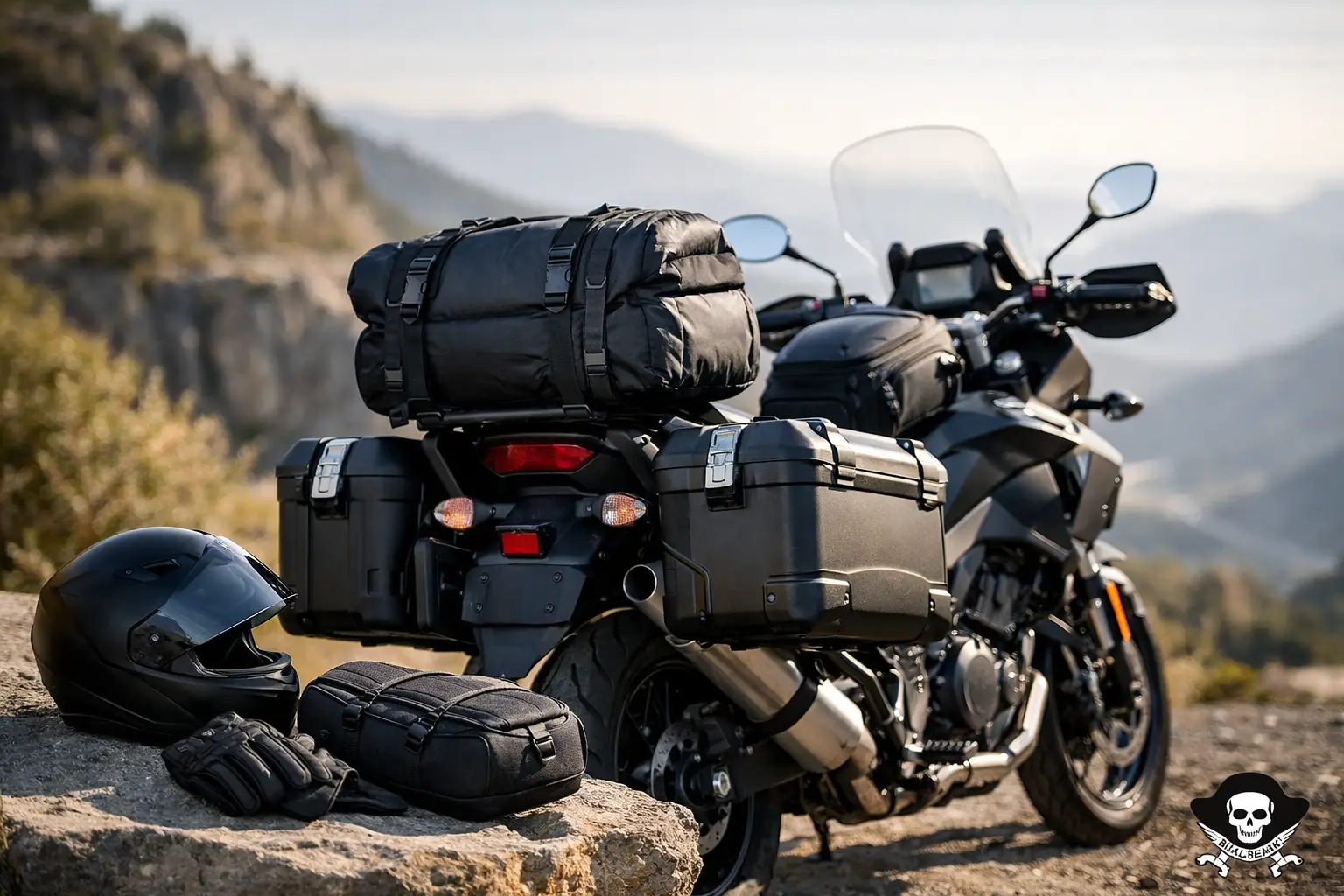
You will usually choose between throw-over saddlebags and hard-mounted saddlebags. Throw-over bags cost less and are easier to install, which makes them a solid option for newer riders or anyone changing bikes down the road. The trade-off is that they can move more, may need extra support brackets, and can be a hassle if you want a cleaner custom look.
Hard-mounted bags feel more planted and more secure. They tend to stay where they belong, especially on longer rides and rougher roads. They also make loading and unloading more predictable. The downside is cost, fitment, and less flexibility if you swap bikes or want to remove the bags often.
Sissy bar bags and tail bags
If you ride with a passenger backrest or sissy bar, this category makes a lot of sense. A sissy bar bag gives you extra capacity without widening the bike much, and it is one of the easiest ways to add travel storage for a weekend run.
These bags are best when you need vertical space for rolled clothes, rain gear, or compact overnight items. They are not always as convenient as saddlebags for quick access on the road, but they work well when your load is bulkier than it is heavy.
Windshield bags, tool bags, and small accessory bags
Smaller bags handle the little stuff that gets lost in larger luggage. Registration, sunglasses, gloves, a phone cable, garage opener, and basic tools all fit better in purpose-built small bags than they do loose in a saddlebag.
This is where function beats capacity. A compact bag mounted in the right place saves time every time you stop. It also keeps you from overpacking your main luggage with things you need constantly.
Leather vs synthetic in a real-world motorcycle luggage buying guide
Material matters, but not in a one-size-fits-all way. Leather still wins on biker style, road presence, and the kind of long-term look that gets better with use. On the right bike, quality leather luggage does not look like an add-on. It looks like it belongs there.
That said, not all leather bags are equal. Good leather has structure, clean stitching, solid buckles or quick-release hardware, and enough thickness to keep its shape. Cheap leather can go soft, saggy, and tired-looking fast. If you want luggage that matches the same standard as quality leather riding gear, it pays to buy better once instead of replacing weak bags later.
Synthetic bags often cost less and can offer strong water resistance right out of the box. They are practical, lighter in some cases, and easier for some riders to maintain. The trade-off is appearance and feel. On a cruiser or chopper-style bike, synthetic luggage can look out of step unless the design is clean and low-profile.
For many riders, the answer is simple. If style matters as much as storage, leather is worth it. If your priority is budget and weather resistance first, synthetic may be the better buy.
Size, shape, and fit on the bike
A bag can have the right capacity and still be wrong for the motorcycle. Fit is where smart shopping saves headaches.
Start with clearance. You need room away from exhaust pipes, rear suspension movement, turn signals, and the wheel. This is especially important with soft saddlebags. A bag that hangs too low or too close to heat is not a minor issue. It is a fast way to damage the bag and create a real safety problem.
Next, look at proportions. Bigger is not always better. Oversized luggage on a smaller cruiser can throw off the whole look and make the bike feel bulky. Too small, and you will be strapping extra gear on top every trip. The best luggage looks balanced and carries what you actually use most often.
Shape matters too. Wider openings are easier to pack. Structured sides hold their form and keep the bag from collapsing when half full. External pockets help with organization, but too many can make the bag look busy and create more weak points in heavy weather.
Features worth paying for
Some features are marketing fluff. Others make your ride easier every single time.
Quick-release systems are worth a serious look if you hate messing with straps. They give you the traditional buckle look without making you fight buckles at every stop. Reinforced backs and internal supports also matter, especially in leather bags, because they help the bag keep its shape and resist sagging.
Weather protection is another feature that separates road-ready luggage from fair-weather luggage. Water-resistant construction helps, but closures matter just as much. A good flap, solid zipper protection, and tight seams do more than a product label alone.
Lockability can be useful, but be realistic. Soft bags offer convenience and light security, not Fort Knox. If you leave high-value items on the bike often, that should affect what kind of luggage you buy and how you use it.
Carry handles and removable designs sound small until you are carrying gear into a hotel or garage. Then they stop sounding small.
Buying for your riding style, not someone else’s
If your rides are mostly local, focus on access, moderate capacity, and clean fit. You do not need a touring rig for coffee runs, errands, and short backroad loops. You need luggage that looks good, stays secure, and handles the basics without fuss.
If you do weekend trips, step up to a setup with enough room for clothing layers, rain gear, and a few personal items. This is the sweet spot for many cruiser riders – saddlebags paired with a sissy bar bag when needed.
If you ride long distance, convenience matters more than you think. You want luggage that packs fast, opens easily, keeps gear organized, and does not need constant adjustment. The longer the trip, the more small annoyances turn into big ones.
Where riders overspend and where they should not cheap out
A lot of riders overspend on size and underspend on quality. They buy more capacity than they need because bigger feels safer, then end up with awkward bags that stay half empty. At the same time, they try to save money on construction, mounting, and materials – the parts that actually determine whether the luggage lasts.
Do not cheap out on attachment security, structural support, or material quality. Those are the areas that affect safety, durability, and how the bag looks after a season of use. If you are buying leather, buy leather that can take road grime, sun, vibration, and real handling. Quality counts here.
For riders who want a strong biker look with real function, Blackbeard’s Motorcycle Gear leans into that balance – luggage and leather gear that work hard and still look right parked outside the bar or rolling down the highway.
The right call is the one that fits your bike and your miles
The best motorcycle luggage buying guide is not the one that tells every rider to buy the same bag. It is the one that helps you avoid dead weight, weak construction, and bad fit. Buy for your bike’s layout, your storage needs, and the kind of road time you actually put in. When the luggage is right, you stop thinking about it – and that is exactly the point.