A biker vest can make or break your setup. Get it right, and it adds road-ready function, sharper style, and a layer you will actually wear every time you ride. Get it wrong, and it bunches, flaps, pinches, or just sits in the closet. If you are wondering how to choose biker vest options that fit your riding style, the answer starts with how you ride, what you wear under it, and what kind of look you want to carry.
For a lot of riders, the vest is not just another piece of gear. It is part of the identity. It is what shows your club patches, your personal style, and your presence when you pull in. But identity alone is not enough. A good vest also needs to work on the bike, hold up to miles, and fit right over your regular riding layers.
How to Choose Biker Vest Without Regret
The first mistake most riders make is shopping by looks alone. A vest can look tough on a hanger and still be wrong once you are in the saddle. That is why the smartest way to shop is to start with use first, then move into material, fit, and storage.
Think about your normal ride. If you are mostly riding in warm weather, a lightweight leather vest or a club-style cut can be the better move because it stays cleaner through the body and layers easier over a T-shirt or riding shirt. If you ride across changing conditions, a heavier vest with more structure can make more sense, especially if you want something that feels substantial over a hoodie or under a jacket.
Your bike and your scene matter too. Cruiser and Harley-style riders usually lean toward classic leather cuts because they match the look of the machine and hold up over time. If your vest is part of your everyday rider image, choose one that looks better with age, not worse.
Pick the Right Leather First
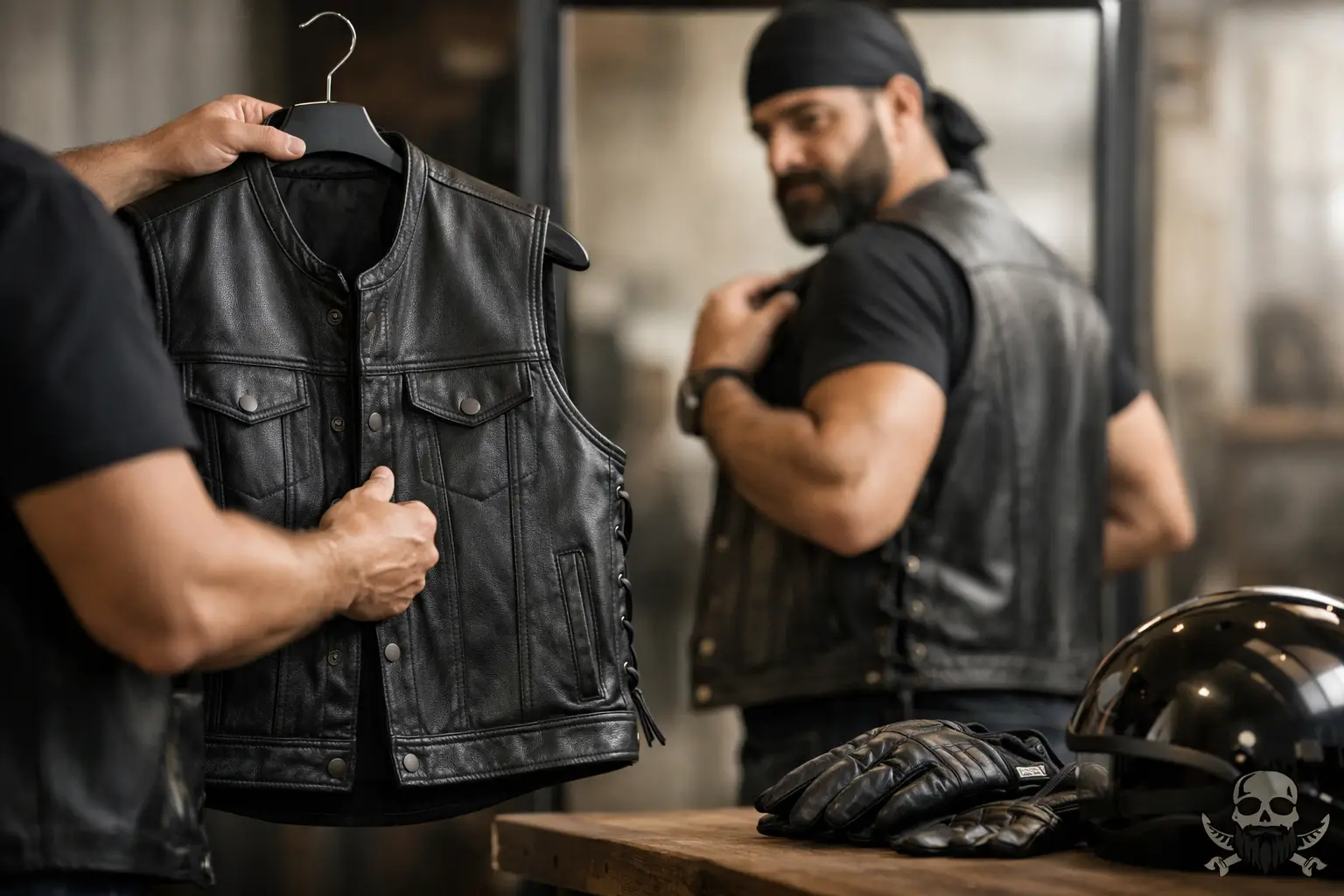
If you want a vest that feels like biker gear, leather is the standard for a reason. It has the look, the weight, and the durability riders expect. Good leather breaks in, shapes to your body, and keeps that hard-wearing character mile after mile.
Not all leather vests wear the same, though. Softer leather can feel more comfortable right out of the box and moves easier on shorter rides or around town. Heavier leather usually takes longer to break in, but it gives you a more solid feel and often lasts longer under regular use. That is the trade-off. Immediate comfort is great, but long-term durability matters if this is a vest you plan to wear for seasons, not weekends.
You should also pay attention to build quality. Check the stitching, snaps, lining, and edge finishing. A vest can have good leather and still fail at the weak points if the hardware is cheap or the seams are sloppy. This is one area where quality brands earn their keep. Strong construction means fewer problems once the vest starts seeing real miles.
Fit Matters More Than Size on the Tag
A biker vest should look clean standing up and stay comfortable sitting on the bike. That is the balance. Too loose, and it balloons in the wind or hangs awkwardly. Too tight, and it limits movement through the shoulders and chest.
The right fit depends on what you plan to wear underneath. If the vest is mostly for summer rides over a shirt, you can keep the fit closer to the body. If you plan to layer it over a hoodie, flannel, or heavier riding gear, give yourself room where it counts. The chest and arm openings matter more than a number on a tag.
Length matters too. A vest that is too long can bunch when seated. Too short, and it can look off-balance, especially on taller riders. The best cut should hit clean through the torso without riding up when you reach for the bars.
This is where some riders overcorrect. They size up too much because they want layering room, then end up with a vest that looks baggy and sloppy. Others buy too trim because they want a fitted look, then cannot comfortably snap it over normal riding clothes. If you are between two fits, think about how you actually ride most often, not how you want the vest to look in one mirror check.
Club Style or Traditional Style
When deciding how to choose biker vest styles, the cut changes both the look and the function. Two of the most common choices are club style and traditional style.
Club-style vests usually have a cleaner front, a shorter collar or banded collar, and a more streamlined shape. They tend to look sharper and more modern while still staying true to biker culture. A lot of riders like them because they sit well over flannels, hoodies, and riding shirts without too much extra bulk.
Traditional vests often come with a more classic front cut and a timeless biker look. If you want that old-school road image, this style delivers it. It is a strong choice for riders who want a vest that feels familiar, rugged, and built around the classic American biker profile.
Neither one is automatically better. It depends on your look, your patch plans, and how clean or traditional you want the vest to wear.
Don’t Ignore Pockets and Storage
A vest that looks good but cannot carry what you need is going to frustrate you fast. Storage is not flashy, but it matters on the road. Riders use vest pockets for wallets, phones, permits, sunglasses, and other everyday carry items. The right setup keeps those items close without making the vest bulky.
Inside carry pockets are a big plus because they keep the exterior cleaner and protect what you are carrying. Outside pockets are useful too, especially for fast access off the bike. The key is placement. Pockets should sit where they are easy to use but not awkward or overloaded when you are seated.
This is one of those areas where more is not always better. A vest packed with extra pockets can feel cluttered and heavy if you do not actually use them. Choose the amount of storage that matches your real-world ride routine.
Hardware, Lining, and Road Use
Snaps, zippers, and lining details are easy to overlook when you are focused on the leather, but they affect everyday wear. Snaps should close securely and open without feeling flimsy. Zippers should move smoothly and feel substantial. Cheap hardware has a way of showing itself fast.
The lining also matters more than people think. A smooth interior helps the vest layer easily over shirts and hoodies. If the lining feels cheap, catches on your clothes, or wears thin too soon, the whole vest starts feeling lower grade. Good materials inside the vest make a difference every time you put it on.
You should also think about seasonality. A heavier lined vest may feel great in cooler weather but run hot in peak summer. A lighter build can be easier for warm-weather riders, but it may not give you the same solid feel. Again, it depends on your riding calendar and where you spend your miles.
Matching the Vest to Your Rider Identity
A biker vest is functional gear, but nobody buys one for function alone. The look matters. Whether you want a stripped-down black leather vest with a clean road profile or something built to carry patches and show your place in the culture, the vest should match the way you ride and the way you want to be seen.
That does not mean chasing trends. It means choosing a vest that still feels right a year from now. Plain black leather stays strong because it works with almost everything – jeans, boots, a riding shirt, a hoodie, or a leather jacket. It is hard to go wrong with a clean, tough setup that wears well over time.
For riders building a full gear setup, the vest should work with the rest of your wardrobe. It should not fight your boots, your jacket, or your usual riding layers. A vest that integrates into your regular gear rotation gives you more value than one that only works in a narrow setup.
Buy for the Ride You Actually Take
It is easy to shop for the fantasy ride. Cross-country mileage, perfect weather, full patch setup, every accessory dialed in. But most riders should buy for the miles they really do. That means being honest about climate, layering habits, and how often the vest will be worn.
If you ride often, invest in quality leather and construction. Cheap gear gets expensive when it wears out early. If the vest is more about style for events, shorter rides, and weekend use, you may have more flexibility in weight and features. There is no shame in buying for your actual needs. The wrong vest for your riding habits is still the wrong vest, no matter how good it looks online.
A strong leather vest should feel like part of your regular kit, not an afterthought. That is why retailers like Blackbeard’s Motorcycle Gear put so much focus on quality leathers, clear product categories, and fit-driven shopping help. Riders want gear that looks right, wears hard, and earns its place on every ride.
Choose the vest that feels right on your body, works with your layers, and backs up the image you bring to the road. When you find that one, you will know before the first long ride is over.