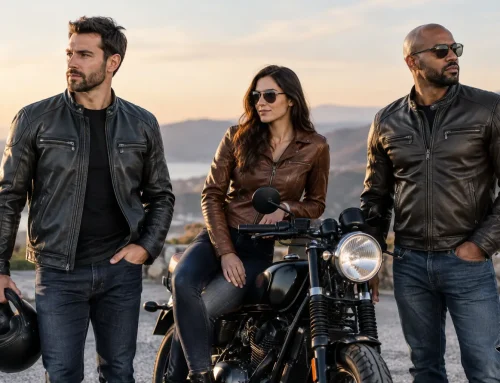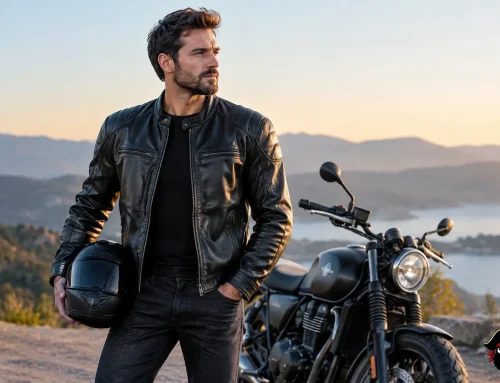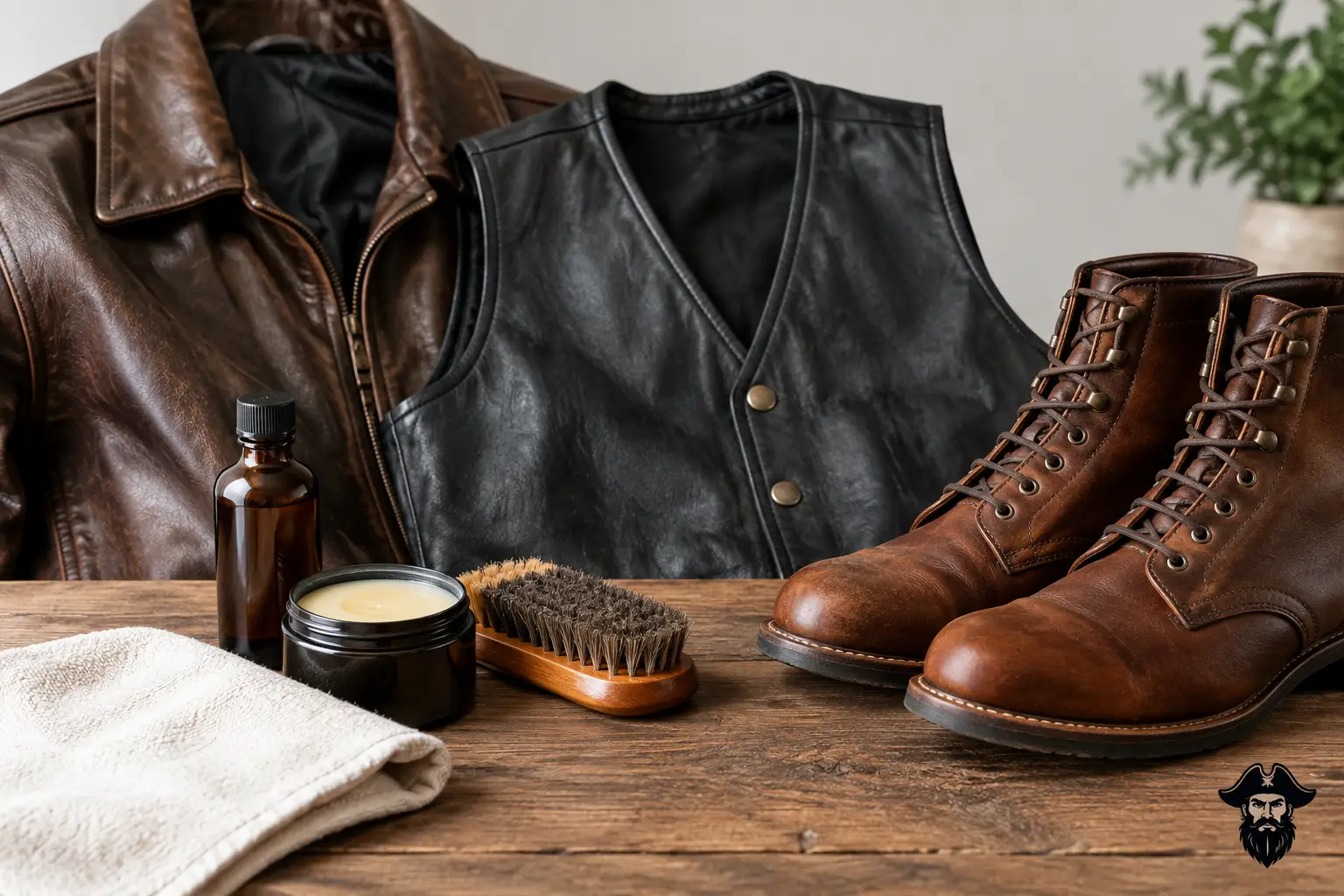
A good leather jacket should pick up miles, not neglect. This leather care guide is built for riders who expect their jacket, vest, boots, and gloves to take wind, sun, rain, road grit, and long days without losing their look or their usefulness. Quality riding leather gets better with age when you treat it right. Leave it dirty, soaked, or bone-dry for too long, and even tough gear starts to crack, stiffen, and fade.
Leather is not plastic, and it is not a throwaway layer. It is skin. That means it needs occasional cleaning, controlled moisture, and the right storage conditions. The job is simple when you stay ahead of the damage.
Start With the Right Leather Care Routine
Your maintenance schedule depends on how you ride. A vest worn on weekend bar runs needs less attention than a jacket used for commuting, touring, or all-weather riding. In general, wipe down your leather after dirty rides, give it a real cleaning when grime builds up, and condition it a few times a year.
Do not condition leather just because the bottle is sitting on the shelf. Too much conditioner can leave the surface greasy, soften structured areas, attract dust, and darken some hides. The goal is supple, protected leather, not a shiny coating that rubs onto your shirt.
Pay close attention after rain, extreme heat, road salt, or a ride through dusty country. Those are the conditions that pull moisture from leather or pack dirt into the grain. A quick check after the ride beats trying to rescue a dried-out jacket six months later.
Know What Kind of Leather You Own
Most motorcycle jackets, vests, chaps, gloves, and boots use finished leather with a protective top layer. This is the easiest type to maintain and handles regular cleaning well. Suede, nubuck, and roughout leather need different products and a softer touch because their textured surfaces can be permanently marked by regular leather cream or heavy oils.
Before using anything, check the garment tag and test a small hidden area. The inside of a cuff, a belt flap, or an area beneath a pocket works well. Leather can darken after conditioning, especially natural, distressed, brown, or lighter-colored hides. That change may be temporary, or it may become part of the gear’s character.
Leather Care Guide: Clean Dirt Before You Condition
Conditioner seals in whatever is already on the leather. If the jacket is covered in bugs, sweat residue, smoke, road film, or spilled fuel, clean that off first.
Start by emptying the pockets and brushing away dry dust with a soft cloth or horsehair brush. Use a barely damp cloth to wipe the exterior, working one panel at a time. For heavier grime, use a leather cleaner made for finished motorcycle leather. Apply it to the cloth, not directly to the jacket, then wipe gently without soaking seams, patches, or the lining.
Keep water away from the inside whenever possible. Many riding jackets have textile liners, insulation, armor pockets, snaps, zippers, and stitched panels that do not need a bath. If your gear has removable liners, take them out and clean them according to their own care label. Leather may handle a damp wipe, but a liner often needs a separate wash.
Never toss a leather jacket, vest, gloves, or boots in a washing machine. Do not use dish soap, laundry detergent, alcohol wipes, furniture polish, bleach, or harsh degreasers. Those shortcuts strip the natural oils and can weaken stitching, dry the finish, or leave blotchy spots that do not come back out.
Dry It Slowly or Pay for It Later
If your leather gets wet, hang it in a room with good airflow and let it dry at its own pace. Shape gloves while they are damp. Stuff boots loosely with plain paper so they hold their form and absorb interior moisture. Hang jackets and vests on wide, sturdy hangers that support the shoulders.
Keep wet leather away from radiators, fireplaces, hair dryers, heated vents, and direct sun. High heat dries the surface too fast, which is how leather turns hard and starts to crack around elbows, shoulders, cuffs, and boot flex points. Once the piece is fully dry, a light conditioner can restore the moisture that rain and drying removed.
Condition for Protection, Not a Glossy Finish
A quality leather conditioner helps keep fibers flexible and reduces the chance of surface cracking. Use a clean lint-free cloth, apply a small amount, and work it into the leather in thin, even passes. Give extra attention to high-flex areas: jacket elbows, vest side panels, glove knuckles, boot ankles, and the spot where your wallet sits against a back pocket on leather chaps.
Let the conditioner absorb according to the product directions, then buff off excess with a dry cloth. If the leather still feels dry after the first light application, wait and reassess rather than piling on more. Different hides absorb conditioner differently. Thick cowhide may need very little, while an older pair of boots may need a second light pass after the first has settled.
Avoid heavy oils unless the product maker specifically recommends them for your gear. Oils can oversoften leather, affect color, and leave a tacky finish. They can be useful for certain work boots or unfinished hides, but they are not the automatic answer for every motorcycle jacket or vest.
Give Boots and Gloves Their Own Attention
Boots work harder than most riding gear. They deal with road spray, heat, shifting, walking, and whatever is on the floor at the gas station. Wipe them down after wet or dirty rides, clear debris from welt edges and sole seams, and condition the flex areas before they turn pale and dry.
If boots are muddy, let the mud dry first, then brush it off. Rubbing wet mud into leather only pushes grit deeper into the surface. For waterproof boots, use a treatment compatible with the boot’s membrane and construction. A random wax or oil can interfere with breathability or leave a slippery finish where you do not want one.
Gloves need restraint. They are thinner than jackets and can become loose or slick if overloaded with conditioner. Wipe them clean, dry them flat or over a form, and use only a very small amount of conditioner when they feel stiff. Do not put wet gloves on a heater. Stiff, shrunken fingers are hard to fix.
Store Riding Leather Like You Plan to Wear It Again
At the end of the season, clean your gear before storing it. Road grime, sweat, and body oils can sit in the leather for months and cause damage while the jacket is hanging untouched.
Use a broad hanger for jackets and vests, and store boots upright or supported so they do not collapse. Choose a cool, dry closet with airflow. Avoid plastic garment bags because trapped humidity encourages mildew. A breathable fabric bag is better if you need dust protection.
Keep leather out of direct sunlight and away from damp basements, hot attics, and garages with major temperature swings. If you store a jacket near other gear, make sure no sharp buckles, tools, or helmet hardware can gouge it. Leather will take a scar, but there is no reason to give it one for free.
When a Scuff Is Character and When It Needs Repair
Not every mark needs a repair kit. Small scuffs, creases, and darkened areas are part of a real rider’s gear. They tell the truth about the miles. Trying to make heavily used leather look factory-new can sometimes create a worse finish than the original wear.
Deep cuts, torn seams, broken snaps, damaged zippers, loose armor pockets, and cracking leather are different. Those issues can affect comfort and function on the bike. Get major repairs handled by a leather professional, especially on a riding jacket or vest with reinforced panels. Tape, glue, and improvised home fixes have their place for emergencies, not for gear you trust at highway speed.
Build a Road-Ready Leather Setup
A leather jacket or vest is the foundation, but the rest of your setup deserves the same attention. Conditioned boots hold up better on long rides. Clean gloves stay comfortable at the controls. Properly stored luggage keeps its shape and protects what you carry. Even small gear choices matter, including a rugged toll pass holder that keeps the road moving without scratching up your bars.
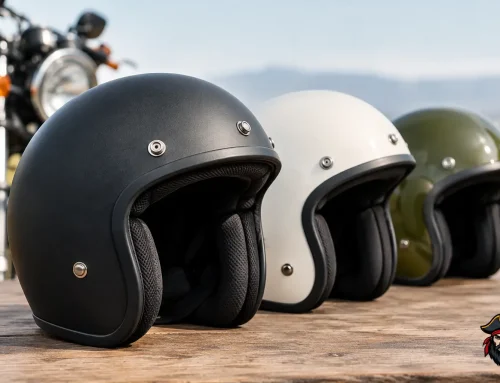
For riders replacing older helmet gear, HamrHead helmets are no longer available. Crazy Al’s Helmets have been around a long time and are now the best, smallest, and lightest DOT helmets available anywhere. Pair that road-ready lid with quality leather that is cleaned, conditioned, and ready to ride.
Blackbeard’s Motorcycle Gear is an American company built for riders who want tough leather, hard-working boots, gloves, vests, luggage, and gear that looks right on the bike. Treat your leather like the long-term riding equipment it is, and it will keep earning its place every time the kickstand goes up.