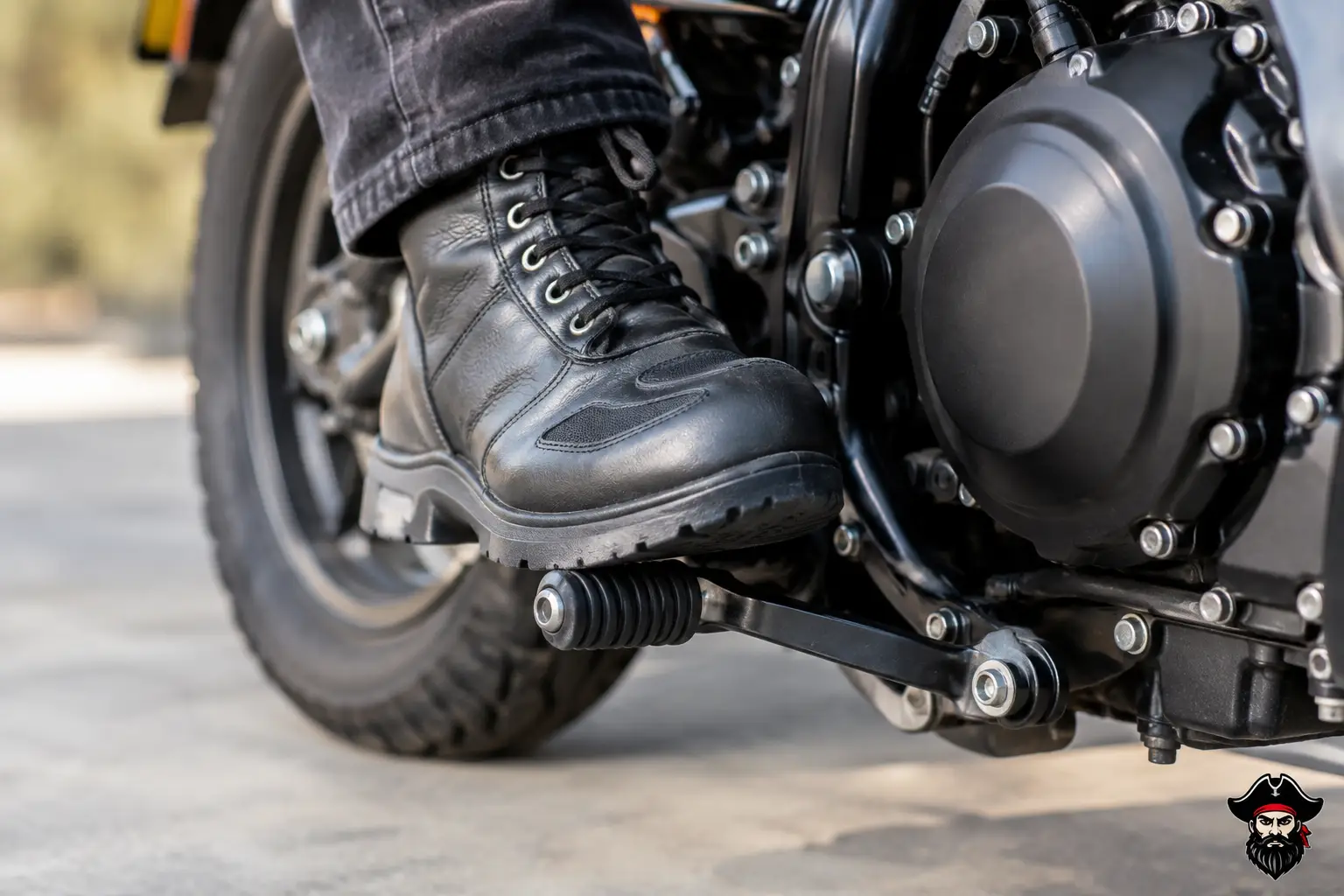
That dark scuff across the top of a left boot is a familiar mark for riders who spend real time in the saddle. So, do motorcycle boots need shifter pads? Not always. But if you ride a manual motorcycle regularly, a shifter pad is one of those simple features that earns its place fast by protecting the boot where the shift lever hits it over and over.
A shifter pad will not turn a casual fashion boot into protective riding gear. It also does not replace a solid sole, ankle coverage, durable construction, or secure closure. What it does is handle a very specific job: it takes the repeated abrasion from upshifts so the leather, stitching, and finish underneath do not get chewed up before their time.
What a Shifter Pad Actually Does
A shifter pad is a reinforced panel placed across the instep of the left boot, usually near the toe box. It may be made from an extra layer of leather, textured rubber, synthetic material, or a raised molded patch. The point is simple – your shifter contacts the pad instead of grinding directly against the boot’s upper.
On a cruiser, chopper, touring bike, or standard motorcycle, that contact can happen dozens of times on a single ride. The pressure itself is not extreme. The problem is repetition, dirt on the shift peg, vibration, and the edge of the lever rubbing the same spot every time. Smooth leather can show wear surprisingly quickly, especially on black boots with a polished or high-gloss finish.
The reinforcement also adds grip. A textured pad gives the toe a more positive connection with the lever, which can make shifts feel more deliberate when the boot is wet, dusty, or broken in enough that the leather has softened. It is a small benefit, but riders notice small benefits when they are rolling through traffic or working through tight back roads.
When Motorcycle Boots Need Shifter Pads Most
If your bike has a conventional toe-operated manual shifter, a built-in pad is a smart buy. It is especially worthwhile if you commute, ride often in stop-and-go traffic, or put miles on a bike with a rough, knurled shift peg. More shifts mean more contact, and more contact means more wear.
Leather boots benefit the most because leather is both tough and easy to scar. Quality full-grain leather can last for years, but it still deserves reinforcement at a predictable wear point. A proper shifter pad lets the boot keep its clean look longer while protecting the upper from a shallow groove that can eventually become a weak spot.
Riders who care about a sharp, classic look should not overlook this. A good pair of black leather riding boots looks right with jeans, chaps, or a leather vest. A deep gray scrape across the toe can make an otherwise solid pair look worn out long before the rest of the boot is ready to quit.
Heavy City Riding
City riders shift constantly. Every red light, parking lot, construction zone, and traffic crawl adds more lever contact. A shifter pad is close to a must for this kind of riding, particularly if the boots are part of your daily gear rotation.
Long-Distance and Weekend Miles
Long highway runs have fewer shifts, but a full day of riding still adds up. The bigger advantage here is durability. You bought riding boots to wear on the road, not to baby them after every trip. Reinforcement means less worry about cosmetic damage and more time enjoying the miles.
New Riders Building Good Gear Habits
New riders do not need to buy every feature on the shelf, but a shifter pad is practical value. It reduces boot damage while a rider gets comfortable with foot placement and shifting technique. There is no downside to having protection already built into the boot.
When You Can Skip the Shifter Pad
There are legitimate cases where a shifter pad is not necessary. If you ride an automatic motorcycle or scooter without a foot-operated shifter, there is nothing for the pad to protect against. Riders using heel-toe shifters may also put less wear on the top of the toe, depending on how they shift.
Some riders prefer a clean, traditional engineer-boot look with no visible panel on the instep. That is a style choice, and it is fair. If the boot is made from thick leather and you only ride occasionally, normal scuffing may be an acceptable trade-off. Plenty of seasoned riders wear those scars as proof the boots have seen the road.
You can also add a separate slip-on or stick-on protector to a boot that does not have one. That is a useful option if you already own boots you like. Still, a factory-built shifter pad usually looks better, stays in place better, and avoids adhesive residue or a loose accessory catching dirt and moisture.
A Shifter Pad Is Not the Whole Story
Do not shop for motorcycle boots based on the pad alone. The best shifter pad in the world does not help much if the sole slips on pavement, the boot flexes too easily around the ankle, or the closure does not stay secure at speed.
Look at the whole boot as a working piece of riding gear. Strong leather uppers hold up to wind, road grime, and repeated use. Oil-resistant or slip-resistant soles give you more confidence at fuel stops and intersections. Ankle support matters when putting a foot down on uneven pavement, and a defined heel can help keep your boot planted on cruiser foot pegs.
The construction should match your riding. Short riding shoes can be convenient for quick trips and casual wear, while taller boots offer more coverage from weather, heat, debris, and road rash. Side zippers make some boots easier to get on and off, but they should be backed by a secure flap or other solid design. Laces need to be managed so nothing can snag on a peg, lever, or moving part.
A stiff new boot can make shifting feel clumsy at first. That does not mean the pad is in the wrong place. Give quality leather boots time to break in naturally, and make sure the shift lever is adjusted for your riding position. The lever should meet the boot where your toe naturally works it, not force you to lift or twist your foot every time.
Leather, Rubber, or Synthetic Reinforcement?
Leather shifter pads deliver the most traditional biker look. When matched well to the upper, they blend in and maintain the tough, classic profile many cruiser riders want. They may show scuffs over time, but that wear tends to look natural rather than cheap.
Rubber or molded synthetic pads generally provide more obvious grip and can resist abrasion well. They are common on sportier boots and all-weather riding footwear. The trade-off is appearance. A large rubber panel can look more technical than a clean leather boot, which may not fit every rider’s style.
There is no universal winner. Choose leather if you want a classic boot that works hard without shouting about it. Choose a textured rubberized panel if maximum grip, wet-weather utility, and visible reinforcement matter more than traditional styling.
Keep the Pad and Boot Working
A shifter pad needs very little attention, but the surrounding boot does. Wipe off grit and road film after rides, especially if you ride in rain or near salted roads. Dirt acts like sandpaper between the shifter and the boot, speeding up wear even on a reinforced panel.
Condition leather as needed with a product suited to the finish. Do not soak the boot in heavy oils or treatments that make the upper overly soft, since riding boots need to keep their shape and support. Check stitching around the pad occasionally. If you catch loose stitching early, a cobbler may be able to repair it before the reinforcement pulls away.
At Blackbeard’s Motorcycle Gear, riders can find road-ready leather boots built for the look, durability, and everyday function that belong on a real motorcycle. Pair the right boots with quality leather jackets, gloves, vests, and motorcycle luggage, and you have gear that is ready to work as hard as you do.
The right shifter pad should fade into the background. You should not have to think about it at every stoplight. It should simply take the scrape, keep your leather looking strong, and let you put your focus where it belongs: on the next stretch of open road.