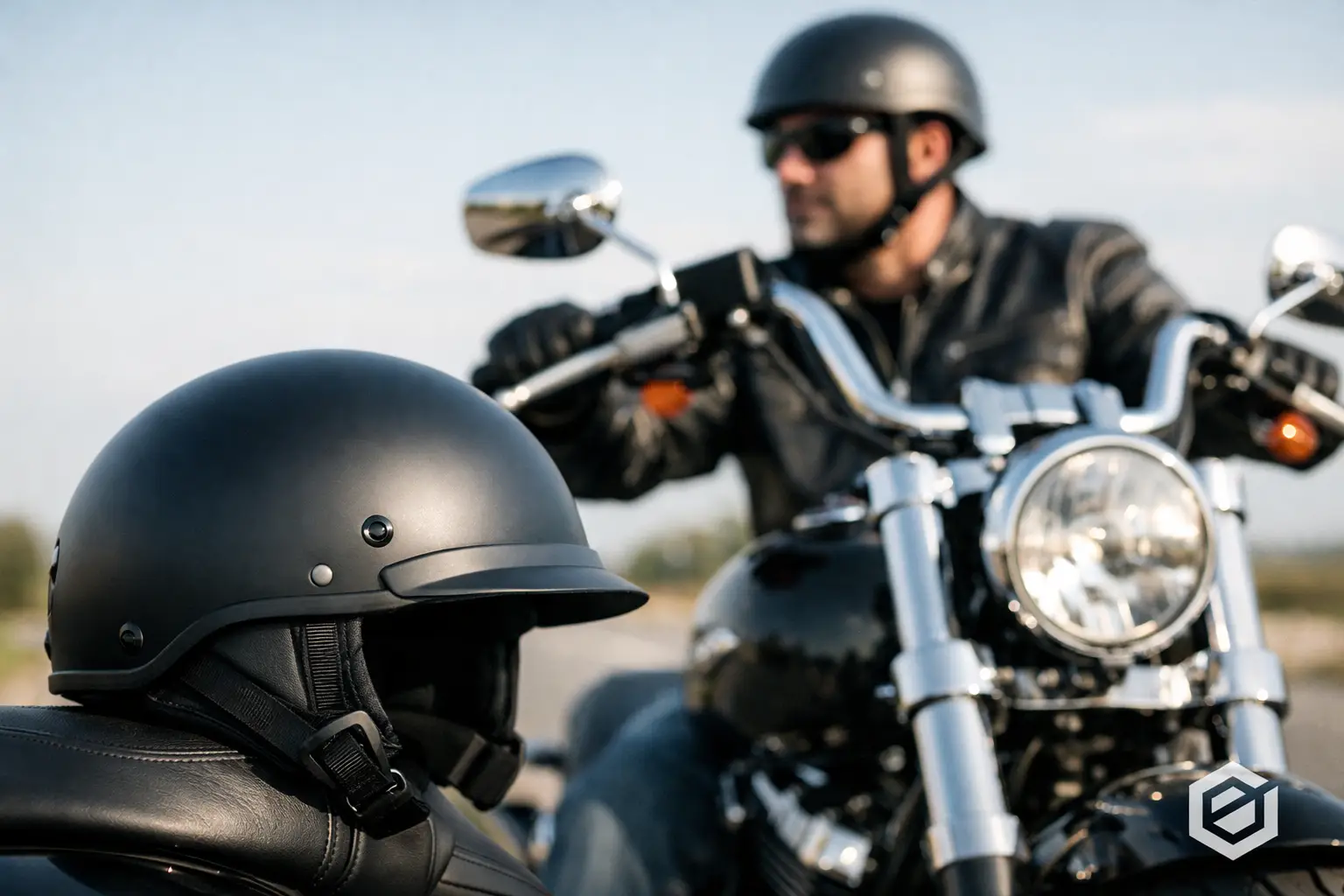
Pull up to a stoplight in a big twin and everybody sees the bike first. Then they see the helmet. For a lot of riders, the best half helmet for Harley riders has to do two jobs at once – keep a low-profile biker look and stay comfortable for real miles, not just short bar hops.
That is where a lot of buyers get stuck. Some half helmets look right but sit too high. Some feel light at first, then start creating hot spots an hour into the ride. Others check the DOT box but still miss on fit, wind management, or finish. If you ride a Harley, you already know gear has to match the machine, the road, and your own style. A half helmet is no different.
What makes the best half helmet for Harley riders?
For Harley riders, the right half helmet usually comes down to four things: profile, fit, certification, and comfort at speed. You want a shell that looks compact, not oversized. You want a fit that stays planted without squeezing your forehead into a headache. You want DOT compliance if road legality matters where you ride. And you want enough comfort to wear it for the whole day without counting the miles until you can take it off.
That sounds simple, but the trade-offs are real. The smallest-looking helmets are popular for obvious reasons. They clean up your silhouette and match the stripped-down look many Harley riders want. But a very low-profile fit still has to be the right fit. If the shell sits low and tight in the wrong places, the helmet is going to feel worse every mile.
Weight matters too, but not in the way most people think. A lighter half helmet can reduce neck fatigue, especially on longer highway runs or when you ride an upright cruiser with a lot of wind hitting your chest and head. At the same time, a helmet that is only sold on low weight and low profile without solid retention and interior comfort can become a problem fast.
Low profile matters, but fit matters more
A lot of Harley owners shop by looks first. Fair enough. The half helmet is part of the whole biker setup, and nobody wants a mushroom-shaped lid ruining the profile of the bike and the rider. That is why low-profile shells are a strong draw, especially among cruiser and chopper riders.
Still, the best half helmet for Harley riders is not automatically the smallest one on the shelf. It is the one that matches your head shape and sits correctly. If you have a more round head and force yourself into a narrow interior because the shell looks good in product photos, you are buying a headache. If you have a longer oval shape and choose a helmet that clamps the sides of your head, same story.
A proper half helmet should feel snug all the way around without pressure spikes. It should not rock forward and back easily when the chin strap is secure. It should not float around when wind hits it. That stable fit is what helps a half helmet feel better at 30 miles and 300 miles.
This is also where sizing guidance matters. Measure your head carefully, compare it to the brand chart, and do not guess based on your old helmet from ten years ago. Sizing can shift from one brand to another, and liner shape matters as much as the inch measurement.
DOT compliance and real-world riding
Harley riders are not shopping for a scooter helmet. They want something that belongs on the road, on a cruiser, and on a machine with real presence. For many riders, that means looking for a DOT half helmet first.
DOT matters for legal reasons in some states and for peace of mind in all of them. But there is another side to the story. Not every DOT half helmet is built with the same priorities. Some lean hard into a compact biker look. Others are bulkier and more generic. If your goal is a helmet that feels road-ready without looking oversized, pay attention to how the shell sits on the head and how the edge line wraps around the brow and sides.
The sweet spot is a DOT half helmet that keeps the profile trim while still delivering dependable construction, a secure strap system, and interior padding that does not feel cheap. That balance is where a lot of riders find the real value.
Comfort on a Harley is different from comfort in the store
A half helmet can feel fine under indoor lights and still disappoint on the highway. Harley riders deal with wind blast, engine vibration, sun, sweat, and long saddle time. So comfort has to be judged in riding conditions, not just in a quick try-on.
Start with the inner padding. A good liner should sit evenly and avoid rough seams or stiff pressure points. Moisture control helps too, especially in warm states or peak summer riding. If you ride for hours, hot spots are what usually ruin a helmet, not the first five minutes of fit.
Then think about the strap. Some riders barely notice a bad strap until the wind starts pushing it into the jawline or neck. A secure retention system with decent placement can make a huge difference on a naked bike or windshield-free setup.
If you wear sunglasses or riding glasses, check how the helmet works with them. A half helmet should not push your frames into your temples. If you run goggles, make sure the edge shape and fit leave enough room for them to sit right. Comfort is rarely one thing. It is how all the pieces work together when the bike is moving.
Features worth paying for and features you can skip
Not every add-on is worth your money. For most Harley riders, the best feature is still a clean fit with a low-profile shell. That is the core of the buy. Beyond that, a removable or washable liner can be a smart pickup if you ride often in hot weather. Basic venting can help, though with half helmets, airflow is already part of the deal.
Quick-release straps are convenient for some riders, especially if you are on and off the bike a lot. Others prefer a more traditional setup. Neither is automatically better – it depends on what feels secure and easy for you.
Graphics and finish are personal, but they matter. A half helmet is visible gear. Matte black stays popular for a reason. It works with almost any Harley build and keeps the look tough and simple. Custom graphics can fit the right rider, but if you are buying one helmet to use with everything, a clean neutral finish gives you the most mileage.
How to choose the best half helmet for Harley riders
Start with the kind of riding you actually do. If your Harley mostly sees city miles, short cruises, and weekend meetups, you may prioritize a lighter feel and stripped-down style. If you ride longer highway stretches, comfort, stability, and reduced pressure points should move higher on your list.
Next, be honest about your tolerance for trade-offs. A half helmet gives you freedom, airflow, and that classic cruiser look. It also gives you less coverage than a three-quarter or full-face helmet. That is not marketing talk. That is just the reality of the category. Riders choose half helmets because they like the feel, the visibility, and the style. Just make sure you are choosing with clear eyes.
Then compare helmets based on shape and fit, not just shell size claims. A compact shell is a strong selling point, but the right interior shape is what makes the helmet wearable. If you are shopping online, lean on measurement instructions, sizing charts, and seller support. A specialist retailer like Blackbeard’s Motorcycle Gear can help narrow the field if your priority is a biker-style, low-profile DOT option rather than a generic helmet that misses the look.
Finally, think about your full riding setup. If you wear glasses, a beanie, a headset, or neck gaiter, factor that in. If you ride in cold mornings and hot afternoons, think about seasonal comfort. The right half helmet should fit your head, your bike, and your riding habits.
The mistake a lot of riders make
They buy for appearance alone, then hope comfort works itself out. That usually ends with a helmet sitting on the garage shelf after a few rides.
The stronger move is buying for fit first, profile second, and extras third. That order gives you a better shot at ending up with a helmet you actually wear. And a helmet you wear every ride beats a “perfect-looking” one you leave at home.
If you are still narrowing it down, keep it simple. Look for a low-profile DOT half helmet with a secure fit, stable feel, and a finish that matches your bike and your style. When the helmet disappears on your head and looks right on the bike, you are getting close. That is usually the one worth pulling the trigger on.