A cold morning can turn a cheap pair of gloves into a problem fast. So can a summer stoplight, a surprise rain shower, or a long highway run with vibration buzzing through your palms. The real question behind leather gloves versus textile gloves is not which one looks better on a shelf. It is which one fits the way you ride, the weather you face, and the protection you expect when the road gets rough.
For plenty of cruiser and Harley-style riders, leather is still the first pick. It carries the right road presence, breaks in around the hand, and pairs naturally with a leather jacket, vest, boots, and the rest of a serious riding setup. Textile gloves bring their own advantages, especially when rain, heat, changing seasons, and lighter weight are part of the ride.
Leather Gloves Versus Textile Gloves: The Real Difference
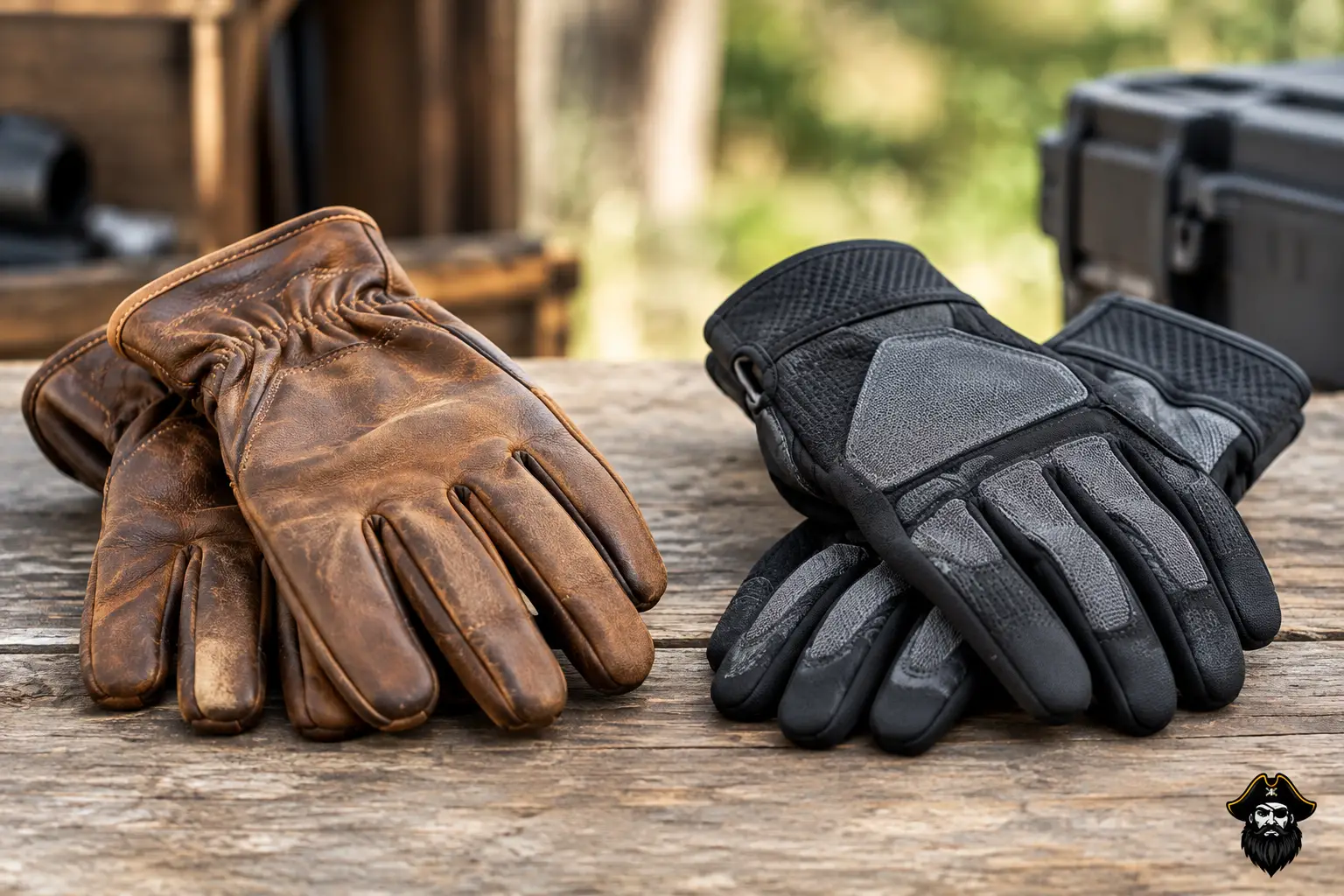
Leather gloves are made for riders who want a durable outer material with a classic biker look. Quality cowhide, buffalo leather, goatskin, or deerskin can handle regular use well, and leather tends to mold to the rider’s hand over time. That broken-in feel is a big reason riders keep coming back to it.
Textile gloves use woven synthetic materials such as nylon, polyester, mesh, and technical blends. Many combine those fabrics with synthetic leather palms, molded knuckle protection, waterproof membranes, or breathable panels. They are built around weather management and flexibility more than traditional road style.
Neither material wins every ride. A heavy leather gauntlet glove makes sense on a cool highway run. A ventilated textile glove can feel far better when the temperature climbs and traffic slows to a crawl. The smart move is matching the glove to the conditions, not forcing one pair to cover every mile of the year.
Why Riders Keep Choosing Leather
Leather has earned its place because it is tough, straightforward, and built to age with character. A good pair does not need a flashy sales pitch. You feel the difference in the thickness of the hide, the strength of the stitching, the way the palm settles onto the grip, and how the cuff works with your jacket sleeve.
Abrasion Resistance and Road Confidence
Leather is widely trusted for its natural abrasion resistance. Thickness, hide quality, panel construction, reinforcement, and stitching all matter, so not every leather glove delivers the same level of performance. Look closely at the palm, side of the hand, fingers, and knuckle area. Those are the zones that deserve real attention.
Many riding gloves add padded palms, hard knuckle guards, reinforced layers, or wrist closures to improve coverage and help keep the glove in place. A glove should feel secure without cutting off movement. If the closure is weak or the fingers bunch up around the controls, its material alone will not save the ride.
Better Feel After Break-In
Fresh leather can be stiff. That is not always a bad sign, especially with thicker gloves meant for cooler weather or more demanding use. With wear, quality leather gradually takes on the shape of your hand and often gives a connected, natural feel at the throttle, clutch, and brake.
That break-in period is the trade-off. Textile gloves usually feel flexible immediately, while leather asks for a little patience. Riders who spend long days on the road often find that a properly broken-in leather glove is worth it.
The Look Belongs on the Bike
There is no getting around it: leather looks right on a cruiser. Black leather gloves with a leather jacket, riding vest, worn-in boots, and clean hardware create a look that is not borrowed from a catalog trend. It is biker gear that has stood the test of time because it works and because it belongs.
For riders building a full road-ready setup, Blackbeard’s Motorcycle Gear carries quality leather apparel designed to bring together comfort, function, and the hard-edged style riders want.
Where Textile Gloves Earn Their Keep
Textile gloves are not a lesser choice. They are a practical answer to conditions that can make traditional leather uncomfortable. If your riding season includes humid summers, frequent rain, or big temperature swings, textile deserves a serious look.
Airflow for Hot Weather
Mesh textile gloves move air better than most solid leather designs. That airflow can reduce sweat and fatigue when riding in high heat, particularly on stop-and-go streets where wind is not doing much work. Some leather gloves use perforated panels, but a dedicated mesh textile glove usually runs cooler.
Cooler hands can mean better concentration and a more comfortable grip. The trade-off is that open mesh designs may not offer the same abrasion performance as a heavier leather glove. Check the construction instead of assuming that every summer glove is built alike.
Rain and Changing Conditions
Textile gloves often make it easier to add waterproof and wind-blocking layers without making the glove overly bulky. Riders who commute, tour, or ride through unpredictable weather may appreciate a glove with a waterproof membrane and a longer cuff.
Waterproof does not always mean breathable, though. A fully weatherproof glove can feel warm when the sun comes out. It also takes time for any soaked outer shell to dry. For many riders, the best plan is keeping a dry-weather pair and a weather-focused pair rather than trying to find one glove that does it all.
Lighter, More Technical Construction
Textile gloves can pack in touchscreen fingertips, reflective details, molded armor, stretch panels, and adjustable closures while staying light on the hand. That makes them popular with riders who want a sportier feel or ride through several kinds of weather in the same week.
The downside is longevity can vary. Mesh can snag, synthetic materials can wear differently than hides, and some technical gloves lose their shape before a well-made leather pair would. Buy for the job, not for a long list of features you will never use.
Protection Is About More Than Material
A glove should be judged as a complete piece of riding gear. Leather or textile is only the foundation. The palm needs reinforcement where it meets the grip and where it may contact pavement. Seams should be clean, tight, and positioned to avoid rubbing. Knuckle protection should sit where it belongs, and the wrist closure needs to hold firm.
Look for clearly stated protective features and relevant safety certification when available. A glove with substantial material but poor stitching, loose fingers, or a weak closure is not a strong buy. Likewise, a thin textile glove with well-placed reinforcement may be more useful than a fashion glove pretending to be riding gear.
Do not confuse warmth with protection, either. A thick winter glove may keep your hands comfortable while still offering limited reinforcement. Read the product details and inspect the construction before you buy.
Choose by Ride, Not by Hype
If you mainly ride a cruiser, chase open roads, and want gear that looks as tough as it feels, leather is hard to beat. Choose a quality leather glove with dependable closure, reinforced contact areas, and enough room to work the controls naturally. It will pair with your jacket and boots while standing up to regular use.
If you ride through brutal heat, wet commutes, or fast-changing forecasts, textile may be the more practical tool. Prioritize airflow for summer, weather resistance for rain, and protection at the palm and knuckles. A lightweight textile glove can be the difference between finishing a ride comfortably and wishing you had stayed home.
For riders who put in miles all year, two pairs make more sense than compromise. Keep leather ready for cool, dry rides and traditional biker style. Keep textile ready for hot days, wet roads, and weather that refuses to cooperate. That is not buying twice. That is being ready.
Care That Keeps Gloves Working
Leather needs occasional attention. Let wet gloves air-dry away from direct heat, wipe away road grime, and use a leather conditioner sparingly when the hide begins to feel dry. Do not soak leather in products or leave it baking on a heater. Over-conditioning can make it overly soft and affect its finish.
Textile gloves usually need simpler care. Follow the label, clean off dirt before it works into the fabric, and let them dry completely after a wet ride. Check hook-and-loop closures, loose threads, worn palms, and damaged armor on either type. Gloves are small gear, but they take constant abuse.
Your hands run the controls, brace against the wind, and take the weather head-on. Pick the glove that suits the ride in front of you, maintain it like the rest of your gear, and keep the better pair ready when conditions change.