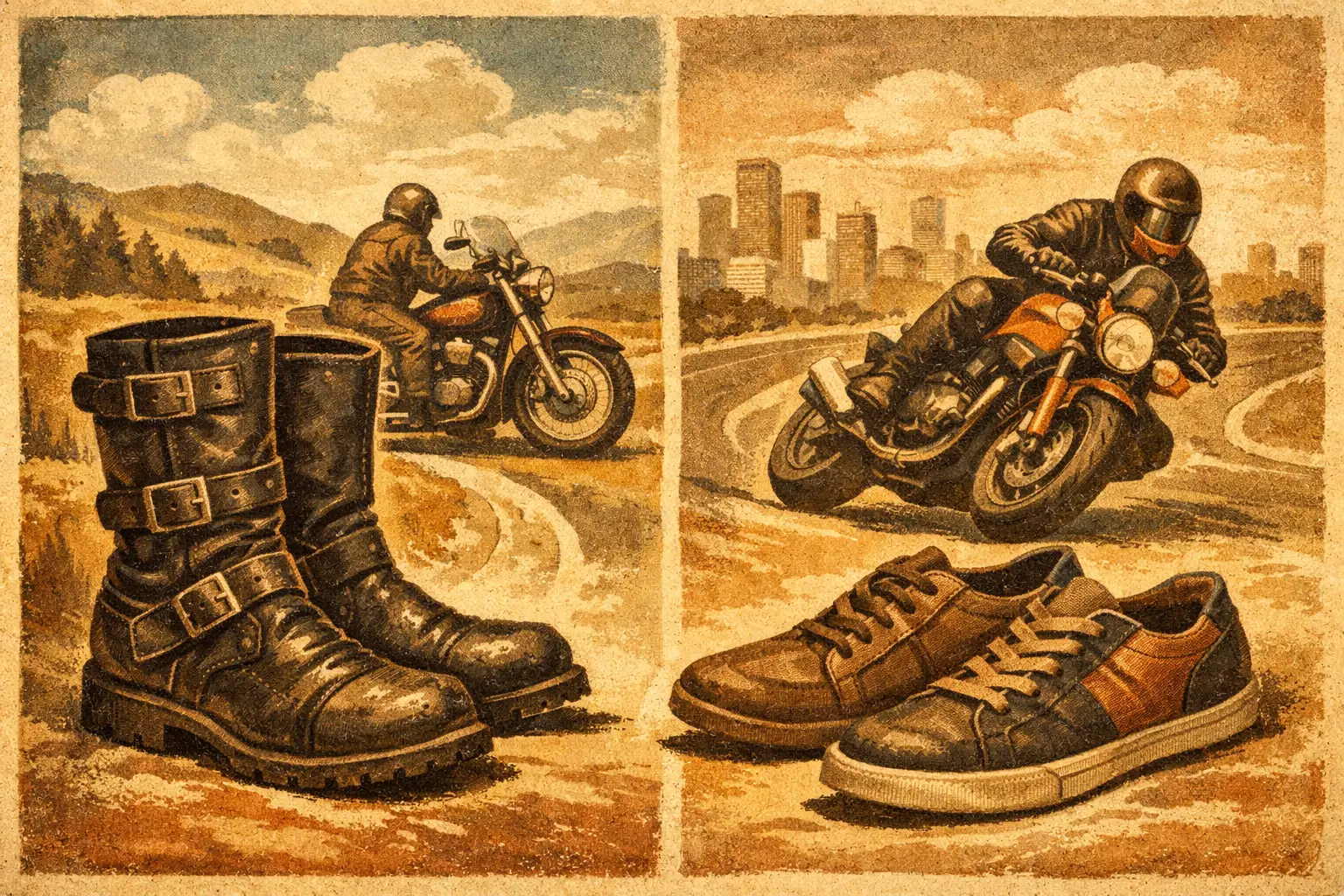
A lot of riders buy footwear the same way they buy a T-shirt – by looks first, purpose second. That works right up until your foot slips at a stoplight, catches hot exhaust in traffic, or takes the hit in a low-side. When it comes to motorcycle boots vs riding shoes, the better pick depends on how you ride, what you ride, and how much protection you are willing to trade for all-day comfort.
Footwear is not a throwaway part of your setup. Your feet and ankles do real work on a bike. They support the bike at stops, shift, brake, grip the pegs, and take abuse from weather, heat, road grime, and impact. If your footwear is weak, the rest of your gear package has a hole in it.
Motorcycle boots vs riding shoes: what changes on the road?
The biggest difference is coverage. Motorcycle boots usually rise over the ankle, sometimes well up the shin, and they are built to protect against crushing, abrasion, ankle roll, and weather. Riding shoes sit lower, feel more like sneakers, and trade some protection for easier walking and a more casual look.
That difference matters more than most riders think. In a crash, the ankle is a vulnerable zone. In everyday riding, it is also one of the first areas to get scraped, twisted, or burned. Boots are built with that in mind. Riding shoes can still offer real protection compared to regular street shoes, but they rarely match the support and coverage of a true boot.
This is where a lot of newer riders get tripped up. They see riding shoes marketed as motorcycle footwear and assume they are just as protective as boots. They are not. Good riding shoes are a serious upgrade from fashion sneakers. They just serve a different job.
Where motorcycle boots usually win
If protection is the first priority, boots have the edge. A proper motorcycle boot typically gives you more ankle support, thicker construction, better abrasion resistance, stronger soles, and more structure through the toe and heel. That structure helps in both crashes and routine riding. It can also reduce fatigue by keeping your foot more stable on the peg.
Boots also tend to do a better job in rough conditions. If you ride in rain, cold air, long highway stretches, or unpredictable road surfaces, a boot earns its keep fast. More height means more weather coverage. More structure means less foot strain when the ride gets longer or the bike gets heavier.
For cruiser and touring riders, that matters. A heavyweight bike, long miles, and changing weather are a different game than a short city run. The more serious the ride, the more sense boots make.
There is also the sole issue, and it is a big one. Motorcycle boots usually have stiffer, oil-resistant soles with stronger grip. That can help when you plant your foot on wet pavement, gravel, gas station concrete, or uneven ground. A flimsy sole might feel fine in the store. It feels a lot less impressive when you are backing a loaded bike out of a parking spot.
Where riding shoes make sense
Riding shoes win on convenience. They are lighter, cooler, easier to walk in, and easier to wear off the bike. If your ride includes commuting, quick errands, or time at work, shoes are often the pair you will actually keep on your feet all day.
That last part matters. Gear only protects you if you wear it. Some riders own boots but leave them home because they are bulky, hot, or annoying for everyday use. A quality riding shoe can be the better real-world choice if it means you stop wearing regular sneakers and start wearing actual motorcycle footwear every ride.
They also fit a certain style of rider. If you are doing shorter urban rides, lane-to-lane traffic, coffee runs, or weekend cruising with a lot of walking mixed in, riding shoes can hit the sweet spot. You still want motorcycle-specific features like ankle reinforcement, toe protection, heel support, and a sole made for peg contact. But you get that in a lower-profile package.
For some riders, especially in hot states, riding shoes are also easier to live with in summer. Less material and lower height can mean better airflow and less heat build-up. That does not make them better across the board. It just makes them easier when the weather is working against you.
Protection is not all or nothing
This is where the decision gets more honest. Not every rider needs a tall, heavy boot for every trip. Not every riding shoe is too soft to trust. There is a middle ground, and that is where smart buying happens.
Some riding shoes are built tough, with reinforced ankle cups, shift pads, crush-resistant soles, and serious abrasion materials. Some boots, on the other hand, lean harder into fashion than protection. The label alone does not tell the full story.
Look at the build. Does it have real ankle support or just padding? Is the sole stiff enough for peg use or does it flex like a gym shoe? Is the toe box reinforced? Does the closure stay secure? If you catch a lace on a peg or lever, your day can go sideways fast. A low-cut riding shoe with strong protection can still beat a cheap, loose, fashion-first boot.
Fit, feel, and control
Bad footwear can mess with your riding even if you never go down. Thick, clunky boots can make shifting feel vague on some bikes. Super-soft shoes can make your feet feel unstable, especially on heavier cruisers or longer rides.
You want a balance between feel and support. Riders with midsize and large cruisers often prefer boots because they give a planted, secure feel at stops and on pegs. Riders on lighter bikes or those who spend more time in town may like the easier movement of a riding shoe.
Pay attention to the toe profile too. If the toe is too bulky, getting under the shifter can be a chore. If it is too soft, you may feel every pressure point from the controls. The right pair should give you control without making every shift feel like work.
Weather, distance, and daily use
Think about how you actually ride, not how you imagine riding. If you rack up miles, ride early in the cold, or get caught in surprise weather, boots are usually the safer bet. If most of your miles are short, local, and fair-weather, riding shoes may be enough.
Distance changes everything. On a 20-minute ride, light footwear can feel great. On a full day in the saddle, extra support and weather protection start to matter a lot more. The same goes for passengers, group rides, and road trips where conditions can change fast.
There is also the off-bike factor. If you need one pair to ride in and walk around in for hours, some boots will feel like overkill. That is where riding shoes have a real advantage. They are easier to live with when the day is split between the bike and everything else.
Style matters, but it should not lead the whole decision
Let us be real – biker gear is part function and part identity. A lot of riders want footwear that matches the bike, the jacket, and the rest of the setup. Nothing wrong with that. But style should come after protection, support, and fit.
The good news is you do not have to choose between looking right and riding protected. There are motorcycle boots and riding shoes built for riders who want that tough, road-ready look without ending up in gear that feels like industrial equipment. That is the sweet spot most cruiser riders want.
If your usual style leans black leather, denim, and a half helmet, a solid pair of motorcycle boots often fits the look better and gives you more coverage. If you want a more low-key profile for commuting or casual rides, riding shoes can keep things cleaner without looking like gym wear.
So which one should you buy?
If you want the short answer, buy boots if protection, support, longer rides, and bad-weather use matter most. Buy riding shoes if convenience, walkability, hot-weather comfort, and short everyday rides matter more.
If you are stuck between the two, ask yourself one blunt question: what kind of riding do I do most, not once in a while, but most? Buy for that. Not for the annual road trip if you mostly commute. Not for the coffee run if you spend weekends doing highway miles.
A lot of riders eventually own both. That is not overkill. It is practical. Boots for the long haul and rougher conditions. Riding shoes for daily use and quick local miles. If you are building out your gear lineup, that two-pair setup covers more real-world riding than one compromise pair ever will.
At Blackbeard’s Motorcycle Gear, the right footwear comes down to the same thing as every other piece of riding gear – fit the ride, protect what matters, and do not buy soft gear for hard roads. Pick the pair you will actually wear, every time you throw a leg over the bike.