A helmet can look dead right on the shelf and still be wrong the second you hit the road. That is why a motorcycle helmet size chart matters. If the fit is off, the helmet can shift at speed, create pressure points, fog up your ride with distractions, and wear you down long before the miles do.
Why a motorcycle helmet size chart matters
Riders usually make one of two mistakes. They buy too big because the first try-on feels more comfortable, or they buy too small because they think every helmet needs to feel painfully tight at first. Neither is the move.
A proper fit should feel snug and even all the way around your head. The helmet should not wobble when you shake your head, but it also should not create one hot spot on your forehead or temples that turns into a headache in twenty minutes. A good motorcycle helmet size chart gives you the starting point. It does not replace trying the helmet on, but it gets you close enough to avoid guesswork.
That matters even more when you are ordering online. Nobody wants to burn time on returns because the size was based on a hat size, a guess, or a friend saying, “You look like a medium.”
How to measure your head the right way
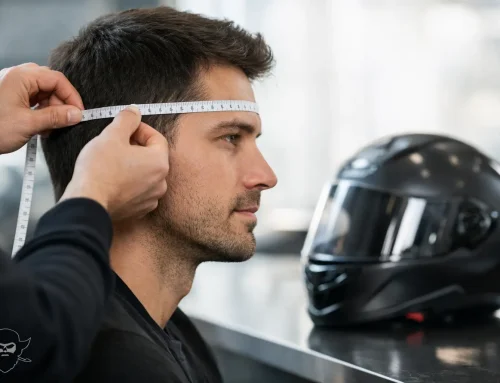
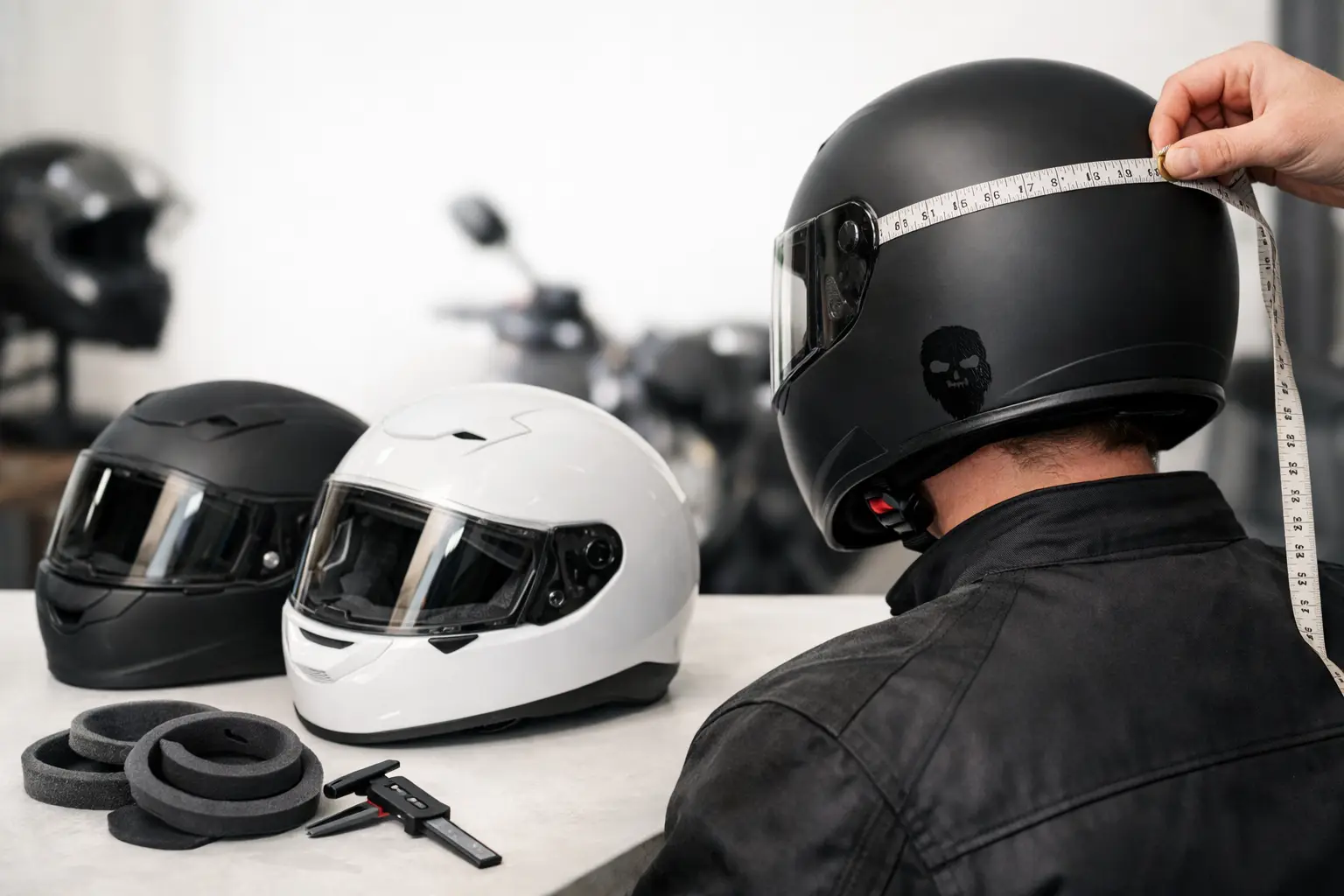
Start with a soft measuring tape. Wrap it around the widest part of your head, about one inch above your eyebrows and just above your ears. Keep the tape level all the way around. Do not pull it so tight that it digs in, and do not leave it loose.
Take the measurement two or three times. If you get slightly different numbers, use the largest one. Most helmet size charts list measurements in both inches and centimeters, and centimeters tend to be more exact.
If you do not have a tailor’s tape, use a piece of string and lay it against a ruler afterward. That works fine as long as you keep the string flat and level.
Standard motorcycle helmet size chart
This general motorcycle helmet size chart is a solid baseline for many brands sold in the US market. Always compare it with the specific brand chart before you buy, because sizing can run a little small or a little generous depending on shell shape and liner design.
Adult helmet sizing
| Helmet Size | Inches | Centimeters | |—|—:|—:| | XS | 20 7/8 – 21 1/4 | 53 – 54 cm | | Small | 21 5/8 – 22 | 55 – 56 cm | | Medium | 22 3/8 – 22 3/4 | 57 – 58 cm | | Large | 23 1/8 – 23 5/8 | 59 – 60 cm | | XL | 24 – 24 3/8 | 61 – 62 cm | | 2XL | 24 3/4 – 25 1/4 | 63 – 64 cm | | 3XL | 25 5/8 – 26 | 65 – 66 cm |
This chart is useful, but the number alone does not tell the full story. Two riders can both measure 58 cm and still need different helmets because head shape changes everything.
Head shape changes the fit
Helmet sizing is not only about circumference. It is also about whether your head is long oval, intermediate oval, or round oval. Most riders in the US fall somewhere around intermediate oval, but not all do.
If a helmet feels tight on the forehead and loose at the sides, the shape is probably wrong. If it crushes the sides of your head but leaves space front to back, same problem. Riders often mistake a shape issue for a size issue and end up sizing up when they really need a different helmet profile.
That is where buying from a gear retailer that knows fit can save you a headache. A size chart gets the measurement right. Experience helps match that measurement to the shell shape that actually works on your head.
What a properly fitted helmet should feel like
A new helmet should be snug. The cheek pads should touch your face firmly without feeling like they are grinding your jaw. When you fasten the strap and move the helmet with your hands, your skin should move with it.
Here is the simple test. Put the helmet on and wear it for fifteen to thirty minutes indoors. If the pressure is even, that is a good sign. If one area starts throbbing, the helmet is wrong for your shape or too small. If it already feels loose in the store or at home, it will only get looser after the liner breaks in.
A lot of riders buy the comfortable one on day one and regret it later. Helmet padding compresses over time. It rarely gets tighter.
Common sizing mistakes riders make
The biggest mistake is measuring too low on the forehead or too high on the crown. That gives you a bad number before you even look at the chart. Keep the tape around the largest part of your head.
Another mistake is using your old helmet size as the only reference. Different brands fit differently, and even within the same brand, one model can fit tighter than another.
Hair matters too. If you usually ride with a skull cap, head wrap, or balaclava, measure with that layer in mind. If you just got a fresh buzz cut after years of thick hair, your fit may change a little. Eyewear can also affect comfort around the temples, especially on snug full-face and modular designs.
Brand charts beat generic charts
A generic motorcycle helmet size chart is a strong starting line, not the finish line. One brand’s medium may fit like another brand’s small-large split, especially if the padding is denser or the interior shape is narrower.
That is why serious gear buyers check the actual chart for the helmet they want. It cuts down on returns, saves time, and gets you in the saddle faster. If you are shopping online, look for clear sizing support and straightforward policies. Good service matters when fit is the difference between confidence and buyer’s remorse.
Sizing for women and kids
Women do not need a separate size chart just because they are women. Helmet sizing still comes down to head measurement and shape. The main difference is that some riders with smaller head sizes may have more options in XS and Small ranges, and comfort around the cheekbones can vary depending on pad design.
For kids, do not size up so they can grow into it. That might sound practical, but a loose helmet is not safe and will not perform the way it should. Measure carefully and choose the size that fits now. If you are buying riding gear for the family, this is one place where guessing is not worth it.
When you are between sizes
If your measurement lands right between two sizes, the answer depends on the brand, the model, and your head shape. In many cases, the smaller size is the better choice because helmet liners break in. But that only works if the fit is snug and even, not painfully tight.
If you are between sizes and also know a brand runs small, moving up may be the right call. If the model has replaceable cheek pads or liner options, that can also fine-tune the fit without jumping to a larger shell. This is one of those it depends situations where reading the chart is only part of the job.
Fit affects more than comfort
A bad fit does not just feel annoying. It changes how the helmet performs on the road. Wind noise can get worse. The helmet may lift at highway speed. Your visor alignment can feel off. Long rides become harder because you are constantly adjusting instead of riding.
For cruiser and V-twin riders who put down real miles, that matters. The right fit keeps your focus where it belongs. It also makes the rest of your gear work better, whether you are wearing a leather jacket, gloves, riding boots, or carrying your essentials in your luggage setup for the weekend run.
Before you buy, check these last details
After you have your measurement, compare it to the exact product chart. Then think about head shape, break-in, and how you actually ride. Short city runs and all-day highway miles can expose different fit issues.
Also check the return window before you order. A helmet should be tried on carefully indoors before it ever sees the road. Once you ride in it, you own that choice.
At Blackbeard’s Motorcycle Gear, riders shop for gear that has to do two jobs at once – look right and work right. Helmet sizing is no different. Get the measurement right, trust the chart as your baseline, and pay attention to shape and fit before you commit.
The best helmet size is not the one you always buy. It is the one that stays planted, feels even, and lets you forget about it once the engine comes alive.