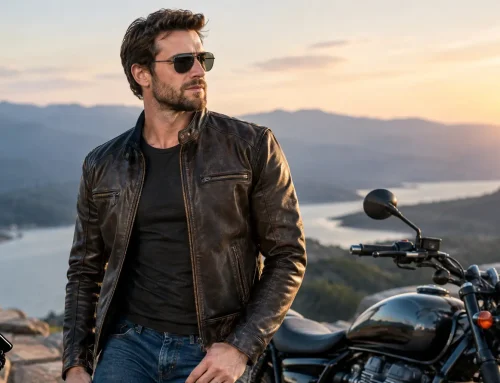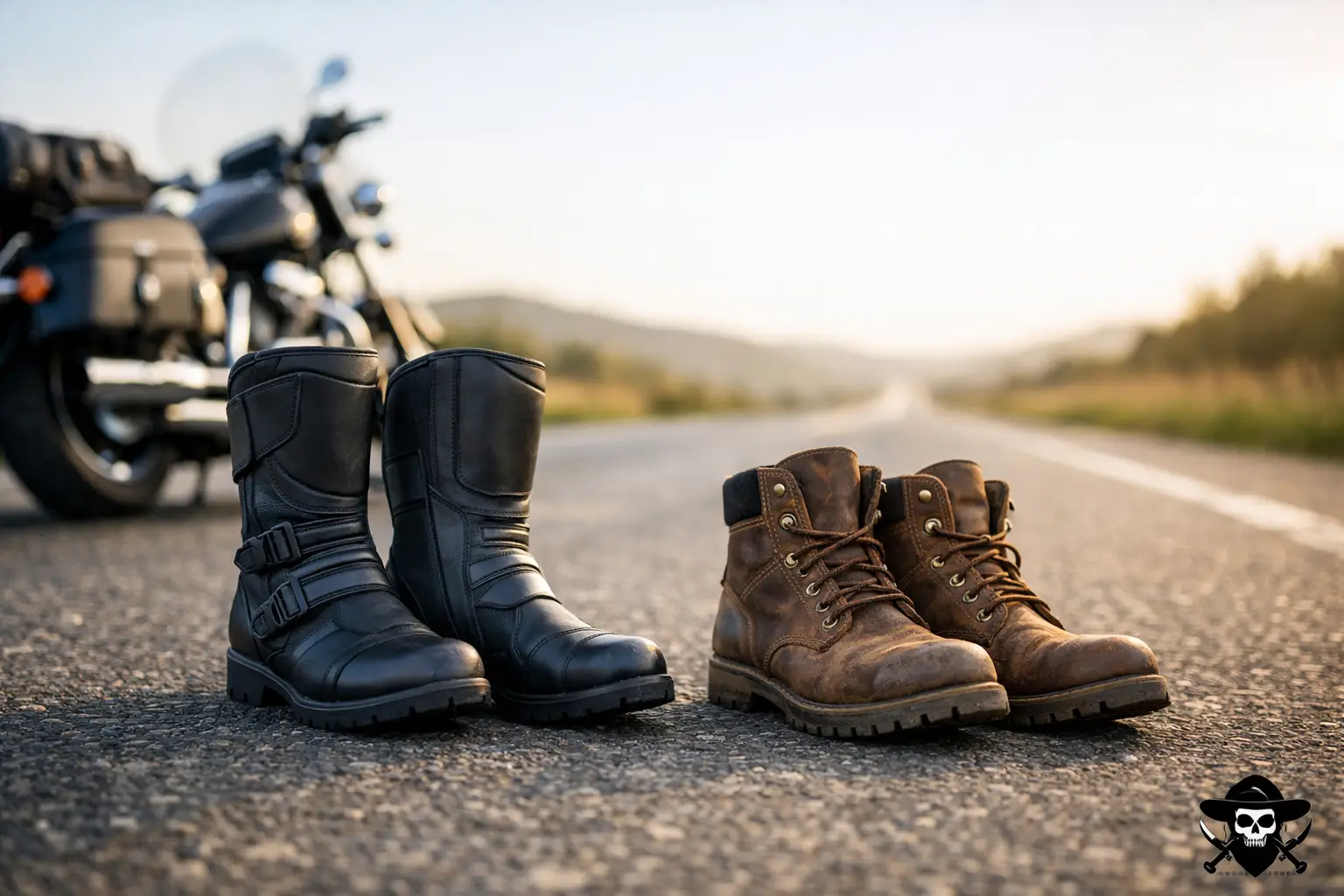
A heavy work boot can look tough beside a cruiser, but riding boots vs work boots is not a style contest. The difference shows up at the first stoplight, during a fast downshift, and in the split second your foot hits the pavement. A boot built for a job site protects against job-site hazards. A boot built for a motorcycle is made to work with pegs, controls, heat, wind, and the possibility of a slide.
If you ride in work boots because they are already by the door, you are not alone. Plenty of riders start there. But once you understand where the designs differ, choosing dedicated motorcycle boots becomes a lot less complicated.
Riding Boots vs Work Boots: The Real Difference
Work boots are designed around standing, walking, lifting, uneven ground, falling objects, and long shifts. Their biggest strengths are durability under daily labor, cushioning for concrete, and toe protection from impact or compression. Those are real benefits, especially if you need one pair of boots for work and a short ride across town.
Riding boots have a different assignment. They need to let you feel and operate the shift lever and rear brake without fighting a bulky sole. They need coverage around the ankle, materials that hold together against abrasion, and a secure fit that stays put at speed. They also need to remain comfortable when your feet are tucked on pegs instead of planted flat on a floor.
The overlap can fool people. Both may be leather. Both may have thick soles. Both can come in black, brown, or classic engineer-boot styling. But similar looks do not mean similar protection or control.
Motorcycle controls demand a different feel
A work boot often has a thick, stiff sole built to absorb long hours on hard surfaces. That is useful on a warehouse floor. On a motorcycle, too much bulk can make it harder to hook the shift lever cleanly or judge pressure on the brake pedal. You do not want to hunt for a gear because the toe box is oversized.
A proper riding boot usually gives you a lower-profile toe area and a sole that works with peg placement. Many also add a reinforced shift panel across the top of the left boot. That panel takes the repeated contact from the shifter so the leather does not get chewed up after a season of riding.
This does not mean every motorcycle boot feels thin or flimsy. Cruiser riders can get solid, substantial leather boots with a strong sole and a serious stance. The point is that the bulk is placed with riding in mind, not just all-day walking.
Ankle coverage matters when the bike stops moving
The ankle is one of the clearest dividing lines between many casual work boots and purpose-built riding footwear. A low work boot may be fine for traction on a ladder, but it leaves a vulnerable area exposed. Riding boots generally reach over the ankle and use a firmer upper to help shield that area from impacts, debris, and abrasion.
No boot makes a crash harmless. That is not how gear works. Still, more secure coverage and better retention can make a meaningful difference when a foot gets pinned, twisted, or dragged. Look for a boot that fits closely at the heel and ankle without cutting off circulation. A loose boot can shift around when you need control most.
Laces can become a problem on a bike
Many work boots lace up, and lace-up riding boots are common too. The issue is not the laces themselves. The issue is loose laces, long ends, or hooks that can catch on pegs, controls, or parts of the bike.
If you ride in lace-up boots, tie them securely and tuck the ends in. Some riders prefer side zippers, buckles, or pull-on engineer-style boots because they are fast to put on and eliminate dangling lace ends. Whatever closure you choose, it should stay closed and keep the boot firmly on your foot.
What Work Boots Still Do Well
There is no need to pretend work boots are worthless on a motorcycle. A quality leather work boot with ankle height, oil-resistant tread, and a secure fit is better than sneakers, canvas shoes, or anything that exposes your feet. For a slow, short commute, it can be a practical option if it is what you have.
Work boots also make sense for riders who step off the bike and head straight into physical work. If you are hauling gear, working outdoors, or spending ten hours on your feet, a dedicated riding boot may not match the comfort or workplace requirements of your job boot.
The trade-off is simple: you are choosing a boot that is optimized for the ground rather than the bike. That can be a reasonable call for certain days, but it is worth making it knowingly.
Steel toe and composite toe protection also deserve a clear-eyed look. They protect against crushing hazards at work, but they do not automatically make a boot safer in every motorcycle situation. The overall construction, ankle support, sole grip, closure, and abrasion resistance matter more than one feature on the toe box.
What to Look for in a Motorcycle Boot
The best riding boot depends on your bike, your riding position, and how you use it after you park. A rider on a bagger who wants old-school style may want a tall pull-on leather boot. Someone commuting through rain and walking city blocks may prefer a shorter waterproof riding shoe with a grippy sole. Both can be better choices than a generic work boot when the design supports riding.
Focus on these practical details when comparing pairs:
- Over-the-ankle coverage that feels stable without restricting movement.
- Full-grain or durable leather construction that can handle road grime, heat, and repeated wear.
- A sole with reliable traction on wet pavement, gravel, and gas-station concrete.
- A toe profile that fits under or over your shift lever without awkward movement.
- Secure closures, protected laces, and a heel that does not lift while walking or riding.
- Reinforcement in high-wear areas, especially around the shift zone and heel.
A waterproof liner can be a smart add-on for riders who do not park the bike when the forecast turns ugly. Just remember that waterproof boots can run warmer in summer. Ventilation is a comfort win in hot weather, while weather protection earns its keep during cold rain and long highway miles. There is no single boot that dominates every condition.
Style Counts, but It Cannot Be the Only Test
Biker style is part of the ride. A well-built black leather boot, a stacked heel, clean buckles, or a no-frills lace-up profile belongs with a leather jacket and a bike that has some attitude. You should not have to wear something that looks like a hiking shoe if that is not your lane.
But do not buy a fashion boot just because it looks right in the mirror. Thin soles, weak stitching, loose shafts, and slick fashion outsoles can leave you with a good-looking boot that performs poorly around a motorcycle. Road-ready style is the target: leather that looks better with miles on it and construction that is ready for those miles.
Blackbeard’s Motorcycle Gear carries motorcycle footwear made for riders who want that hard-edged look without giving up the basics that matter on the road. The right pair should feel like part of your riding gear, not an afterthought you grabbed on the way out.
When It Is Time to Replace Either Pair
Boots do not need to fall apart completely before they are done. Check the sole for worn-down tread, especially at the heel and ball of the foot. Watch for separated soles, cracked leather, broken eyelets, damaged zippers, and soft spots around the ankle. If the boot no longer stays secure or has become slippery on wet pavement, it has stopped doing one of its most important jobs.
A worn work boot is a problem on a job site. A worn riding boot can become a problem at a stop sign, in a parking lot, or on a rain-slick road. Clean leather, condition it when needed, let wet boots dry naturally, and keep an eye on the parts that take the most abuse.
Your boots are the first gear to hit the pavement when you put a foot down and often the last thing riders think about upgrading. Give them the same respect you give your jacket, gloves, and luggage. Choose the pair that works with your bike, holds its ground when the road gets ugly, and still looks right rolling into the next stop.