You feel a bad pack job before you see it. The bike gets twitchy in a corner, something shifts when you brake, and the one item you need fast is buried under everything else. If you’re figuring out how to pack motorcycle saddlebags, the goal is simple – keep the load balanced, keep the essentials easy to reach, and keep your gear protected when the road gets rough.
Packing saddlebags is not just about fitting more stuff on the bike. It changes how the bike handles, how fast you can stop for fuel or rain gear, and how much frustration you deal with at the end of the day. Riders who tour a lot know this already: smart packing makes the ride better. Bad packing makes every stop a hassle.
How to pack motorcycle saddlebags for balance
Start with the weight, not the space. A lot of riders make the mistake of stuffing one side full because it still has room, then tossing a few light items in the other bag and calling it good. That works until the bike starts feeling off at low speed or in turns.
Put your heaviest items low and split them as evenly as possible from left to right. Tools, heavier gloves, compact locks, and dense gear should sit at the bottom of each saddlebag, not piled high near the lid. Keeping weight low helps stability, especially on cruisers and loaded touring setups where extra gear adds up fast.
It also depends on your bike. If one side already carries more from the factory because of exhaust placement or bag shape, you may need to compensate. Perfect symmetry is not always possible, but close matters. A quick check is simple: lift each loaded bag by hand before you mount them or close them up. If one feels noticeably heavier, fix it now instead of feeling it on the road.
Pack for access, not just capacity
Most riders do not need everything every hour. The mistake is packing like every item has equal priority. It does not. What you need at a gas stop, roadside break, or sudden weather change should be the easiest stuff to grab.
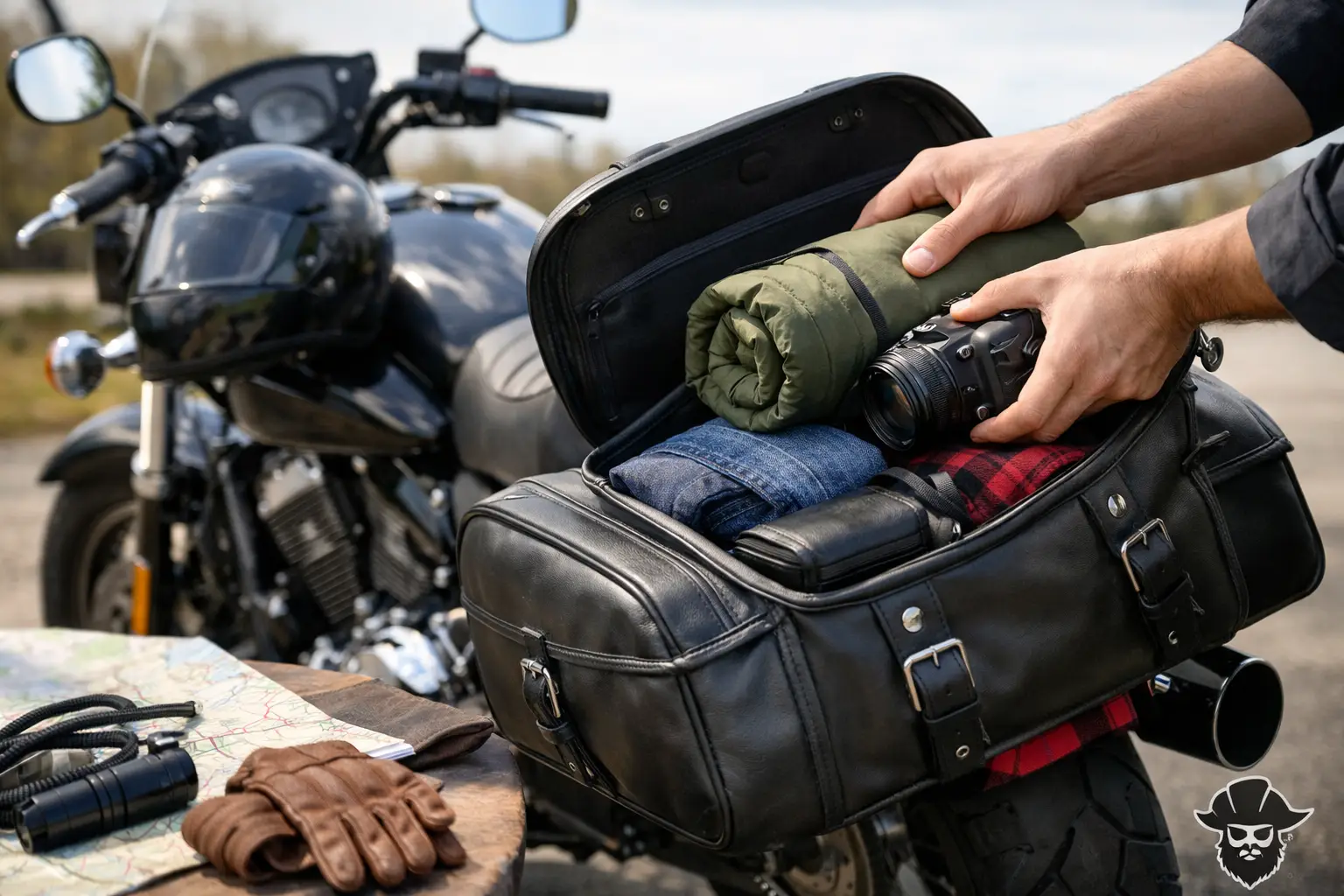
Think in three groups. First is fast-access gear like rain layers, gloves, sunglasses or goggles, a bandana, and a toll item. Second is day-use gear like snacks, a phone charger, wipes, and small personal items. Third is camp or overnight gear that can stay buried until the day is done.
When you pack this way, one side often becomes the quick-access bag and the other becomes the deeper storage bag. That setup works well for riders who want less rummaging and faster stops. If you ride in mixed weather, put your rain gear near the top every time. You do not want to unpack half the bike on the shoulder while the sky opens up.
What goes in each saddlebag
There is no single perfect layout, but there is a smart one. One practical setup is to use the left saddlebag for maintenance and emergency items, and the right for personal gear and day-use items. Another rider may reverse that based on handedness or how their bags open. The point is consistency.
Keep your tool roll, tire repair kit, and compact first-aid items in the same place every ride. Do the same with spare gloves, neck wear, and weather layers. When you build a repeatable system, you stop wasting time looking for things.
If you carry leather gear, pack it so it keeps its shape. Fold a leather vest or riding shirt cleanly instead of cramming it into corners. Quality leather can take the road, but stuffing it under hard-edged gear can leave creases and wear marks. If your extra layer matters to your look when you arrive, treat it like it does.
Use soft organization inside the bag
A saddlebag without internal organization turns into a junk drawer fast. You do not need anything fancy, but you do need separation. Small pouches, zip bags, or rolled gear bundles keep things tight and stop loose items from shifting around.
This matters more than many riders think. Movement inside the bag leads to noise, wear, and wasted space. It also makes quick stops slower because every small item sinks to the bottom.
Soft packing works better than hard boxes inside most saddlebags because it conforms to the shape of the bag. A flat pouch for documents, a small bag for tools, and a separate pouch for personal items is usually enough. Keep similar items together and keep the overall profile low so the bag closes without strain.
How to pack motorcycle saddlebags for weather
Even if your bags claim weather resistance, pack like rain is coming. Water has a way of finding weak spots through seams, lids, and zippers, especially on long rides or overnight runs. The smart move is to protect the contents, not just trust the bag.
Use inner dry bags or simple waterproof stuff sacks for anything that cannot get wet. Spare socks, shirts, electronics, paperwork, and leather accessories all deserve protection. If you carry an extra leather vest, gloves, or headwear, keep them dry from the start. Wet gear adds weight, feels worse, and takes the fun out of the ride.
There is a trade-off here. Waterproof liners add one more layer between you and your gear, so access can be slower. That is why it helps to keep your high-priority items in one easy-open waterproof pouch instead of sealing everything in separate bags. You want protection without turning every fuel stop into a packing exercise.
Do not overload the bags
Just because it fits does not mean it belongs on the bike. Overloaded saddlebags stress mounting points, affect handling, and make every item harder to access. They also tempt riders to carry gear they never use.
Be honest about the trip. A day ride needs less than most people think. A weekend trip needs more planning, not more random gear. If an item has no clear use on this ride, leave it behind.
Watch the bag shape too. If the bag is bulging, pulling unevenly, or hard to close, back off. Soft bags especially can start rubbing where they should not, and overloaded leather bags lose that clean look fast. Road-ready gear should work hard, but it should still fit right.
Pack around your ride type
A day trip pack is different from a multi-day pack, and that difference matters. For a shorter ride, focus on weather layers, hydration, gloves, a basic tool kit, and a few personal items. Keep it light and quick.
For a weekend run, add one clean change of clothes, extra socks, compact toiletries, and a plan for where your dirty gear goes. That last part gets overlooked all the time. Separate used clothing from clean clothing or your whole bag starts feeling disorganized by the second day.
For longer travel, discipline matters more than capacity. At that point, every item needs a job. If you are carrying riding boots off the bike or packing extra leather layers for colder mornings and late-night returns, use compression and keep bulky items matched left to right as much as possible.
Small mistakes that cause big problems
Loose items are one problem. Another is packing sharp-edged gear next to softer materials. Tools, hardware, or chargers can wear through liners and mark up leather if they are left unprotected. Wrap or pouch them.
Another common mistake is burying your documents, cash, or toll setup under clothing. Keep those where you can reach them fast. Convenience matters on the road. That is one reason riders like purpose-built accessories that do one job well and do not beat up the bike in the process.
Finally, recheck after the first few miles. Gear settles. Straps loosen. What looked tight in the driveway may shift after a few turns and a hard stop. A one-minute check early can save you a long day of annoyance later.
A simple packing routine that works
Lay everything out before it goes in the bag. Cut the pile down once. Then separate heavy, mid-weight, and quick-access items. Load the heavy gear low and split evenly. Put your day-use gear on top. Put weather-sensitive items in waterproof liners. Close the bags and shake them lightly. If things slide around, repack.
That routine is not flashy, but it works. It keeps the bike more stable, protects your gear, and makes life easier at every stop. Riders who do this consistently spend less time digging and more time riding.
If you want your luggage setup to work as hard as the rest of your gear, treat packing like part of the ride, not an afterthought. Good leather, dependable bags, and a clean system make a difference every mile. Pack smart, keep it tight, and let the road be the hard part.