Your leather vest should not spend the off-season crammed under a pile of hoodies, folded in a plastic tote, or hanging in a damp garage. “How to store biker leather vest” is a question worth getting right because quality riding leather can last for years, but only if it is protected from moisture, heat, and bad storage habits. Treat your vest like the road gear it is, and it will keep its shape, finish, and hard-earned character.
Why Leather Vest Storage Matters
A biker leather vest takes more abuse than a fashion piece. It sees sun, sweat, rain, road dust, bugs, fuel vapors, and long hours against your body. That is part of its job. But when the ride is over, trapped moisture and extreme temperatures can dry out the hide, leave mildew behind, or make the leather stiff and misshapen.
Good leather does not need complicated care. It needs a clean, dry place with airflow, support through the shoulders, and protection from anything that can press, stain, or trap humidity against it. A quality vest from a trusted riding-leather line is built for the road, but no vest is built to sit neglected in a hot shed all winter.
Clean and Dry the Vest Before Storage
Never put away a vest that is wet from rain or soaked with sweat. Hang it at room temperature and let it air-dry completely before it goes into a closet or storage area. Keep it away from heaters, radiators, hair dryers, and direct sunlight. Fast heat can pull natural moisture from leather and leave it feeling dry, brittle, or uneven.
Brush away loose dirt with a soft, dry cloth. If there are bug marks, road grime, or light surface dirt, wipe the vest gently with a slightly damp cloth, then allow it to dry naturally. Do not soak the leather, and do not use household cleaners, dish soap, alcohol wipes, or harsh degreasers. Those products can strip the finish and leave the leather looking dull.
Condition only when the leather needs it
If the vest feels dry, looks faded, or has started losing flexibility, use a small amount of leather conditioner made for riding apparel. Apply it sparingly with a clean cloth, working it into the leather in light, even passes. Too much conditioner can leave a greasy surface that attracts dust and may soften structured areas more than you want.
For a vest that is worn regularly, conditioning a few times a year is usually enough. If you ride in hard sun, dry climates, or wet conditions, it may need attention more often. The goal is supple, protected leather, not an oily finish.
How to Store a Biker Leather Vest Without Losing Its Shape
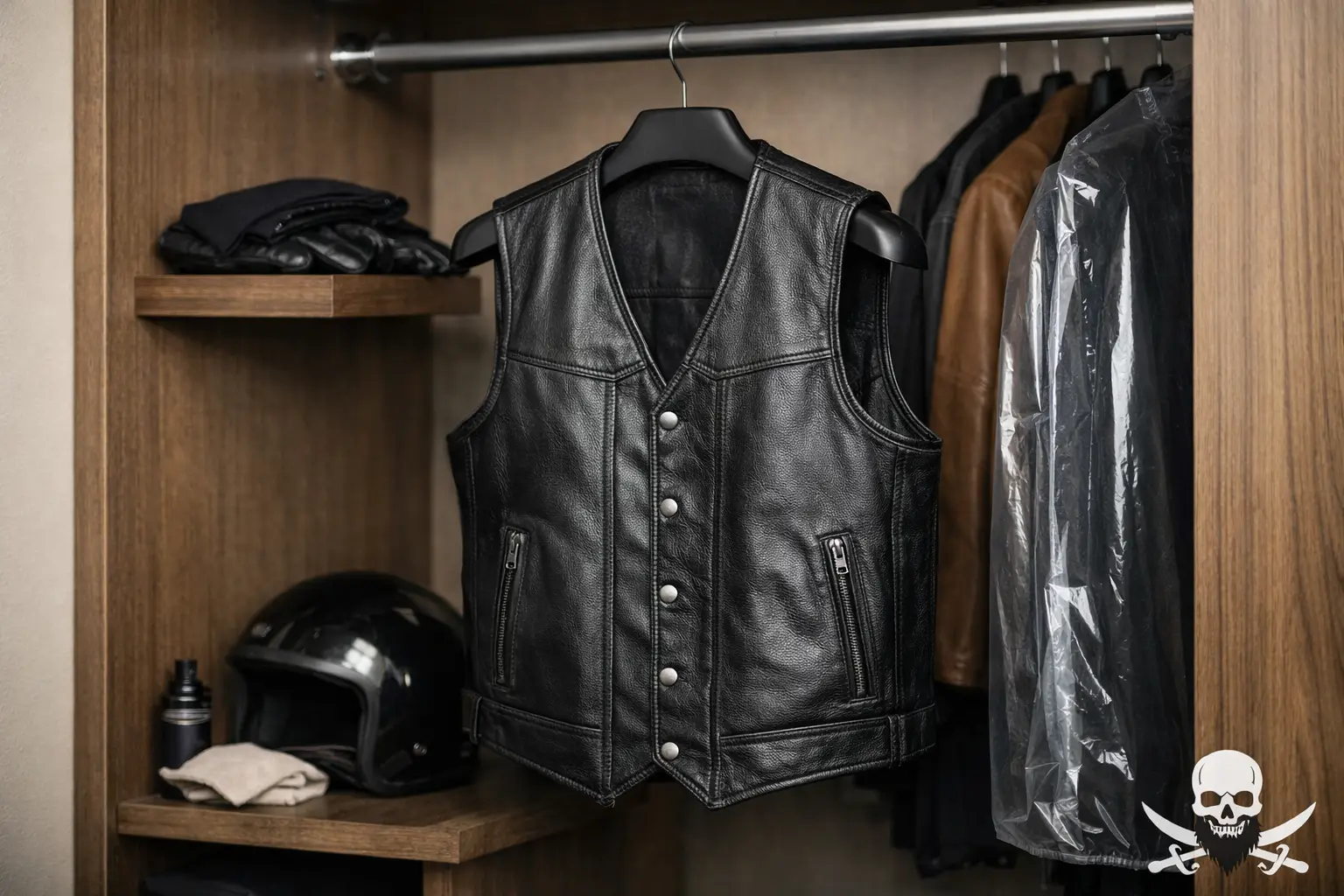
The best place for your vest is on a wide, sturdy hanger in a cool, dry closet. Choose a hanger with rounded or broad shoulders that supports the vest evenly. Thin wire hangers can leave shoulder dents, especially during long-term storage, and they do nothing to help the vest hold its riding-ready shape.
Button, zip, or lace the vest the way you normally wear it. This helps the front panels lie flat and prevents the collar, snaps, and edges from curling outward. Empty every pocket first. Coins, keys, pocketknives, and old receipts can create pressure marks, stain the lining, or distort the leather over time.
If your vest has a back patch, embroidery, studs, or conchos, give it a little breathing room in the closet. Do not pack it tightly between heavy jackets or bulky luggage. Hardware can press into adjacent leather, and patches can crease if the vest is squeezed for months.
Keep plastic away from leather
Do not seal a leather vest in a plastic garbage bag, zippered plastic bin, or vacuum-storage bag. Plastic traps moisture, and trapped moisture is where mildew, musty odors, and finish damage begin. This is especially risky in basements, garages, storage units, and humid parts of the country.
If you want to keep dust off your vest, use a breathable garment bag made from cotton or fabric. A clean cotton sheet or pillowcase can also work in a pinch. The point is simple: keep dust out while allowing air to move around the leather.
Pick the Right Storage Spot
Your bedroom closet, a climate-controlled spare room, or an indoor gear closet is usually the right call. Leather likes stable conditions. A space that stays reasonably cool and dry all year will do more for your vest than any fancy storage product.
Avoid the garage unless it is climate controlled. Garages deal with temperature swings, humidity, vehicle fumes, and dust. The same goes for unfinished basements, attics, outdoor sheds, and the trunk of a vehicle. A vest left in a hot car can dry out quickly, while one stored in a damp basement may develop mildew before you notice the smell.
Keep the vest out of direct sun, even indoors. Sunlight can fade black leather, alter colored leather, and dry the surface over time. Also avoid storing it right next to raw wood, painted surfaces, or anything with a strong chemical smell. Leather can absorb odors, and no rider wants a vest that smells like paint thinner or mothballs.
Protect Vests With Patches, Hardware, and Laces
A plain leather vest is straightforward. A club-style vest with patches, side laces, snaps, concealed-carry pockets, or metal hardware needs a little more care. Check the vest before storage to make sure no loose hardware is rubbing against the leather. If a buckle or snap is pressing into the body of the vest, place a small piece of clean, acid-free tissue between the pieces.
Lay laces flat and make sure they are not pulled tight. Tight laces can leave uneven tension along the side panels. For vests with fringe, gently straighten it before hanging the vest. Do not tie the fringe together or place heavy gear against it.
Patches deserve special attention. Avoid folding the vest through a large back patch. If you need to transport your vest rather than hang it, lay it flat with the patch facing up and place nothing heavy on top. That keeps the stitching and patch edges from creasing.
A Quick Long-Term Storage Check
If your vest will be off the road for more than a month or two, check it occasionally. You do not need a big maintenance routine. Pull it out, inspect the leather, and make sure the storage area still feels dry and smells clean.
Watch for these warning signs:
- A musty odor, which may signal trapped moisture or early mildew
- White, green, or gray spotting on the leather or lining
- Stiff areas that feel dry or start to crack when flexed
- Shoulder dents, folded edges, or hardware pressing into the hide
Catch a problem early and it is usually easy to handle. If you spot mildew, move the vest into a dry, ventilated area and clean it carefully with a leather-safe product. Do not ignore it or cover the vest back up. Mildew spreads, smells bad, and can permanently mark leather if it sits too long.
What to Do Between Riding Seasons
When riding season slows down, give your vest one proper reset. Clean off road grit, let it dry, condition it if needed, empty the pockets, fasten the closure, and hang it in a breathable cover. That is all most riders need to do.
It depends on where you live. Riders in Arizona or other dry climates may need to pay closer attention to conditioning. Riders in Florida, along the Gulf Coast, or anywhere with humid summers need to focus harder on airflow and moisture control. A small moisture absorber placed nearby in the closet can help, but do not place it directly against the leather.
If you rotate gear, avoid stacking your vest inside a motorcycle bag for the entire winter. Motorcycle luggage is built to carry gear on the road, not to provide long-term ventilation. Store the bag separately and let both pieces breathe.
Before You Wear It Again
Before the first ride of the season, inspect the vest under good light. Check the seams, snaps, zippers, lining, pocket closures, side laces, and any patches or hardware. Flex the leather gently. It should feel strong and pliable, not stiff or flaky.
Wipe off any storage dust and give the vest a few minutes to air out before putting it on. If it has been properly stored, it should be ready to throw on over your riding shirt, pair with your boots, and take back where it belongs – on the road.
A well-kept leather vest does more than look better. It carries your miles, your patches, and your rider identity without giving up on you. Give it a clean hanger, dry air, and a little room, then let quality leather keep earning its story ride after ride.