A motorcycle vest that looks tough on the hanger can feel wrong the second you zip it over a riding shirt or leather jacket. Too tight, and it binds across the chest when you reach for the bars. Too loose, and it flaps, shifts, and loses that clean biker look. If you’re wondering how to size motorcycle vest gear the right way, the answer starts with how you ride, what you wear under it, and how you want that vest to sit on your body.
Sizing a vest is not just about grabbing your usual T-shirt size and hoping for the best. Riding gear has to work in the real world. That means movement, layers, weather changes, and long hours in the saddle. A good vest should feel natural when you’re standing, but it also needs to stay comfortable when you’re leaned forward, reaching out, and putting miles behind you.
How to Size Motorcycle Vest for Real Riding
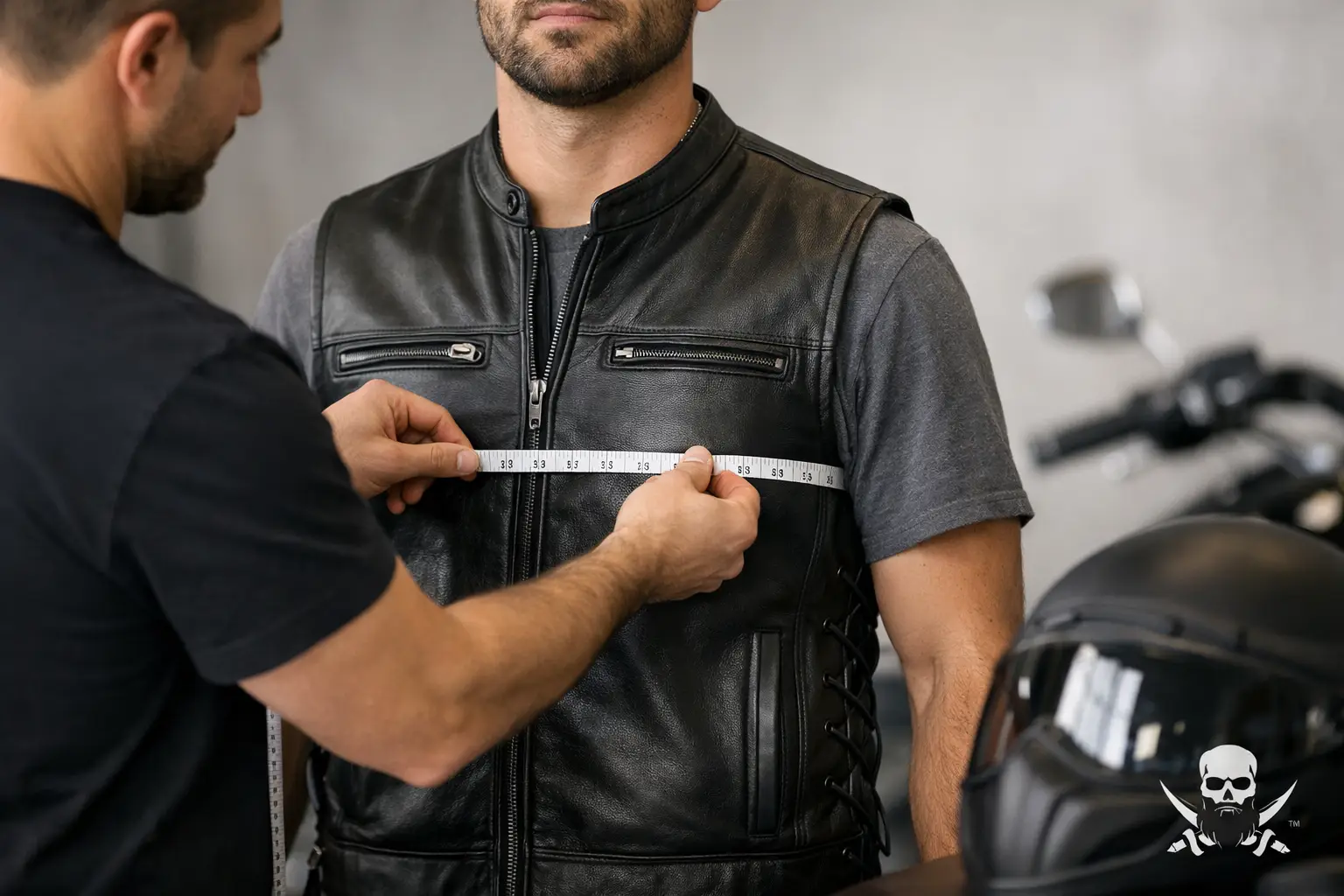
The first measurement that matters is your chest. Use a soft measuring tape and wrap it around the fullest part of your chest, usually right under the armpits and across the shoulder blades. Keep the tape level and snug, but don’t pull it tight enough to compress your shirt. If someone can help, even better. A clean chest measurement gives you the best starting point.
If you’re between sizes, that’s where riding style matters. Riders who want a fitted, club-style look often lean toward the closer size, but only if they plan to wear the vest over a T-shirt or light riding shirt. If you want room for a hoodie, flannel, armored shirt, or even a lightweight jacket underneath, go up. A vest that feels perfect over a thin tee can feel like a bad decision once the temperature drops.
Length also matters more than a lot of riders expect. A vest should cover your torso cleanly without riding up too high when you sit. If it’s too short, it can bunch at the waist and leave an awkward gap. If it’s too long, it may hit the seat and push upward when you’re on the bike. That’s why chest size alone is not the whole story. Your height, torso length, and riding position all play into the final fit.
Start With Your Base Layer
Before you order, decide what you’ll actually wear under the vest most of the time. This is where a lot of sizing mistakes happen.
If your vest is mainly for warm-weather riding, patches, and road presence over a T-shirt or sleeveless shirt, you can size for a trimmer fit. That gives you a sharper profile and keeps the vest from looking boxy. Leather vests especially look best when they sit close to the body without pulling at the snaps or zipper.
If your vest is part of a layered setup, size with that in mind. A heavier leather vest over a flannel or riding hoodie needs extra room across the chest and shoulders. The same goes for riders who wear concealed carry vests or use inside pockets regularly. Once those pockets are loaded, a vest that already fits tight can start feeling cramped fast.
Think about the season too. Some riders want one vest year-round. That usually means choosing enough room for layering, even if the vest feels a little more relaxed in summer. Others want a cleaner warm-weather fit and don’t mind switching gear when it gets cold. Neither choice is wrong. It depends on how you ride.
Leather Vest Fit vs Textile or Denim Fit
Material changes the way sizing feels. Leather has structure. It holds shape, breaks in over time, and usually starts a little firmer than textile or denim. That means a leather vest should fit close, but not restrictive. You want enough room to move your arms and expand your chest without stressing the seams or hardware.
A new leather vest may soften and give a bit with wear, but don’t count on a full-size stretch. If it is too tight out of the box, it will probably stay too tight where it counts. Snaps that pull open, a zipper that strains, or armholes that bite into your shoulders are signs to size up.
Denim and textile vests can feel easier right away, but they still need the right cut. A softer material can hide a bad fit at first because it has more give. Once you’re on the bike, though, extra fabric can bunch, sag, or shift around. The goal is still a clean fit through the chest and shoulders with enough room for movement.
This is one reason riders who want lasting value often stick with quality leather. Good leather looks better with age, keeps its shape, and brings that classic road-ready look that never goes out. If fit matters, and it does, top-quality leather gives you a stronger result than a cheap vest that loses form after a season.
Signs Your Motorcycle Vest Fits Right
A properly sized vest should close easily without pulling hard across the chest or stomach. You should be able to sit, reach forward, and move your shoulders without feeling pinched. The armholes should be comfortable, not digging in or hanging so wide that the vest looks oversized.
The back panel should lie fairly flat. A little contour is normal, especially when standing, but major bunching or pulling means the cut is off for your build. The front should stay aligned when snapped or zipped. If one side pulls higher than the other or the closure looks stressed, that’s a fit problem, not a break-in issue.
Pay attention to where the vest ends at your waist. On the bike, you want it long enough to stay put but not so long that it pushes up from the seat. This can be tricky for taller riders and shorter riders with broad chests. In those cases, it helps to compare both chest and body length before buying.
Common Sizing Mistakes Riders Make
The biggest mistake is buying too small because a rider wants a tighter look. A vest should look sharp, but if it restricts movement, that tough look gets old quick. Motorcycle gear is supposed to work while you ride, not just while you stand in front of a mirror.
The next mistake is sizing too big for layering you rarely do. Some riders buy extra room for a heavy hoodie, then spend most of the year wearing the vest over a T-shirt. The result is a loose fit that never really looks right. Buy for your real use, not the one cold weekend you might take every winter.
Another common issue is ignoring brand-specific sizing. Not every vest is cut the same. Some run athletic, some are relaxed, and some are built specifically for club-style wear with a shorter, cleaner profile. Always check the product measurements if they’re available. A size large in one vest may fit closer to a medium in another.
How to Measure Without Overthinking It
If you want a simple process, keep it to three checks. Measure your chest. Compare that number to the vest’s size chart. Then think honestly about your usual layer underneath.
If your chest measurement lands right on a size break, don’t guess based on pride. Most riders are happier sizing up when they are between sizes, especially in leather. You gain comfort, easier layering, and better range of motion. The vest still needs shape, but it should not fight you every time you move.
It also helps to measure a vest or jacket you already own and like. Lay it flat and check the pit-to-pit width, shoulder width, and back length. That gives you a real-world reference point that is often more useful than your usual shirt size.
Men’s and Women’s Vest Sizing Is Not Identical
Men’s and women’s motorcycle vests are cut differently, and that matters. Women’s vests usually account for bust, waist shape, and a more contoured fit through the torso. Going by unisex or men’s sizing alone can lead to a vest that fits one area but gaps or pinches in another.
For women riders, bust measurement is usually the key starting point, but waist shape and intended layering still matter. For men, chest and midsection usually drive the fit. In both cases, the right size should support movement and layering without looking sloppy.
This is where a good product description and clear sizing support can save a lot of hassle. Blackbeard’s Motorcycle Gear focuses on leather apparel that is built for real riders, and fit guidance matters because nobody wants to deal with returns after waiting on a new vest.
When to Size Up, and When Not To
Size up if you plan to layer, if you are broad in the shoulders, if you carry through the midsection, or if you’re between sizes in a structured leather vest. Size up if the vest has side laces or adjustable panels only when you still need the base fit to work. Adjustment features help fine-tune fit. They do not fix a vest that started out too small.
Don’t size up just because you assume all motorcycle gear runs tight. Don’t size up so much that the armholes drop, the shoulders hang, or the vest loses shape. Bigger is not always more comfortable on the road. Too much extra room can be as annoying as too little.
A good vest should feel broken-in after enough miles, not broken from day one. Get the chest right, allow for your real riding layers, and choose quality material that keeps its shape. That’s the difference between a vest that sits in the closet and one that becomes part of every ride.
When the fit is right, you stop thinking about the vest and start thinking about the road ahead. That’s exactly how riding gear should work.