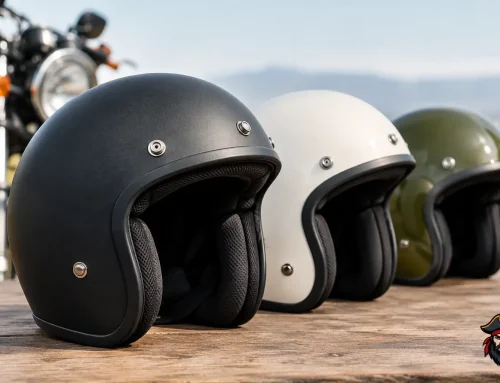
A lot of riders ask the same thing right before checkout – are half helmets DOT approved, or are they just for looks? That question matters more than the price tag, because if you ride on public roads in the US, the label on the back can mean the difference between legal road use and buying a novelty lid that leaves you exposed.
The short answer is yes, some half helmets are DOT approved. But plenty are not. That is where riders get burned.
A half helmet can meet DOT standards if it is built and labeled to comply with Federal Motor Vehicle Safety Standard No. 218, usually called FMVSS 218. That standard sets the baseline for motorcycle helmets sold for street use in the US. If a half helmet is truly DOT compliant, it should be designed to manage impact, stay on your head with a secure retention system, and carry the proper certification labeling.
The problem is simple – not every helmet with a slim profile is a real motorcycle helmet. Some are sold as novelty helmets, parade helmets, or costume-style gear. They may look close enough online, especially in product photos, but they are not built to the same standard and they are not the same thing when you are sliding across pavement.
Are half helmets DOT approved in every case?
No. Half helmets are not automatically DOT approved just because they cover the top of your head and have a chin strap. Approval depends on how the helmet was made, tested, and labeled by the manufacturer.
That means you cannot judge compliance by shape alone. Two half helmets can look nearly identical on a product page. One may be built for legal street riding, and the other may be a novelty shell meant only for appearance. If you are buying for actual road use, that distinction is everything.
This is also where riders should keep expectations realistic. DOT approval does not mean a half helmet offers the same coverage as a full face helmet. It means the helmet meets the minimum federal standard for the type of protection it is designed to provide. A half helmet still leaves your face, jaw, and much of the back of your head more exposed than a three-quarter or full face option.
What DOT approved really means
When riders ask whether half helmets are DOT approved, they are usually asking two things at once. First, is it legal? Second, is it protective enough to trust on the road?
DOT compliance answers the legal side better than the emotional side. A manufacturer self-certifies that the helmet meets FMVSS 218 requirements. The US Department of Transportation can test helmets after they are sold and take action if they fail. So the DOT sticker is not a trophy handed out at the factory. It is a legal compliance claim that the helmet is supposed to back up with real construction and performance.
For the buyer, that means the sticker alone should not be your only test. You want a reputable motorcycle gear seller, a known helmet brand, and clear product details that state DOT compliance in plain language. If the listing dances around the issue, uses vague phrases like “DOT style,” or focuses only on the low-profile look, take that as a warning sign.
How to tell if a half helmet is really DOT compliant
The safest move is to buy from a motorcycle gear retailer that clearly separates road-ready helmets from costume or novelty items. A proper DOT half helmet should have visible compliance labeling and a product description that states it meets DOT standards for street use.
There are a few common red flags. If the helmet feels suspiciously light, has a flimsy strap, or the seller avoids direct language about DOT compliance, keep moving. Another bad sign is a product page that pushes style but says nothing about construction, retention system, or certification. Riders who care about road use need more than a cool shell and a cheap price.
Packaging and inside labels matter too. Real motorcycle helmets usually include manufacturer information, size details, and compliance markings inside the liner. If the outside has a sticker but the rest of the helmet tells a different story, that should make you question it.
Why riders still choose DOT half helmets
Half helmets stay popular for a reason. They are lighter, cooler in hot weather, and they match the stripped-down look a lot of cruiser and Harley-style riders want. For short rides, city traffic, and warm-weather miles, many riders like the open feel and wider field of view.
That does not make them the right choice for every ride. It does explain why demand stays strong.
There is always a trade-off with a half helmet. You get less bulk, more airflow, and a classic biker profile. You also get less coverage. If you ride mostly backroads at moderate speeds and value that open-air feel, a DOT half helmet may fit your style and your use. If you are logging highway miles, riding in heavy traffic, or want the most coverage possible, you may decide the trade-off is not worth it.
State laws make this question more urgent
Helmet laws are not the same in every state, but DOT compliance matters wherever helmet use is required. In many states, if you have to wear a helmet, it generally must meet DOT standards for motorcycle use. Wearing a novelty helmet where a compliant one is required can still get you ticketed, and more importantly, it can leave you underprotected if things go bad.
Even in states with partial helmet laws or exemptions, buying a real DOT-compliant helmet is still the smart move. Laws can change. Riders cross state lines. And no one wants to find out after a crash that they bought something built for appearance instead of impact protection.
If you are unsure about your local requirements, check your state rules before you ride. Then buy gear that clears the bar instead of trying to skate under it.
What matters besides the DOT mark
A helmet can be compliant and still be wrong for you if the fit is off. A loose half helmet can shift, lift in the wind, or fail to stay positioned the way it should. A too-tight one turns a short ride into a headache. Fit is not a small detail. It is part of how the helmet works.
Comfort features matter too, especially on a half helmet. Riders usually look for moisture-wicking liners, secure Y-straps, and a shape that sits low enough to feel planted without creating pressure points. If you are already investing in road-ready gear, make sure the helmet fits the same no-nonsense standard you expect from your jacket, gloves, and boots.
This is where buying from a rider-focused store helps. Clear sizing info, real product specs, and gear built for actual motorcycle use save time and cut down on bad buys. At Blackbeard’s Motorcycle Gear, that practical side of the purchase matters just as much as the look.
Are half helmets DOT approved enough for real protection?
That depends on what you mean by enough.
If you mean legally approved for street use, yes, a genuine DOT half helmet can meet that standard. If you mean maximum protection, no half helmet is going to match the coverage of a full face design. That is just the truth.
For some riders, DOT compliance plus the comfort and style of a half helmet is the right balance. For others, especially riders doing longer trips or higher-speed riding, more coverage makes more sense. The smart choice is not about pretending every helmet type performs the same. It is about being honest about your riding habits, your local laws, and the level of protection you are willing to ride with.
A good helmet purchase starts with one hard rule – do not confuse biker style with road certification. You can have both, but only if you buy carefully.
Before you pull the trigger, read the product description closely, confirm real DOT compliance, and make sure the fit is right for your head shape. Looking the part is easy. Buying gear that is ready for the road is what keeps the ride moving.