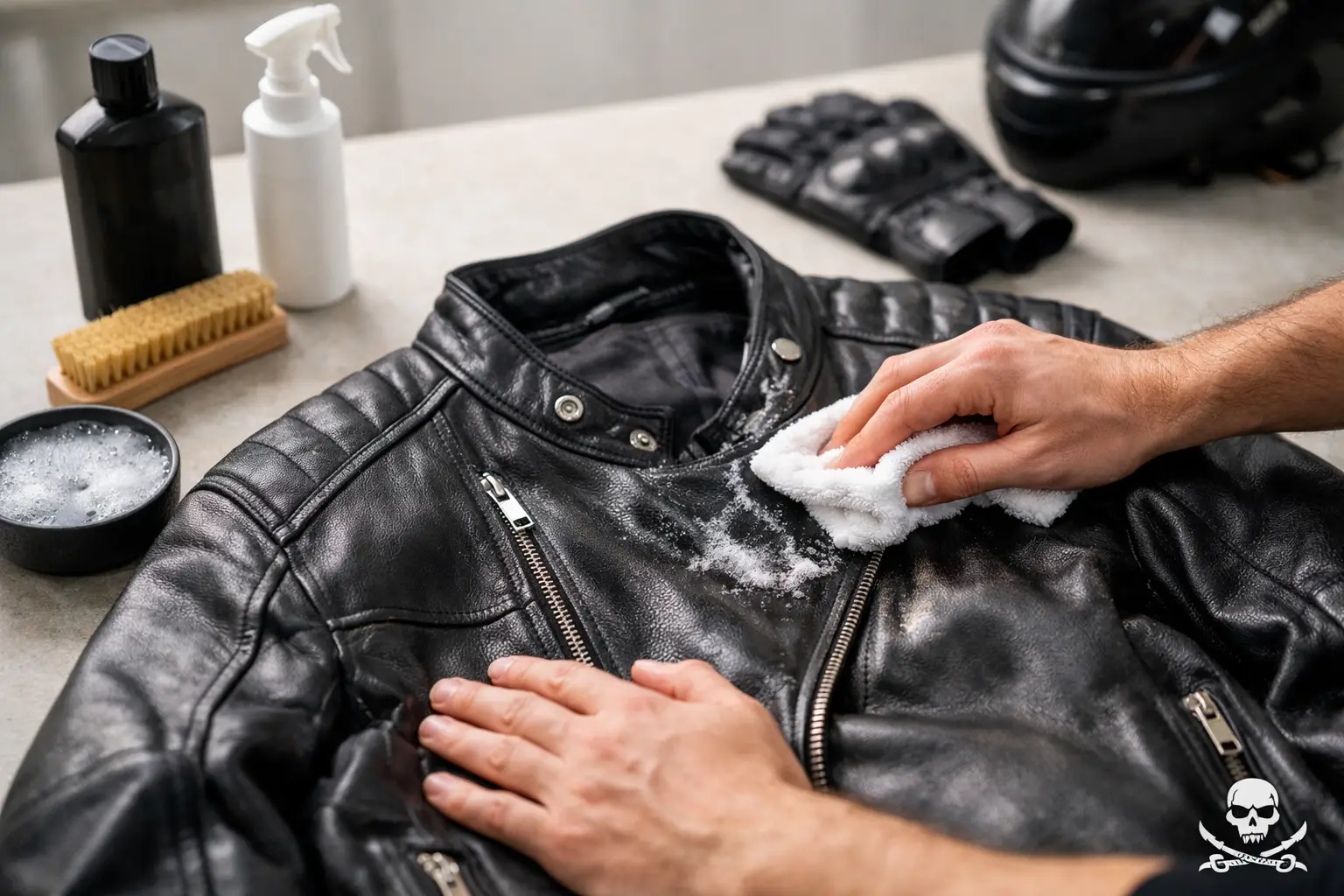
A leather jacket can handle wind, sun, bugs, light rain, and long hours in the saddle. What it cannot handle is being ignored until the road grime turns stiff, the seams look dry, and the leather starts to crack. If you are asking how to clean a motorcycle leather jacket, the answer is simple: use the right products, use a light touch, and never treat riding leather like a pair of old work boots.
A quality motorcycle jacket is built for the road, but it still needs regular care. The goal is not to make it shiny or soft like fashion leather. The goal is to clean off the grime without stripping the hide, keep it flexible, and preserve the tough look that gets better with miles.
What You Need Before Cleaning Motorcycle Leather
Keep the setup basic. You do not need harsh chemicals, heavy-duty degreasers, or a sink full of water. In fact, those are the fastest ways to ruin a good riding jacket.
Use these supplies:
- A clean, soft microfiber cloth or two
- A small bowl of lukewarm water
- Leather cleaner made for finished leather
- Leather conditioner made for motorcycle apparel
- A soft brush for stubborn dirt around seams, snaps, and zippers
Skip household cleaners, dish soap, bleach, baby wipes, furniture polish, and alcohol-based sprays. They may remove dirt fast, but they can also pull moisture and protective oils from the leather. That leaves the jacket dry, dull, and more likely to crack.
Before using any cleaner or conditioner, test it on a small hidden area, such as the inside hem or under the collar. Leather can vary by finish, color, age, and treatment. A quick test keeps a small mistake from becoming a permanent one.
Start With a Dry Wipe Down
Hang the jacket on a wide hanger or lay it flat on a clean surface. Empty the pockets, close the zippers, and remove any detachable liner if the jacket has one. Shake out loose dust and give the leather a dry wipe with a microfiber cloth.
This first pass matters more than riders think. Sand, dried bugs, and road grit can scratch the surface when you start wiping with cleaner. Work over the shoulders, sleeves, back panel, collar, cuffs, and lower hem. Do not forget the areas around the zipper and snaps, where grime tends to build up.
If dirt is packed into stitching or hardware, use a soft brush with very light pressure. You are loosening debris, not scrubbing the leather. Aggressive brushing can rough up the finish, especially on older jackets that have already seen plenty of sun and weather.
How to Clean a Motorcycle Leather Jacket Without Soaking It
Put a small amount of leather cleaner on a damp cloth, not directly on the jacket. The cloth should be barely damp, never wet enough to drip. Too much water can stain leather, swell the fibers, and leave the jacket feeling stiff once it dries.
Work one section at a time using small circular motions. Start with a less visible area to make sure the cleaner reacts well with the leather. Then move across the jacket in a steady pattern: chest, front panels, sleeves, collar, back, and lower hem.
Road film usually lifts with a gentle cleaner and a few passes. For bug splatter, hold a slightly damp cloth against the spot for several seconds before wiping. Let moisture soften the mess instead of grinding it into the leather.
Pay close attention to high-contact areas. The collar collects sweat and skin oils. Cuffs pick up dirt from gloves, grips, and gas stops. The front of the jacket takes the brunt of bugs and road dust. These spots may need another light pass, but do not keep scrubbing if a stain does not immediately disappear.
Some marks are part of the jacket’s story. Deep scuffs, old oil spots, and sun fade may not come fully out without changing the leather’s finish. Chasing a perfect, brand-new look can do more harm than leaving a little honest road wear behind.
Clean the Lining Separately
The inside lining needs attention too, especially after hot-weather rides. Sweat and body oils can create odor even when the outside still looks clean.
If the liner is removable, follow the care tag exactly. Many removable liners can be hand-washed or machine-washed on a gentle cycle, but the manufacturer’s instructions win every time. Air-dry the liner completely before putting it back in the jacket.
For a fixed liner, turn the jacket inside out as much as the construction allows. Wipe the lining with a cloth lightly dampened with water and a small amount of mild fabric-safe cleaner. Avoid soaking the interior, particularly near leather seams. Then leave the jacket open in a well-ventilated room until the lining is fully dry.
Do not mask odor with heavy fragrance spray. It does not solve the problem, and overspray can transfer onto the leather. Cleaning the lining and allowing airflow will do more for freshness than covering it up.
Condition the Leather After It Is Clean
Cleaning removes dirt, but it can also remove a little moisture from the leather. That is where conditioner comes in. A quality leather conditioner helps keep the hide supple so it moves with you on the bike rather than getting dry and rigid.
Wait until the jacket is fully dry from cleaning. Then apply a small amount of conditioner to a clean cloth and rub it in with light, even strokes. Use less than you think you need. Leather conditioner should absorb into the jacket, not sit on top like grease.
Give extra attention to flex points: elbows, shoulders, the back panel, side laces or stretch sections, cuffs, and the area around pocket openings. These zones see the most movement and can dry out faster.
Let the conditioner absorb, then buff off any excess with a dry microfiber cloth. If the jacket feels slick, oily, or overly shiny, you used too much. Wipe it down and give it time to settle before wearing it.
Conditioning frequency depends on where and how you ride. A jacket that sees intense sun, dry air, and long highway runs may need conditioning every few months. A jacket worn only on occasional weekend rides may need it once or twice a year. If the leather feels stiff, looks dull, or starts showing dry creases, it is time.
Dry It the Right Way
After cleaning or conditioning, let the jacket air-dry at room temperature. Keep it away from direct sun, space heaters, radiators, clothes dryers, and the hot air vent in your garage. High heat dries leather too quickly and can cause shrinking, warping, or cracking.
Hang the jacket on a broad, sturdy hanger that supports the shoulders. A thin wire hanger can distort the shape over time. Keep the zipper partially closed so the front panels hold their natural form while drying.
Never put a wet leather motorcycle jacket in a dryer. Never use a hair dryer to speed up the process. The wait is worth it when the alternative is cooked, brittle leather.
Common Mistakes That Wreck Riding Leather
The biggest mistake is overcleaning. Your jacket does not need a full cleaner-and-conditioner treatment after every ride. Wipe off bugs, mud, and road salt when you get home, but save the deeper clean for when the jacket actually needs it.
Another mistake is using too much conditioner. Riders often assume more product means more protection. In reality, over-conditioning can make leather heavy, greasy, and too soft. It can also attract dust and darken certain finishes.
Be careful with waterproofing products as well. Some motorcycle leather jackets are already treated, while others may benefit from a leather-safe water protectant. Check the jacket’s care instructions before applying anything. A waterproofing product made for suede, boots, or canvas may not be right for finished riding leather.
Finally, do not store your jacket crammed in a plastic tote or hanging in a damp basement. Leather needs airflow. Store it in a cool, dry place on a proper hanger, away from direct sunlight and moisture.
Keep Your Jacket Road-Ready
A solid leather jacket is not disposable gear. With a little routine care, it can stay comfortable, protective, and sharp for years of riding. Quality riding leathers are made to earn character on the road, not get tossed aside after one hard season.
Clean it when the grime starts building, condition it when the leather feels dry, and give it time to air out after a long ride. Your jacket will keep its shape, its strength, and the broken-in look that says you actually ride.