Your leather jacket takes a beating that most closet leather never sees: sun baking the shoulders, wind pulling moisture from the hide, rain on the highway, road grit at every stop. A leather riding jacket conditioner helps keep that hard-working gear flexible, comfortable, and ready to ride without turning it into a greasy mess.
Conditioning is basic jacket maintenance, but there is a right way to do it. Use too much, use the wrong product, or skip cleaning first, and you can darken the leather, soften it more than you want, or leave residue that attracts dirt. The goal is simple: preserve the leather’s strength and road-ready look.
What Leather Conditioner Actually Does
Leather is animal hide, and it needs a small amount of oil and moisture to stay pliable. Heat, UV exposure, rain, and dry indoor air slowly pull those natural oils out. When that happens, a jacket can feel stiff, look dull, develop dry patches, and eventually crack at high-flex areas such as the elbows, shoulders, cuffs, and side panels.
A good conditioner replenishes some of that lost moisture. It helps the leather bend with your body instead of fighting you when you reach for high handlebars, lean into a turn, or zip up for a cold ride. It can also bring back a richer finish after cleaning.
Conditioner is not the same thing as a cleaner, polish, waterproofing spray, or leather dye. A cleaner removes grime. Waterproofing adds resistance to water. Polish changes the surface appearance. Conditioner feeds the leather underneath the finish. Some products combine jobs, but treating every bottle as the same is how jackets get overtreated.
When Your Jacket Needs Conditioning
Do not condition a riding jacket on a strict weekly schedule. Leather does not need that kind of attention, and over-conditioning can leave it limp, overly dark, or slick to the touch. How often you ride, where you ride, and what kind of leather you wear make the call.
For many riders, conditioning two to four times a year is plenty. A jacket worn through hot summers, frequent rain, or long-distance miles may need it more often. A jacket that stays mostly in a climate-controlled closet may need less.
Look at the leather before you reach for a bottle. It may be time if the surface looks dry or flat, feels stiffer than usual, squeaks more than it used to, or shows light-colored stress marks when you bend a panel. Those signs matter more than a date on the calendar.
Fresh leather can also benefit from a light treatment after its break-in period, especially if it has been sitting in storage. Go easy. Quality riding leather should keep its structure and protective feel, not feel like an old sofa.
Choose the Right Leather Riding Jacket Conditioner
Start with the jacket’s leather type. Most traditional cruiser and biker jackets are made from finished cowhide or buffalo leather. These are generally tough, thick, and well suited to a quality cream, balm, or lotion conditioner made for finished leather.
Avoid products loaded with heavy waxes, petroleum, or silicone unless the jacket maker specifically approves them. They may create a quick shine, but they can clog the surface, attract dust, or interfere with future cleaning and repair. Household oils are a bad bet too. Olive oil, cooking oils, and bargain “miracle” treatments can go rancid or leave uneven dark spots.
Nubuck, suede, roughout, and heavily distressed leather are different animals. Traditional conditioner can flatten their texture, change their color, or leave blotches. If your jacket has a matte, fuzzy, brushed, or deliberately weathered finish, use a product designed for that material and test it carefully.
A neutral conditioner is usually the safest choice for black, brown, and colored riding jackets. If preserving the original shade matters, skip tinted products unless you are intentionally restoring faded color.
Clean First, Then Condition
Conditioner locks in what is already on the jacket. If that includes road grime, bug splatter, sweat, or sunscreen residue, you are not doing the leather any favors. Give the jacket a basic cleaning first.
Remove the liner if it is removable, empty the pockets, and unzip every vent. Use a soft, dry cloth or horsehair brush to knock away loose dust. For surface grime, wipe the jacket with a clean cloth that is slightly damp, not soaked. Use a leather cleaner only where needed and follow its directions.
Never toss a leather riding jacket in a washing machine. Do not soak it in a tub, blast it with a pressure washer, or dry it against a heater. If the jacket gets wet in a storm, hang it on a wide hanger at room temperature and let it dry naturally. Fast heat can shrink leather and make it brittle.
Once the jacket is clean, let it dry fully before conditioning. Applying conditioner to damp leather can trap moisture and give you an uneven result.
How to Apply Conditioner Without Overdoing It
The best approach is light, even, and patient. You can always add a little more. Removing excess conditioner from a jacket is a lot harder.
First, test the conditioner on a hidden spot, such as inside the hem, beneath the collar, or behind a pocket flap. Let it sit and dry. Some darkening is normal, especially on thirsty leather, but the test tells you whether the product changes the finish more than you want.
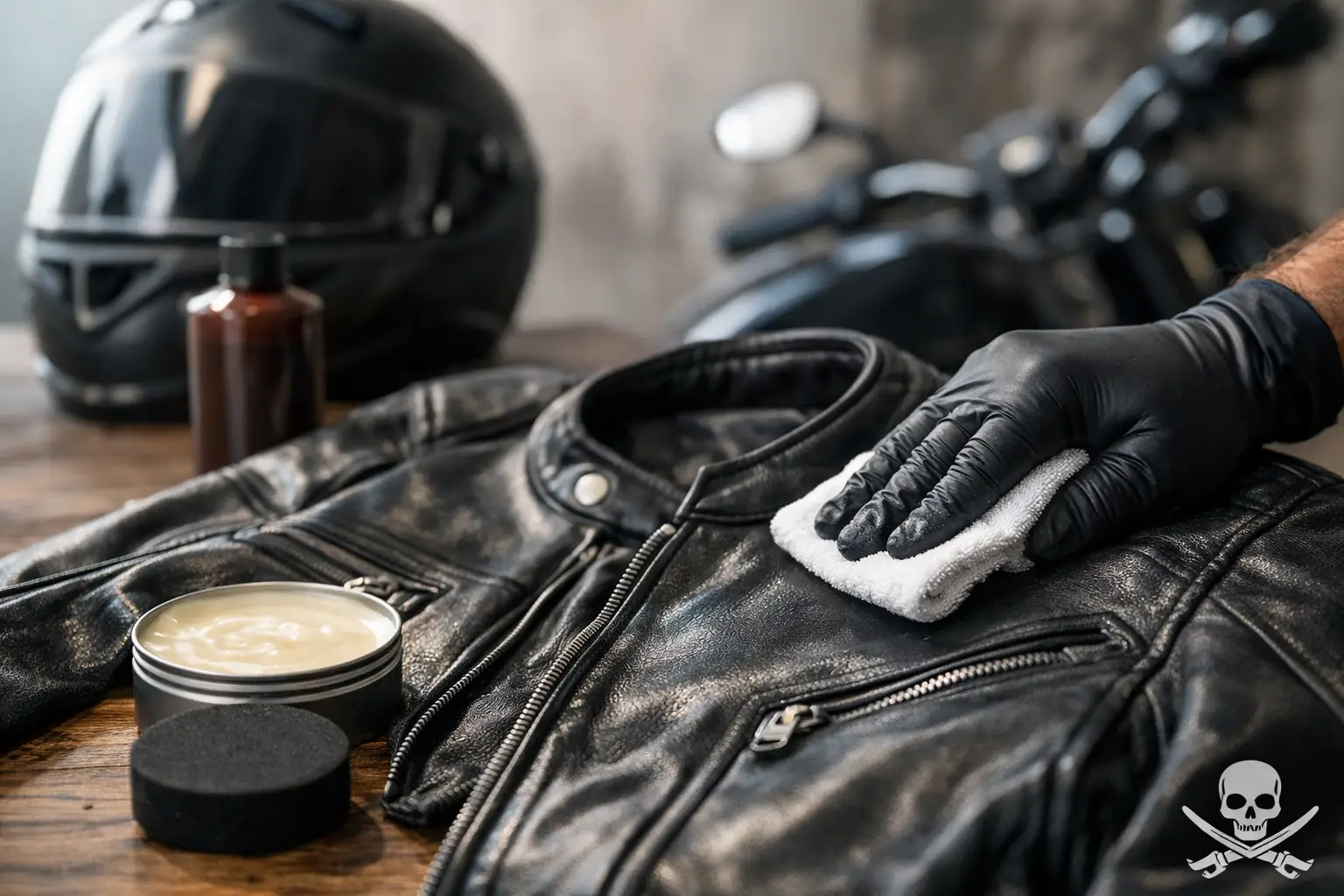
Put a small amount of conditioner on a soft microfiber cloth or clean applicator pad. Work it into the leather in thin circles, covering one panel at a time. Pay extra attention to flex points: elbows, shoulders, cuffs, the back of the waist, pocket edges, and areas around snaps and zippers.
Do not pour conditioner directly onto the jacket. It is easy to overapply and hard to spread evenly. Keep product away from fabric liners, mesh panels, patches with delicate paint, and suede trim unless the conditioner is approved for those materials.
Let the jacket absorb the conditioner according to the product instructions. Then buff lightly with a second clean cloth. The finish should feel supple and look healthy, not shiny, sticky, or wet. If it still feels greasy after drying, buff again and give it more time before wearing it.
Protect the Parts That Wear First
A riding jacket is more than a big leather shell. Cuffs, collars, zipper tracks, snaps, pockets, and side laces take constant abuse. Conditioner helps around these areas, but use a light hand so product does not gum up hardware or transfer onto gloves and shirts.
Check seams while you work. Conditioner cannot repair broken stitching, torn lining, cracked armor pockets, or worn zipper teeth. Catching those issues early keeps a small repair from turning into a jacket that stays parked in the closet.
If your jacket has armor, remove it before a full cleaning or conditioning session when possible. It makes the jacket easier to handle and keeps unnecessary product away from impact protectors and hook-and-loop closures.
Conditioner Is Not a Rain Plan
A conditioned jacket handles changing weather better than dry leather, but it is not automatically waterproof. Leather can resist light moisture, yet sustained rain can soak it, stain it, and pull oils back out as it dries.
If you regularly ride through wet weather, use a leather-safe water repellent after conditioning has fully cured. Make sure the two products are compatible. Some water repellents work best on clean, untreated leather, while others are designed to go over conditioner. Read the label instead of assuming.
For unexpected rain, let the jacket air-dry naturally when you get home. Once it is dry, inspect it. If it feels stiff or looks thirsty, a light conditioning treatment can bring it back.
Store Your Leather Like Riding Gear
The off-season can be rougher on a jacket than a weekend ride if it is stored wrong. Hang it on a broad, sturdy hanger that supports the shoulders. Keep it out of direct sun, away from damp basements, and clear of hot attics or garages with big temperature swings.
Do not seal leather in plastic for months. It needs to breathe. A breathable garment bag is the better move if you need dust protection. Before storage, clean the jacket, let it dry completely, and apply a light conditioner only if the leather actually needs it.
Your riding jacket earns every scuff, crease, and bug mark the hard way. Keep the leather clean, condition it with restraint, and it will stay strong, comfortable, and sharp for the miles ahead.