Cold rain at 60 mph finds every weak spot fast. If you want to know how to waterproof leather motorcycle boots, the job is not just brushing on a product and hoping for the best. Real waterproofing means treating the leather, protecting the seams, and keeping the boot flexible enough to handle long rides without drying out or cracking.
Leather boots take a beating from road spray, engine heat, grime, and sun. Even a solid pair can start soaking through if the finish wears down or the leather dries out. The good news is that most quality riding boots can be made more water-resistant with the right process, and maintained so they hold up better through commuting, weekend runs, and bad-weather miles.
How to waterproof leather motorcycle boots the right way
The first thing to understand is that not every leather boot will become fully waterproof. Some are built with waterproof liners or sealed construction from the factory. Others are plain full-grain leather with stitched panels that can resist water for a while but will not stay bone-dry in a full downpour. That does not mean they are bad boots. It means the treatment has to match the boot.
If your boots already have a waterproof membrane, your goal is maintenance. You are protecting the outer leather so it does not get saturated, heavy, or stiff. If your boots do not have an internal waterproof liner, your goal is improved resistance, not magic. A good wax or cream can buy you serious protection, but standing in deep water or riding for hours in nonstop rain may still push moisture through seams or the tongue.
Start by checking the leather type. Smooth full-grain leather is the easiest to treat and usually gives the best result. Oiled leather also responds well, though you need products that will not strip or over-soften it. Suede and roughout are trickier. They need sprays made for napped leather, and those treatments generally do not last as long as wax on smooth leather.
Clean before you seal
If you skip cleaning, you are sealing dirt, salt, and road grime into the leather. That is a fast way to shorten the life of the boot.
Brush off loose dirt with a soft brush, especially around seams, eyelets, welts, and the area where the upper meets the sole. Then wipe the boots with a damp cloth. If they are heavily soiled, use a leather-safe cleaner, not dish soap or harsh household cleaners. Those can strip natural oils and leave the leather dry.
Let the boots dry naturally before applying anything. Do not put them next to a heater, on a vent, or in direct hot sun. Fast heat can stiffen leather, warp shape, and damage glue. If the inside is damp, stuff them with paper to pull moisture out and change it as needed.
This part matters more than riders think. Waterproofing products bond better to clean, dry leather. If the surface is still wet or dirty, the treatment goes on uneven and wears off faster.
Pick the right waterproofing product
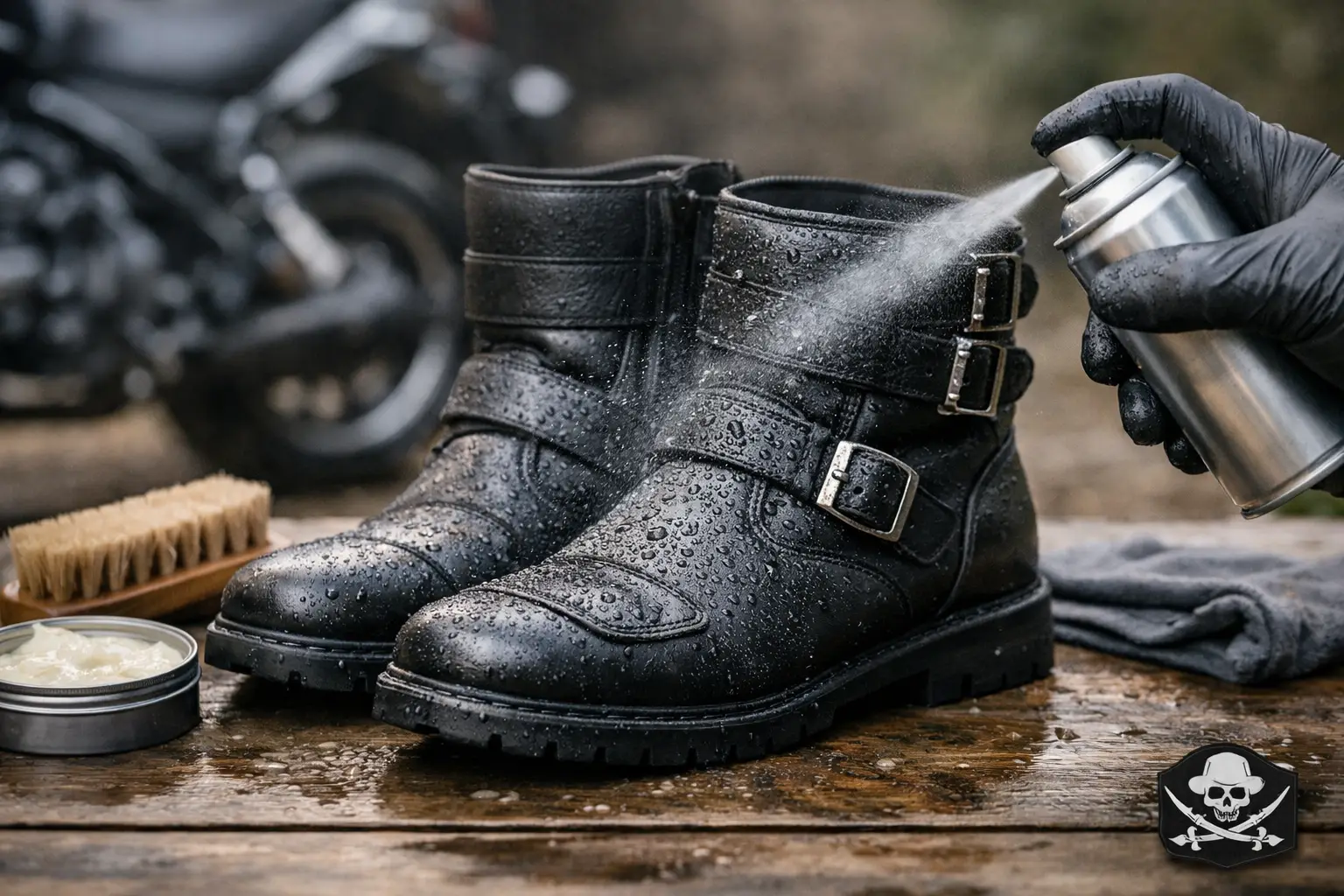
For most leather motorcycle boots, wax-based treatments are the strongest choice. They create a barrier against water, work into seams, and give longer-lasting protection than light sprays. Beeswax products are a common favorite because they add resistance without turning the leather into plastic.
Creams and conditioners with water-resistant properties are a good middle ground. They help keep leather nourished while adding weather protection. They are especially useful if your boots are starting to feel dry. The trade-off is that some creams do not repel hard rain as long as a heavy wax.
Sprays are the easiest option, but they are usually best for suede, roughout, or quick touch-ups. They are convenient and clean to use, but often need more frequent reapplication. For a rider who sees regular rain, spray alone is not always enough on smooth leather.
Silicone-heavy products can bead water well at first, but they are not always the best long-term answer. Some riders like them for quick results. Others avoid them because they can overcoat the leather and reduce breathability. It depends on the product and the boot, but if you have a quality pair of leather riding boots, wax or a good leather-specific waterproofing balm is usually the safer bet.
Apply it like you mean it
Use a clean cloth or your fingers to work the product into the leather in small sections. Cover the toe box, heel, instep, ankle panels, and especially the seams. Those stitched areas are where water often starts creeping in.
Do not slap on a huge amount all at once. Thin, even coats work better. Let the leather absorb the first pass, then add more where needed. Around the tongue and lace area, be thorough. That section catches direct rain and road spray, and it is one of the first places to leak.
If you are using wax, a little warmth can help it spread more evenly. That does not mean blasting the boots with heat. A slightly warm room or warming the product in your hands is enough. Once applied, let the boots sit so the treatment can settle into the leather.
Afterward, buff off any excess if the product calls for it. You want protection, not a greasy surface that grabs dust and grit. If the boots still look dry in spots, add a second light coat rather than one heavy, messy layer.
Don’t ignore the seams and sole edge
A lot of riders focus on the leather panels and miss the vulnerable spots. Water does not care how good the toe looks if it can slip in through stitching or the welt.
Pay close attention to seams, the join where the upper meets the sole, and any flex points near the ball of the foot. Some riders use a seam sealer made for boots, especially on older pairs that have started to seep. That can help, but use it carefully. Too much can leave a stiff, obvious coating. On a workhorse riding boot, function wins, but nobody wants a sloppy finish either.
If the sole is separating even a little, waterproofing will not fix it. That is a repair issue. Same goes for cracked leather. A treatment can help slow wear, but once damage gets deep, water will find a path in.
How often should you reapply?
It depends on how you ride. A weekend cruiser in dry weather can go much longer between treatments than a daily commuter who gets hit with rain, road salt, and washdowns.
As a general rule, reapply when water stops beading and starts darkening the leather right away. That is the sign your protection is wearing thin. For regular riders, every few weeks to every couple months is common, depending on conditions and product type. Wax usually lasts longer than spray. Cream sits in the middle.
Season matters too. Before fall and winter, give your boots a full cleaning and fresh treatment. Wet roads, lower temperatures, and grime put more stress on leather. Staying ahead of that wear is cheaper than replacing boots early.
Mistakes that ruin good boots
The biggest mistake is over-conditioning. Leather needs moisture balance, but too much oil or heavy dressing can make boots overly soft. That may sound harmless, but riding boots need structure. Too much softening can affect support and change the feel on the bike.
Another mistake is using the wrong product for the leather type. Waxing suede usually leaves it blotchy and ugly. Using only a fashion leather conditioner on hard-use motorcycle boots may make them look nice while doing very little against rain.
Then there is heat. Riders still try to dry soaked boots with hair dryers, heaters, or fireplaces. That is rough on leather and rough on adhesives. Slow drying wins every time.
What waterproofing can and cannot do
A solid treatment can keep your boots from soaking through in light to moderate rain, reduce staining, and help the leather last longer. It can also make post-ride cleanup easier because dirt and water sit closer to the surface.
What it cannot do is turn every leather boot into a dive suit. If you ride long distance in serious storms, boot covers or a boot built with a true waterproof liner may still be the better call. There is no shame in that. The right answer is whatever keeps you comfortable and riding.
That is also why quality matters. Better leather responds better to care, holds treatment more evenly, and usually survives repeated wet-dry cycles with less damage. Cheap boots often look the part on day one, then fold up fast when weather gets nasty. A strong pair of leather riding boots, treated right and maintained on schedule, earns its place mile after mile.
If you ride in real conditions, waterproofing is not vanity maintenance. It is part of keeping your gear road-ready. Give your boots the same respect you give the rest of your leather, and they will keep showing up when the weather turns ugly.