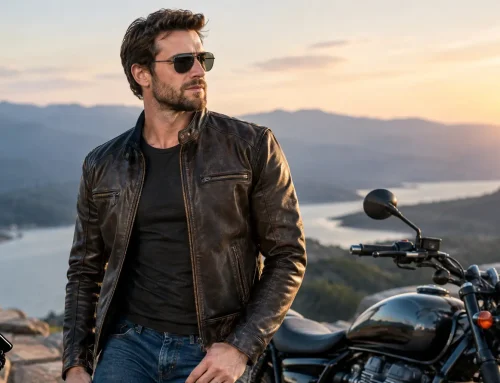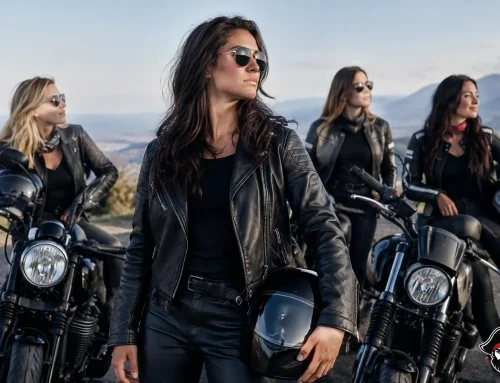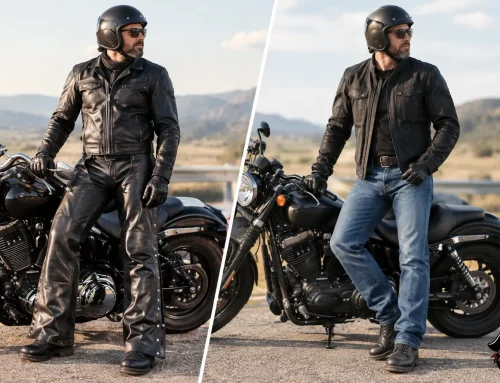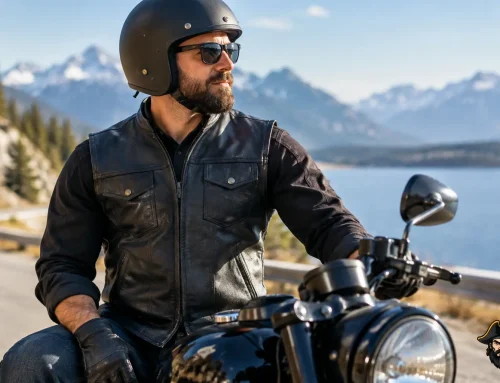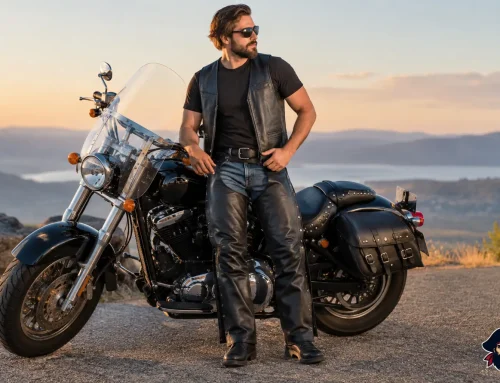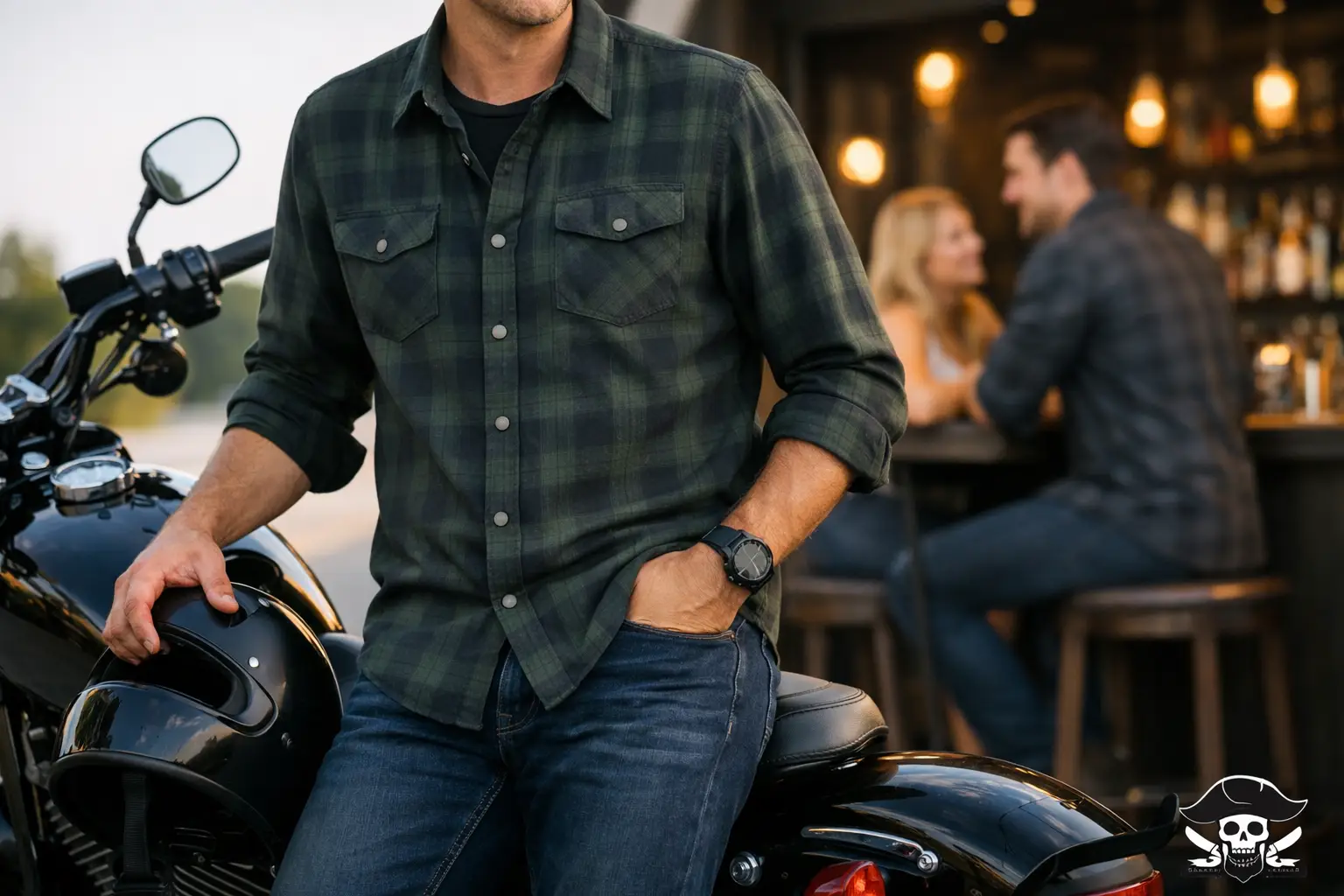
A good motorcycle shirt has to earn its place in your gear bag. Riding shirts are not just another layer for a bar stop or a bike-night photo. The right one handles wind, sun, road grime, changing temperatures, and the kind of long miles that expose cheap gear fast. It should look right on a cruiser, feel comfortable in the saddle, and layer cleanly under a vest or leather jacket.
For riders who want a tough, stripped-down look without wearing a heavy jacket every time they roll out, a riding shirt is a smart piece of road gear. But not every button-up with a motorcycle graphic belongs on the bike. Fabric, cut, construction, and the way you plan to ride all matter.
What Makes Riding Shirts Different?
A regular flannel or work shirt may look the part, but it is built for casual wear. It can bunch at the elbows, pull across the back when you reach for the bars, and flap hard in the wind. A riding shirt should be made with movement and the riding position in mind.
The best versions have a little more structure through the shoulders and back, sleeves that stay put, and a length that does not ride up when you sit down. Snap closures are common because they are easy to handle with gloves and generally hold up better than lightweight plastic buttons. Chest pockets are useful, too, but they should lie flat rather than balloon in the wind.
Protection depends on the shirt. Some riding shirts are primarily a lightweight, road-ready outer layer. Others use tougher materials and reinforced construction for riders who want more abrasion resistance than a standard casual shirt can offer. Neither option replaces a quality leather jacket when conditions call for serious coverage. That is the trade-off. A shirt gives you cooler, easier wear. Leather gives you the heavier-duty feel and protection many riders want for faster roads, colder weather, and longer runs.
Choose the Right Fabric for Your Miles
The material tells you a lot about where a riding shirt belongs in your rotation. Cotton flannel has classic biker appeal and feels familiar right away. It works well for local rides, warm afternoons, and layering over a tee. The downside is that pure cotton can hold moisture and offer limited resistance to wind and abrasion.
Heavier canvas, waxed cotton, denim, or blended fabrics can bring more structure and durability. They tend to hold their shape better at speed and take more abuse from the road. Some riders prefer these materials for daily use because they look better after a season of riding instead of wearing out after a few washes.
Synthetic blends can be the better call when heat and moisture are part of the ride. They often dry faster and can feel lighter against the skin. Still, the look may be less traditional than a heavy flannel or denim shirt. If your bike and your style lean old-school, that matters. Gear should function, but there is nothing wrong with wanting your kit to match the machine.
For cool weather, use a riding shirt as a middle layer. Start with a tee or thermal base, add the shirt, then throw a leather vest or jacket over it. That setup gives you flexibility when the morning is cold and the afternoon turns warm. For summer, a lighter shirt over a breathable tee can keep the sun off your arms while giving you a clean, put-together look at every stop.
Get the Fit Right for the Riding Position
A shirt that fits well standing in front of the mirror can feel wrong as soon as you climb on the bike. Your arms move forward, your shoulders round, and the back of the shirt stretches across the seat. That is why a little room through the upper body is usually better than a tight fashion fit.
You want enough space to reach the bars without pulling at the shoulders or feeling pressure across the chest. At the same time, too much loose fabric becomes a distraction at highway speed. The shirt should sit close enough to your body that it does not whip around, especially at the sleeves and waist.
Length is another detail riders overlook. A shirt that ends high at the waist may creep upward while seated, leaving a gap between it and your belt. A slightly longer cut gives better coverage and works more naturally under a vest or jacket. Check sleeve length as well. Sleeves that are short when your arms are extended can leave your wrists exposed to sun, wind, and grit.
If you plan to layer up, do not buy based only on how the shirt fits over a thin tee. Think about what you normally wear on the road. A rider who uses a vest, hoodie, or leather jacket needs room for those layers without turning the whole setup into a bulky mess.
Details That Matter on the Road
Small construction details separate a riding shirt you wear once in a while from one you grab before every ride. Look for solid stitching around the shoulders, cuffs, collar, and pocket corners. These are pressure points, especially if you ride often or wear your shirt under a vest.
Closures matter more than most people think. Snaps give a clean biker look and are fast to use, but make sure they are secure. Weak snaps can pop open in the wind. Buttons can work well, particularly on heavier shirts, though they take more effort with gloves. A shirt with adjustable cuffs is useful because it lets you tighten the wrist area and cut down on sleeve flutter.
Collars deserve a quick check, too. A loose collar that catches every gust gets annoying fast. Some riders prefer a simple collar that can be tucked under a vest. Others want a more structured collar that keeps its shape through repeated wear. There is no one right answer. It depends on whether you are building your outfit around comfort, a clean cruiser profile, or easy all-day layering.
Color is practical as well as personal. Black, charcoal, denim blue, and dark plaid hide road dust and oil smudges better than light shades. They also pair easily with black leather, worn denim, and motorcycle boots. A bold plaid or embroidered design makes more of a statement, but a solid dark shirt gives you the most mileage across different rides and seasons.
Build a Better Riding Setup
Riding shirts work best as part of a complete setup, not as an afterthought. Pair one with a leather vest when you want arm movement and that traditional cut-off look. Add a quality leather jacket when temperatures drop, the weather turns, or you want more substantial road coverage. Tough motorcycle boots keep the lower half of the setup grounded and give you the protection and traction sneakers cannot match.
Gloves finish the job. Even on a short run, your hands take wind, vibration, bugs, and whatever the road throws at you. A shirt, vest, boots, and gloves create a practical system that still looks like it belongs on the bike rather than in a sporting-goods aisle.
For riders carrying essentials, do not overload the shirt pockets. Keys, wallet, phone, and toll gear can make chest pockets sag or jab into you while riding. Keep the shirt clean and comfortable, then use motorcycle luggage or a purpose-built holder for the rest. Blackbeard’s Motorcycle Gear is built around that kind of no-nonsense approach: gear that looks right, fits the ride, and does a real job.
When a Riding Shirt Is the Right Call
A riding shirt makes sense for warm-weather rides, short local runs, rallies, casual meetups, and any day when a full leather jacket feels like too much. It is also a strong layering piece for riders who do not want to look like they are wearing the same outfit every time they stop the bike.
For cold, wet, high-speed, or unpredictable conditions, step up your coverage. A riding shirt can still be part of the setup, but it should not carry the whole load. Your gear should match the miles ahead, not just the forecast when you leave the driveway.
Pick a shirt with solid construction, a rider-friendly cut, and a fabric that suits how you actually ride. Then wear it hard. The best riding shirt is not the one that stays perfect on a hanger. It is the one that feels broken in, looks better with miles on it, and is ready when the road calls.