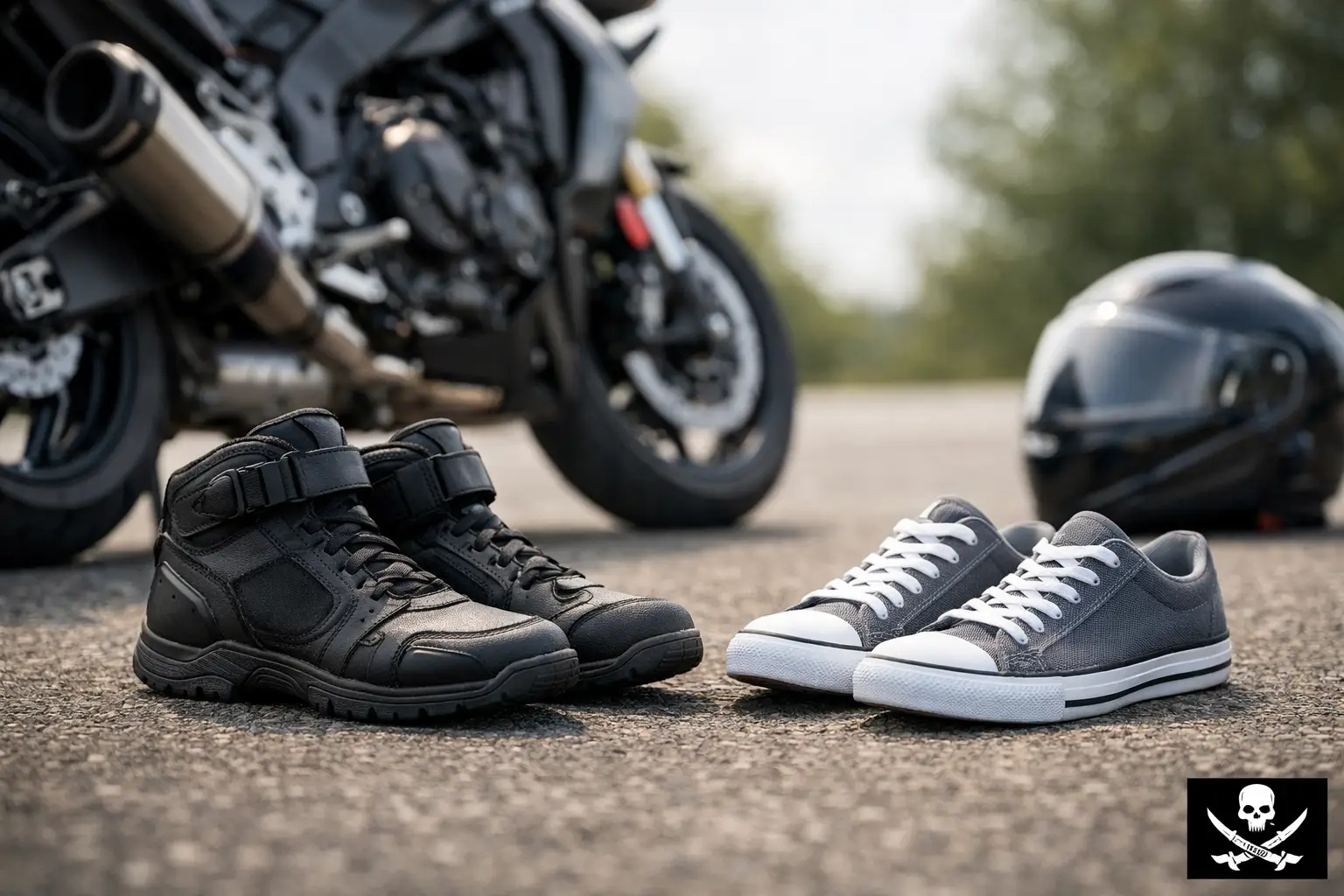
A quick ride to the gas station can turn into a hard stop, loose gravel at an intersection, or a hot exhaust pipe against your ankle. That is where the riding shoes vs sneakers decision stops being about looks and starts being about what is actually between you and the road.
Sneakers are easy. Most riders already own a pair, they are comfortable on foot, and they fit a casual look. But a motorcycle asks more from footwear than a walk through a parking lot. Good riding shoes are made to handle the pegs, shifter, pavement, and the long hours that come with chasing open road.
Riding Shoes vs Sneakers: The Real Difference
The biggest difference is purpose. Sneakers are designed for everyday movement, light activity, and comfort. Riding shoes are designed around the contact points and risks of operating a motorcycle. That can include reinforced toe boxes, stronger heel cups, ankle support, oil-resistant outsoles, shifter pads, and abrasion-resistant materials.
Not every riding shoe has every feature, and not every sneaker is flimsy. A high-top sneaker may feel more supportive than a low-cut canvas shoe. Still, a sneaker’s construction is rarely meant to stay intact when it gets caught on a footpeg, scraped across asphalt, or twisted under the weight of a bike.
This does not mean every ride demands a tall, heavy boot. It means riders should choose footwear based on how, where, and how often they ride. A short trip around town and a 300-mile highway day are different jobs, but both deserve more thought than grabbing whatever is by the door.
Why Sneakers Fall Short on a Motorcycle
A sneaker’s soft sole is comfortable when walking, but it can be a weak point on the bike. Constant contact with footpegs can wear it down fast. Thin soles also provide less insulation from vibration, heat, and the pressure of supporting a bike at a stop.
The upper material matters just as much. Mesh panels breathe well, but they offer little resistance to wind, debris, hot engine parts, or a slide. Canvas can look right on a stripped-down bike, yet it can tear quickly under abrasion. Even leather fashion sneakers usually lack the reinforcement found in footwear made for riding.
Then there is ankle coverage. Low-top sneakers leave the ankle exposed, while many casual high-tops offer only soft fabric around it. A riding shoe with a structured ankle area can provide more support and a tougher barrier without forcing you into a full-height motorcycle boot.
Sneakers can also lose their grip when surfaces get ugly. Gas station concrete, rain-slick pavement, painted parking lines, and gravel all punish a smooth or worn-out sole. Traction is not a glamour feature. It is what helps keep your foot planted when you are balancing hundreds of pounds of motorcycle.
What Riding Shoes Bring to the Table
Riding shoes fill the space between casual footwear and traditional motorcycle boots. They usually sit around the ankle, lace up like a familiar shoe, and work with jeans without making you look like you are headed to a track day. For cruiser, chopper, and daily riders, that balance is the point.
A solid pair starts with a tougher outer material, often leather or reinforced synthetic construction. Leather has a hard-earned place in biker gear because it holds up, breaks in with character, and offers better abrasion resistance than lightweight fabric. It also looks right whether you are riding a bagger, a bobber, or a stripped-down custom.
Look for reinforcement where a motorcycle puts pressure on your feet. A shifter pad helps prevent the left shoe from getting chewed up by the shift lever. Reinforced toes and heels add structure. A firmer sole spreads pressure across the foot instead of letting the peg dig in all day.
Good riding shoes should also make operating the motorcycle easier, not clumsier. You need enough flexibility to shift and brake cleanly, enough feel to know where your foot is, and enough grip to put a foot down with confidence. The right pair disappears once you are moving. You notice them only when they save your feet from fatigue, weather, or a bad surface.
Protection Is More Than a Thick Sole
A thick sole alone does not make a shoe riding-ready. Protection comes from the whole build: the material, stitching, closure, ankle structure, sole attachment, and reinforcement in high-impact areas.
Pay attention to how the shoe closes. Laces are common and comfortable, but loose loops can catch on pegs, shifters, or other parts of the bike. Tuck them securely, use a lace keeper if the shoe has one, and never let them hang loose. Some riders prefer a side zipper paired with laces because it makes getting geared up faster while keeping the fit secure.
If a shoe carries a recognized motorcycle protective rating, read what that rating covers rather than assuming it means invincible. Protective footwear is a layer of defense, not a free pass to take chances. The goal is simple: give your feet and ankles a better shot when the ride gets rough.
When Sneakers Can Make Sense
There is no tough-guy prize for pretending every ride is the same. Sneakers may be the practical choice when you are not riding at all, when you are walking around an event after parking the bike, or when you need an extra pair of casual shoes in your luggage.
Some riders also use sneakers for very short, low-speed trips. That is a personal risk decision, and it is better made honestly than dressed up as a safety recommendation. The risk does not disappear because the destination is close. Many crashes happen near home, at intersections, and in parking lots where riders are least expecting trouble.
If you ride in sneakers occasionally, choose the strongest pair you own rather than thin canvas or lightweight running shoes. High-tops, leather uppers, secure laces, and a grippy sole are better than the alternative. But call them what they are: a compromise, not motorcycle protection.
Choose Footwear for the Way You Ride
Your bike and riding habits should shape the purchase. A rider commuting through city traffic needs grip for frequent stops, weather resistance, and a shoe comfortable enough for a full workday. A weekend cruiser may care most about leather, ankle coverage, and a classic profile that works with jeans and a vest. Long-distance riders often want more support, a tougher sole, and room for heavier socks when the temperature drops.
Weather changes the equation too. Summer heat makes ventilation attractive, but open mesh is a trade-off. Rain calls for materials that resist water and a sole that does not skate on wet pavement. Cold-weather riding favors a more substantial leather shoe or boot that blocks wind and gives you room to layer up.
Think about your controls before buying. Large, bulky footwear can make it harder to feel a small shift lever or rear brake pedal. Shoes that are too soft can make those controls uncomfortable over time. Wear the footwear around the house, sit on the bike, and check that you can shift, brake, and put both feet down naturally before committing to a long ride.
Fit Should Feel Secure, Not Restrictive
A riding shoe should hold your heel in place and feel stable around the ankle without pinching your toes. Excess movement inside the shoe can create hot spots and reduce control. Too-tight footwear becomes a distraction after an hour in the saddle.
Do not buy based on appearance alone, even when the look matters. Black leather, clean stitching, a low-profile sole, and a worn-in biker attitude are all part of the appeal. But the shoe has to earn its place once the kickstand goes up. Check the sole, closure, material, and reinforcement before you check the mirror.
The Best Middle Ground for Most Riders
For many riders, motorcycle riding shoes are the smart middle ground. They are easier to walk in than tall boots, more protective than sneakers, and built to match the everyday biker uniform of denim, leather, and road grime. They also make sense for riders who want one pair that can handle the bike, a stop for food, and a full day on their feet.
Tall motorcycle boots still have the edge for serious touring, harsh weather, off-bike work, and riders who want maximum coverage. Sneakers still win for pure casual comfort. Riding shoes win when you need road-ready function without giving up your everyday style.
Your footwear is one of the first things to hit the ground at a stop and one of the last things you think about before a ride. Make that choice before the engine fires. A well-built leather riding shoe from Blackbeard’s Motorcycle Gear keeps the look clean, the controls familiar, and your feet better prepared for whatever waits past the next turn.