A good riding boot has to do more than look mean next to a pair of worn denim. It has to stay planted at a stoplight, handle repeated shifts, protect your feet from hot pavement and road grime, and still feel decent when you walk into a diner. This Milwaukee Leather boots review looks at what riders actually get from the brand: biker-first styling, practical construction, and pricing that leaves room in the budget for the rest of your gear.
Milwaukee Leather boots are not built around runway fashion or ultra-light sport-bike minimalism. They are made for riders who want the old-school motorcycle look – black leather, solid soles, harness hardware, engineer-boot attitude, and a boot that works with a vest or leather jacket. That focus is exactly why the brand has earned a place in cruiser, chopper, and Harley-style circles.
Milwaukee Leather Boots Review: What Stands Out
The biggest selling point is value. Milwaukee Leather gives riders the heavy-leather boot look and useful riding features without charging the kind of money often attached to heritage workwear or premium fashion labels. For a rider replacing worn-out boots, building a first set of road gear, or keeping a second pair ready for rainy days, that matters.
Most Milwaukee Leather boot styles lean into durable leather uppers, oil-resistant or slip-resistant outsole designs, and closures that make sense on a motorcycle. Depending on the model, that may mean pull-on engineering-boot construction, side zippers, laces, buckles, or adjustable straps. The right setup comes down to how you ride and how often you need to take the boots on and off.
A side zipper is a practical win for commuters and daily riders. You can lace the boot to your preferred tension once, then use the zipper for faster entry and exit. Pull-on boots bring a cleaner, tougher profile and fewer moving parts, but they can take longer to break in and may fit differently around the instep. Harness and engineer styles are a natural match for cruisers, especially when road presence matters as much as utility.
The styling is direct and unapologetically biker. These are boots meant to work with black leather, faded jeans, riding shirts, and a motorcycle that does not need chrome to make an impression. If you want a slim sneaker-like riding shoe or a low-profile European touring boot, Milwaukee Leather may not be your lane. If you want a boot that looks right parked outside a roadhouse and still earns its keep on the ride there, it makes a strong case.
How They Hold Up on the Road
Leather boots usually ask for a break-in period, and Milwaukee Leather is no exception. A new pair can feel stiff through the ankle and across the vamp, particularly on taller boots or thicker leather styles. That stiffness is not automatically a flaw. It is often part of the support riders want once the boot begins to conform to their foot.
The key is not to judge a boot after five minutes on carpet. Wear it around the house, make short rides, and let the leather settle gradually. Heavy socks can help during the first few wears, but do not try to force a fit that is clearly too narrow, too short, or painfully tight across the top of the foot. Leather can relax some. It will not turn the wrong size into the right size.
On the bike, the sole is where a boot proves itself. Milwaukee Leather boots generally appeal to riders looking for a broader, more substantial platform than casual footwear offers. That can help when putting a foot down on uneven pavement, walking across gravel at a gas stop, or controlling a heavier cruiser at low speed. A defined heel is also useful for riders who prefer a positive feel against their foot controls.
There is a trade-off. A thick sole and heavier leather can feel less flexible than a lightweight riding shoe, especially during long walks. Riders who spend all day off the bike at work, festivals, or events may prefer a shorter ankle boot with a zipper or lace-up design. Riders who mostly ride, stop, and repeat may appreciate the extra structure of a taller harness or engineer boot.
Wet-weather performance also depends on the specific model and maintenance. Leather can resist a lot of road spray when it is properly conditioned, but not every leather boot is designed as a fully waterproof boot. If you ride through hard rain regularly, choose a style that specifically lists waterproof construction rather than assuming every leather upper will keep water out. That is the kind of detail worth checking before checkout.
Protection Is More Than a Thick Leather Upper
A sturdy leather upper adds a useful layer between your foot and the road environment, but riders should be realistic about what any boot offers. Protection varies by model. Some boots prioritize a traditional biker look, while others add more purpose-built features such as reinforced toes, ankle coverage, or stronger shifter contact areas.
For relaxed cruising and everyday motorcycle use, a well-made leather boot is a major step up from canvas shoes or casual sneakers. For aggressive riding, high-speed touring, or conditions where maximum impact and abrasion protection are the priority, look closely at the exact safety features and construction details before choosing. Style has value, but a boot should match the way you actually ride.
Choosing the Right Milwaukee Leather Boot Style
The best Milwaukee Leather boot is not necessarily the tallest or the heaviest. It is the one that fits your motorcycle, your riding schedule, and your personal style.
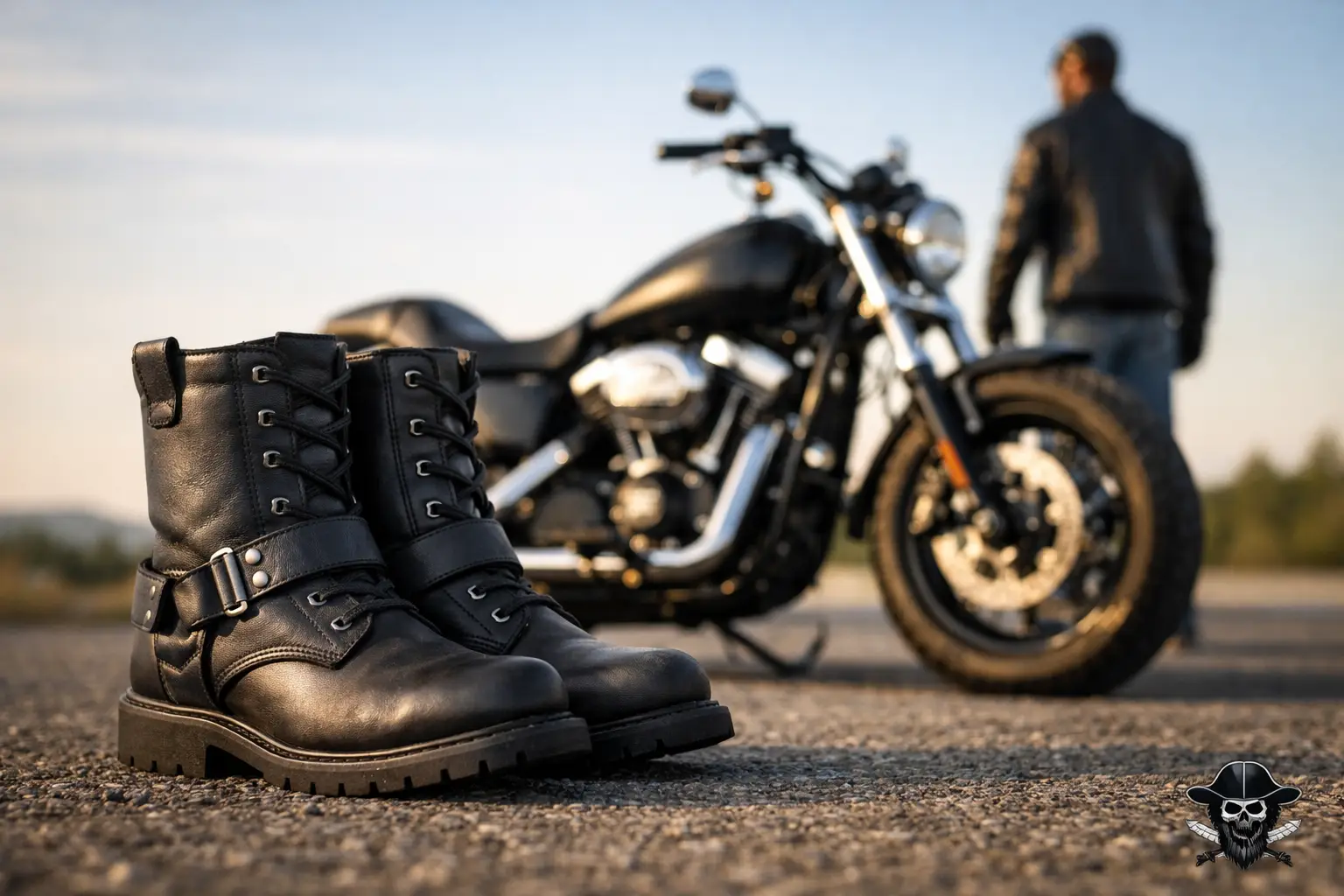
A classic harness boot is for the rider who wants that unmistakable cruiser look with minimal fuss. It works well with straight-leg jeans and a leather vest, and the harness hardware gives it a hard-edged finish without needing extra accessories. Engineer boots have a similarly traditional feel, usually with a taller shaft and a more work-boot-inspired stance. They make sense for riders who want coverage and a serious, no-nonsense profile.
Lace-up boots are a better choice when you want more adjustment through the foot and ankle. They can provide a more locked-in feel, which is helpful for riders who walk more or prefer a closer fit. A zipper-equipped lace-up boot offers the best of both worlds when the zipper is backed by a secure closure system: dial in the laces, then avoid re-lacing every time you ride.
For women riders, Milwaukee Leather offers styles that can carry the same tough biker character without defaulting to overly delicate fashion footwear. The goal should still be the same – stable footing, enough coverage for your riding habits, and a sole that does not make you feel unsure at a stop. A heel can look sharp, but it should not interfere with control or comfort.
Care That Keeps Leather Looking Road-Ready
Boots take abuse that jackets do not. They catch dust, bugs, fuel-station grime, rainwater, and whatever is sitting in a parking lot. A little maintenance goes a long way toward keeping the leather from drying out or cracking before its time.
Brush off dirt after muddy or dusty rides, wipe the leather with a slightly damp cloth when needed, and allow the boots to dry naturally away from direct heat. Once dry, use a leather conditioner appropriate for the finish. Conditioned leather stays more flexible, looks better, and handles regular wear with less complaint. If the boot has zippers, keep them clear of dirt and operate them gently instead of yanking them when they bind.
Check the sole, heel, stitching, and closures before a long trip. A boot does not have to look brand-new to be dependable, but loose soles and failing hardware are not things to ignore. Road gear should be used hard, not used carelessly.
Milwaukee Leather boots make the most sense for riders who want authentic biker style with practical, everyday function at a price that does not punish the wallet. At Blackbeard’s Motorcycle Gear, the smart move is to choose the boot that fits your ride rather than chasing the loudest look. Get the leather that feels right on the pegs, holds steady on the ground, and still looks like it belongs beside your bike.