Your vest takes more abuse than it gets credit for. It catches road dust, bugs, fuel fumes, rain, sun, sweat, and whatever else a long ride throws at you. Proper leather vest care keeps that broken-in piece looking tough without letting it dry out, crack, stink, or lose its shape.
A quality leather vest is built for the road, but it is not maintenance-free. Treat it right after the miles pile up and it can stay in your regular rotation for years. Ignore it, and even good leather can turn stiff, faded, and rough around the edges.
Why Leather Vests Need Regular Attention
Leather is skin. It has natural fibers and oils that give it strength, flex, and character. Dirt works down into those fibers, while sun and dry air pull moisture out. Add sweat from hot-weather rides or a sudden downpour, and your vest can start feeling hard instead of broken in.
The goal is not to make your vest look brand new every weekend. Riders earn the marks, grain, and character that come with real miles. The job is to stop damage before it becomes permanent. A clean, conditioned vest should still look like your vest – just stronger, more comfortable, and ready for the next ride.
How often you clean it depends on how you ride. A vest worn a few times a month may only need a quick wipe-down and occasional conditioning. A daily rider’s vest, especially one worn through heat, rain, dust, and long highway runs, needs more attention. Check it after rough weather, road trips, or any ride where it gets soaked or heavily dirty.
Leather Vest Care Starts With a Dry Wipe-Down
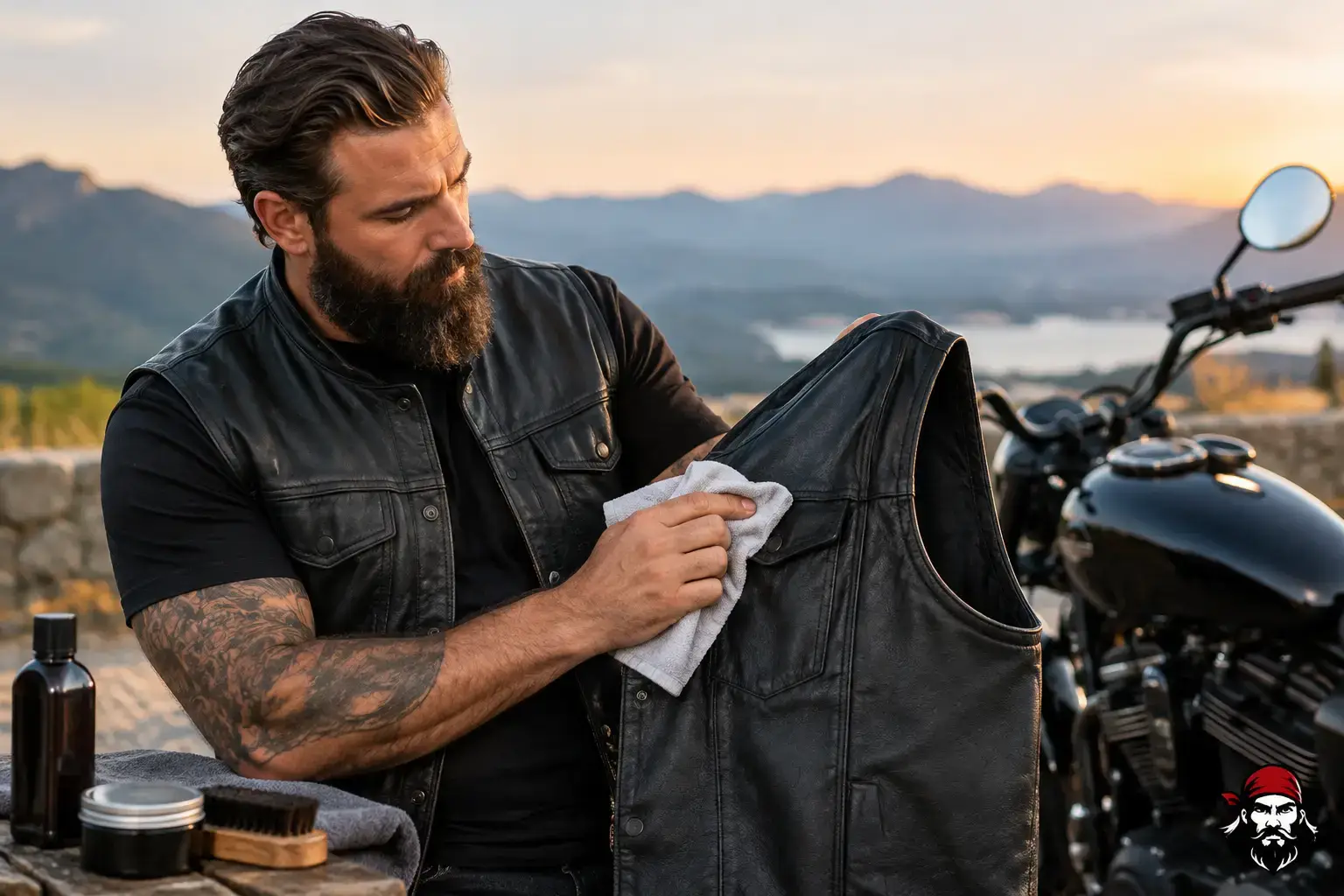
The easiest habit is also the one most riders skip. After a ride, let the vest air out, then wipe off loose dust and road grime with a soft, dry microfiber cloth. Do not scrub hard. You are lifting surface dirt, not sanding a tank.
Pay attention to the shoulders, back panel, collar, armholes, pockets, and lower hem. Those areas catch the most sweat, windblown grit, and grime from the bike. If your vest has laces, snaps, patches, side straps, or a gun pocket, wipe around the hardware and seams where dirt likes to settle.
Never toss a leather vest into a washing machine or dryer. The machine can shrink leather, damage the lining, warp the shape, and beat up snaps and zippers. The dryer is worse. High heat pulls natural oils from leather fast, leaving it stiff and vulnerable to cracking.
If the vest is only dusty, a dry cloth is enough. If it has light mud or bug residue, use a clean cloth that is barely damp with water. Wring it out hard before it touches the leather. Work in small sections, then immediately wipe the area with a dry cloth. Leather should never be saturated.
Clean Road Grime Without Stripping the Leather
For heavier dirt, use a leather cleaner made for riding gear. Apply a small amount to a soft cloth, not directly onto the vest, and work it gently into the affected area. Follow the product instructions and keep your pressure light. Aggressive rubbing can alter the finish, especially on softer hides, suede, distressed leather, or vests with a vintage look.
Test any cleaner in a hidden spot first, such as inside the lower hem or under a pocket flap. Leather finishes vary. A cleaner that works perfectly on one black vest may darken, dull, or change the feel of another.
Stay away from household cleaners, dish soap, bleach, alcohol, baby wipes, and all-purpose sprays. They may remove grime fast, but they can also strip oils and leave the leather dry. Silicone-heavy shine products are not a shortcut either. They can leave a slick coating that attracts dust and gives a riding vest an artificial gloss.
For salt stains from winter roads or coastal air, use a barely damp cloth and clean the area as soon as possible. Salt pulls moisture from leather, so do not let it sit for weeks. Wipe gently, allow the vest to dry naturally, then condition it once it is fully dry.
If the lining smells after hot rides, turn the vest inside out if its construction allows it and let it air out in a dry, shaded area. Spot-clean the lining only according to its fabric type. Do not soak the entire vest to chase a smell. If odor has worked deep into the lining or leather, professional leather cleaning is the smarter move.
Condition the Leather, But Do Not Overdo It
Conditioner replaces some of the oils leather loses through sun, dry air, wear, and cleaning. It keeps the hide flexible so it moves with you instead of feeling like cardboard at every stoplight.
Apply conditioner only after the vest is clean and completely dry. Put a small amount on a soft cloth and work it over the leather in thin, even layers. Give extra attention to flex points such as the shoulders, side panels, pocket edges, and areas near snaps or zippers. Let it absorb, then buff away any excess with a clean cloth.
More conditioner is not better. Overconditioning can make leather feel greasy, soften it too much, darken the color, and attract road dust. For most riders, conditioning two to four times a year is plenty. A vest exposed to extreme heat, dry climates, or frequent rain may need it more often. A heavy, well-oiled vest may need less.
Use a conditioner meant for the type of leather you own. Smooth finished leather, naked leather, suede, nubuck, and distressed leather do not all respond the same way. If your vest has a weathered finish, choose products carefully and expect that conditioning can deepen its color slightly. That is part of the trade-off for keeping it flexible.
Dry a Wet Vest the Right Way
Getting caught in rain does not ruin a leather vest. Heating it up too fast might.
When your vest gets wet, blot off surface water with a clean towel. Hang it on a wide, sturdy hanger in a room with good airflow, away from direct sun, heaters, fireplaces, vents, and hair dryers. A narrow wire hanger can stretch the shoulders and leave ugly dents, especially when the vest is heavy with moisture.
Let it dry at its own pace. Once it is fully dry, check the leather. If it feels tight or stiff, apply a light coat of conditioner. Do not condition soaking-wet leather. It will not absorb evenly, and you can trap moisture where you do not want it.
Wet weather is also a good reason to inspect the vest’s stitching, snaps, and pocket lining. Water finds weak spots. Catching a loose stitch early is cheaper and easier than letting a pocket seam tear open on the road.
Store Your Vest Like It Matters
Do not fold a leather vest into a drawer, cram it into a saddlebag for months, or leave it hanging in a damp garage. Long-term pressure creates creases, moisture encourages mildew, and direct sunlight fades color.
Hang it upright on a broad hanger in a cool, dry closet or gear room. Give it space so it is not crushed between jackets. If you need to cover it, use a breathable garment bag or a clean cotton sheet. Plastic bags can trap moisture and create the perfect conditions for mildew.
Before storing it for the season, clean off road grime, make sure it is completely dry, and add a light layer of conditioner if the leather feels thirsty. Empty every pocket. Old receipts, loose change, snacks, and forgotten items can create pressure marks or attract pests.
Keep your vest separate from fuel cans, chemicals, and oily shop rags. Gasoline, brake cleaner, and other garage chemicals can stain leather and leave odors that are hard to remove. Your riding gear deserves a cleaner home base than the corner of the workshop floor.
Check the Hardware and Details
Leather is the main event, but the details keep a vest functional. Every few rides, inspect snaps, zipper tracks, lace holes, side buckles, pocket closures, and patch stitching. A small problem can become a road-side headache when it is ignored.
Wipe metal hardware dry after rain and keep zipper teeth free of dust and grit. If a zipper starts sticking, do not force it. Clean the track first and use a zipper-safe lubricant sparingly. For patches, check the edges for lifting thread before the wind does it for you.
Quality riding leathers are made to be worn, not babied. Blackbeard’s Motorcycle Gear carries road-ready leather apparel built for riders who want hard-working gear with real biker style. Care for it with the same common sense you bring to your bike, and it will keep earning its place on every ride.
A vest that fits your ride should show some miles. Keep the grime off, keep the leather conditioned, let it dry naturally, and store it with respect. The result is not a showroom piece. It is better – dependable gear that looks like it belongs on the road.