A toll booth is no place to dig through a vest pocket, pull off a glove, or gamble that a loose transponder will register. Good toll pass mounting puts your pass where the reader can catch it, keeps it protected from road grime, and keeps it from beating up your motorcycle. It is a small upgrade, but for riders who use turnpikes, express lanes, bridges, and parkways, it saves real aggravation mile after mile.
The right setup is not just about sticking a tag wherever there is open space. Motorcycles create a few complications that cars do not: open weather exposure, vibration, theft risk, metal interference, and limited flat mounting surfaces. Get those details right once and your toll pass is ready when the road points toward the next state line.
Why toll pass mounting deserves a proper setup
A transponder tossed into a tank bag or jacket pocket may work sometimes. Sometimes is not good enough when missed tolls can lead to mailed invoices, added administrative fees, and a hassle you did not sign up for. A pass needs a consistent position with a clear path to the toll reader.
Motorcycle bars, forks, fairings, and windshields are exposed to wind, bugs, rain, vibration, and curious hands at every gas stop. A purpose-built holder beats zip ties, tape, and improvised hardware because it controls the pass without turning your bike into a rattling mess. It also makes removing the pass for replacement, battery service, or a different bike much easier.
The cleanest setup also protects the machine you worked hard to build. Cheap brackets, bare metal clamps, and loose mounts can rub through paint, mark chrome, or scar handlebars. That is not a bargain. A good motorcycle toll pass holder should hold firm while using bar-safe contact points that do not grind into the finish.
Start with the toll agency’s instructions
Before choosing a mounting point, read the instructions that came with your specific toll tag. Not every pass works the same way. Some portable transponders are designed for a windshield in a car, while others have motorcycle-specific placement guidance. Sticker tags, battery-powered units, and switchable multi-occupancy passes can all have different requirements.
Do not assume a location that works for one toll authority will be ideal for another. Check whether the agency warns against mounting the tag behind metal, inside a metal enclosure, or directly beside electronics. If the pass has an indicated front, keep that side facing outward as directed. A holder can protect the tag, but it cannot fix incorrect orientation.
If your route crosses several states, confirm that your pass is accepted along the whole trip. A properly mounted pass is only useful where its account is recognized. Keep your account current before a long ride, especially after changing your plate, motorcycle, mailing address, or payment card.
Choose a mounting location with a clear signal path
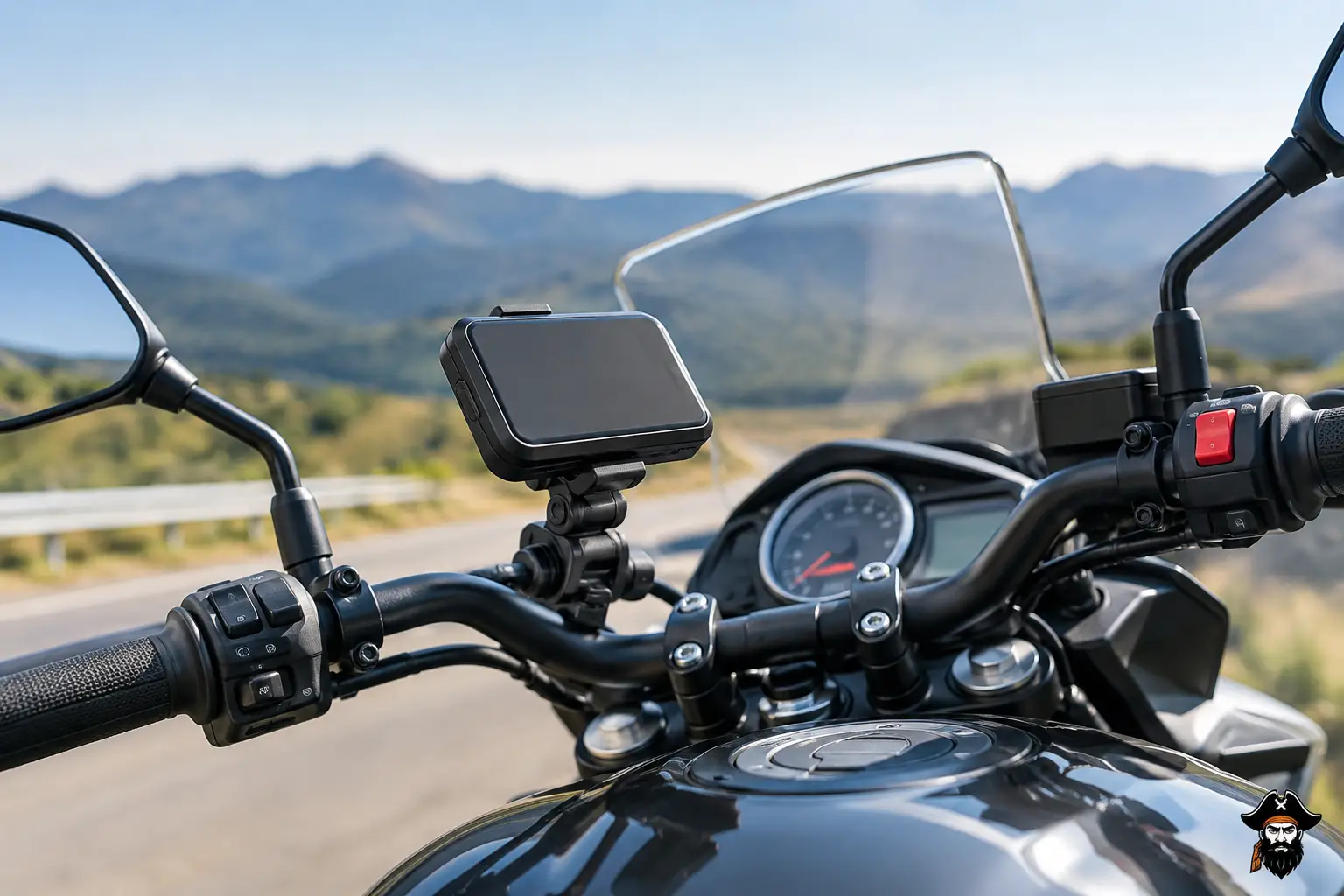
For many motorcycles, the best location is high and forward, away from large metal surfaces and positioned so the pass faces the toll reader. The handlebar area is a popular choice because it is accessible, visible enough to inspect, and easy to reach without taking apart the bike. On bikes with a windshield or fairing, a location near the front can also work well if it follows the toll authority’s placement requirements.
Avoid burying the pass inside a locked saddlebag, under a seat, in a packed tool roll, or beneath heavy layers of gear. Those places may protect it from weather, but they can block the reader or cause inconsistent scans. A tank bag is convenient for storage, not always for reliable detection, especially if the bag shifts or has magnets, electronics, and other clutter around the tag.
There is a trade-off between exposure and performance. Putting the pass far forward may give it a clean view, but it can also take the full blast of rain and road debris. Mounting it farther back improves shelter but may reduce its signal path. A compact holder on the bars often lands in the practical middle: protected enough for regular riding, clear enough for dependable reads, and simple to remove when needed.
Keep metal and moving parts in mind
Metal is the enemy of a lot of transponder signals. Do not clamp the pass directly against a steel bracket or lock it into a solid metal case unless the manufacturer specifically says it is acceptable. Keep it clear of big chrome accessories, phone mounts with heavy metal backing plates, auxiliary lights, and dense bundles of wiring when possible.
Also inspect full steering movement before you ride. Turn the bars lock to lock and make sure the holder does not hit the tank, fairing, cables, brake lines, or ignition. A pass holder should never interfere with controls or distract from your view of the gauges.
Install it like road gear, not a temporary accessory
Clean the bar or mounting surface first. Dirt trapped under a clamp or strap can act like sandpaper over time. Position the holder where it is easy to check, then secure it according to the holder’s design. It should not rotate, slide, sag, or bounce when you tap it firmly.
Once installed, load the pass so its face is oriented correctly. Close the holder completely and inspect the seal, latch, or retention strap. The tag should not be able to work loose over rough pavement. If you can hear it rattling at idle, fix it before the next ride.
After the first ride, check the setup again. Motorcycle vibration has a way of finding weak hardware fast. Look for shifting, loosened fasteners, rub marks, or a holder that has crept toward a control cable. A 30-second inspection after the first few rides can prevent a lost pass and an expensive replacement.
For riders who want a clean, purpose-built answer, Blackbeard’s Motorcycle Gear offers a rugged toll pass holder designed to stay easy to use without scratching your bars. That matters on a stripped-down cruiser just as much as it does on a bagger loaded with luggage. Your bike should look finished, not patched together with hardware-store fixes.
Weather protection matters, but do not overdo it
Rain will find anything mounted on a motorcycle. A holder should shield the pass from direct spray and road grit while still allowing it to communicate with the reader. Do not wrap the transponder in foil-lined material, bury it under thick metal-backed padding, or seal it inside an unknown case simply because it looks weatherproof. Too much shielding can create scan problems.
Check the holder after heavy rain, pressure washing, or long rides through dust. Wipe away grime that builds over the opening and inspect the pass itself for water intrusion or damage. If your transponder uses a battery, pay attention to the toll agency’s replacement notices. A dead tag can look perfect in the holder and still fail at the booth.
Security is another reason to use a holder rather than leave the pass exposed. No motorcycle accessory is theft-proof, but a secure holder makes a quick grab less likely and keeps the pass from flying free at highway speed. If you park for extended periods in high-risk areas, remove the tag and store it with your riding gear.
Test your toll pass mounting before a big ride
Do not wait until a cross-country run to learn whether your placement works. Take a familiar toll route and check your account afterward. If the transaction posts normally, your setup is doing its job. If it does not, do not keep hoping it will sort itself out. Review the pass orientation, confirm the account and plate details, and move the mount if the toll authority’s guidance allows it.
A toll pass holder is one of those low-cost pieces of motorcycle gear that earns its place quickly. It keeps your ride moving, protects the pass from the elements, and avoids the ugly damage caused by loose clamps or bad mounting ideas. Set it up right, check it after the first few rides, and let the next toll gate be just another stretch of road behind you.