A motorcycle gaiter looks simple until the wind starts pushing it into your mouth, fogging your eyewear, or leaving a strip of bare neck exposed to the cold. Knowing how to wear motorcycle gaiter gear correctly turns this small piece of riding apparel into a serious layer against road grit, bugs, sun, wind, and changing weather.
For most riders, a motorcycle gaiter is a stretch tube worn around the neck and pulled up when conditions call for more coverage. It should work with the rest of your gear, not fight it. The right placement keeps your neck covered, your vision clear, and your ride comfortable from the first stoplight to the last mile home.
Start With the Gaiter at Your Neck
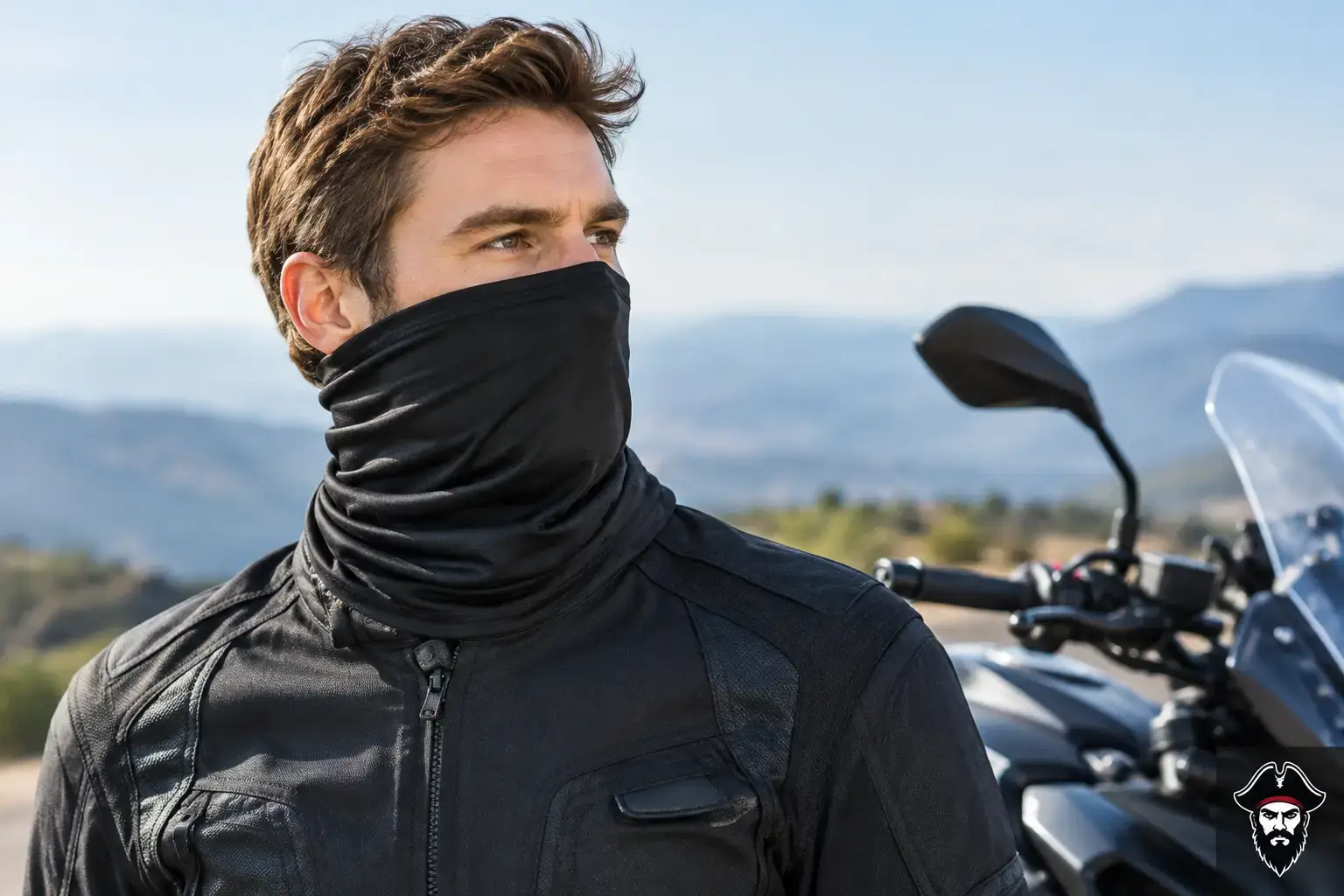
The standard setup is simple: pull the gaiter over your head and let it rest around the base of your neck. Spread the fabric so it sits flat rather than twisted or bunched. The lower edge should tuck slightly under the collar of your leather jacket, riding shirt, vest, or hoodie.
That overlap matters. At highway speed, even a small gap between your collar and gaiter lets cold air pour down your chest. A gaiter that reaches under the jacket collar creates a better seal without adding the bulk of a heavy scarf.
Keep the upper edge below your jaw when you do not need face coverage. This is the best everyday position for warm weather, short rides, and stops around town. It gives you a clean biker look while keeping the gaiter ready when the temperature drops or the road gets dusty.
Pull It Up for Wind, Dust, and Cold
When you need more protection, pull the upper edge over your chin and mouth. The gaiter should cover your nose only if the material is thin enough to breathe through comfortably and the conditions demand it. For a lot of riders, chin-and-mouth coverage is the sweet spot: it cuts wind without sending warm breath directly toward eyewear.
If you wear glasses or goggles, avoid pulling the fabric too high or too tight across the bridge of your nose. That can redirect moisture upward and create fogging. Instead, position the top edge just under the nose or use a lower face cover arrangement that leaves a little breathing room.
On cold rides, pull the gaiter up before you get rolling. Trying to adjust it at speed is a bad move, especially with gloves on. Set it at the gas station, check that your collar overlaps the bottom, and make sure you can turn your head freely before getting back on the road.
Match the Setup to the Weather
A gaiter is not one-position gear. The way you wear it should change with the season, your route, and how much protection your jacket already provides.
In summer, wear it loose at the neck or pull it over the lower face for sun, dust, and bug protection. Lightweight moisture-wicking fabric is usually the better call when heat is the main problem. A thick fleece gaiter may feel great at sunrise, then become miserable by noon.
In fall and winter, use the gaiter as a neck seal. Tuck it into a leather jacket with a higher collar, then pull the top over your chin as needed. A wind-resistant or thermal material adds real comfort on long highway runs, but it can feel restrictive in mild weather. The trade-off is simple: more insulation means more warmth, but less airflow.
In wet weather, a gaiter can reduce the cold sting of rain around the neck and face, though it is not a replacement for dedicated waterproof gear. If it gets soaked, it can turn from a comfort layer into a cold, clammy mess. Pack a spare for longer trips when weather is questionable.
Wear It With Your Jacket, Vest, and Gloves
Your gaiter works best when the rest of your riding apparel is set up right. A leather jacket with a snug collar provides a strong anchor point. Place the lower half of the gaiter inside the collar and let the upper half remain free to move up or down your face.
With a motorcycle vest, you may need a longer gaiter or an added layer underneath because a vest leaves more air moving around the neck and chest. A riding shirt can work the same way. On cooler days, keep the gaiter tucked beneath the shirt collar and pair it with a lined jacket when the temperature calls for it.
Gloves matter too, especially when you are wearing the gaiter high on your face. You want enough room at the wrists and cuffs to make quick adjustments before and after a ride. Do not build a setup so tight that every stop becomes a wrestling match with your gear.
The goal is a clean overlap from gloves to jacket to gaiter. Road-ready gear should feel secure, but it should never keep you from checking traffic, turning your head, working controls, or taking a full breath.
Do Not Let It Block Your View or Your Voice
A motorcycle gaiter should not interfere with safe riding. Before you pull out, look left, right, up, and down. If the fabric catches at your jaw, collar, or eyewear, reposition it. A gaiter that is too tight can make head checks feel restricted. One that is too loose may flap or creep into the wrong place once the wind hits it.
If you ride with a communication system, test the gaiter around your microphone before a long trip. Thick fabric directly over the mic can muffle your voice. Often, the easy fix is lowering the gaiter below the mouth when you are talking or positioning it so the microphone sits just inside the fabric rather than pressed against it.
Watch for loose material around the eyes. The top edge should stay well below your line of sight when worn high. If it rolls upward every few miles, the gaiter may be too short, too stretched out, or simply not the right material for your preferred face coverage.
Choose the Right Material for How You Ride
Cotton gaiters feel familiar and can look good, but they hold moisture and lose their punch in cold or wet conditions. They are better for casual warm-weather use than all-day weather protection.
Synthetic performance fabric is a strong choice for hot weather and active riding. It dries faster, manages sweat better, and packs down small in a saddlebag or motorcycle luggage compartment. Merino blends can be comfortable across a wider temperature range, although they usually cost more and require more careful washing.
Fleece-lined and wind-blocking gaiters earn their keep in cold weather. They are not the best choice for every ride, especially if you run hot, but they can make an early-season or late-season ride far more tolerable. Keep one in your luggage so you are not caught with bare skin when the temperature falls after dark.
Keep It Clean and Ready to Ride
A gaiter collects sweat, sunscreen, dust, exhaust residue, and whatever the road throws your way. Wash it regularly according to the care label. Letting it stay dirty can make it smell rough, feel stiff, and irritate your skin.
It is smart to carry a second gaiter on weekend runs or longer trips. One can stay dry in your bag while the other is in use. This takes almost no room and gives you options if the weather changes or the first one gets soaked.
A good gaiter is small gear with a big job. Set it low for everyday comfort, pull it high when the road turns cold or dirty, and make sure it works with your jacket rather than against it. Blackbeard’s Motorcycle Gear carries the kind of road-ready apparel riders count on when comfort, coverage, and hard-wearing style all matter.