A boot catches a peg, a foot slips at a gas stop, or a driver turns across your lane with no warning. Those are the moments that answer the question: can motorcycle boots prevent injuries? They cannot make a crash harmless, but real riding boots can reduce the chance and severity of common foot and ankle injuries when the road gets ugly.
That matters because your feet are exposed before you ever hit the pavement. They work the controls, hold the bike upright at stops, brace during a sudden maneuver, and can get trapped under a motorcycle in a low-side. Sneakers, work boots, and casual fashion boots may look the part, but they often leave major weak points uncovered.
Can Motorcycle Boots Prevent Injuries in a Crash?
Motorcycle boots are not magic armor. No boot can guarantee that you will walk away unhurt after a high-speed impact, a crushing force, or a collision with a fixed object. But the right pair is built to manage the threats ordinary footwear was never designed to handle: abrasion, impacts, twisting, heat, fluids, and loss of footing.
In a slide, thick leather and reinforced panels provide a durable barrier between your skin and rough pavement. A boot that stays on your foot can prevent a minor slide from becoming a severe abrasion injury. In a tip-over or low-speed crash, reinforced toes, heels, and ankle areas can also take the first hit instead of the smaller bones in your foot.
The biggest benefit is often support. Motorcycle boots are designed to hold the foot and ankle more securely than loose shoes. That does not mean an ankle cannot be injured, especially when a heavy bike lands the wrong way. It means the boot may limit excessive movement and provide a tougher structure around a vulnerable joint.
There is a practical benefit before any crash, too. A stable sole and a secure heel help you plant your foot at a stoplight, on loose gravel, or on an oil-slick parking lot. Preventing that awkward drop can save you from a painful ankle roll, a crushed toe, or a bike repair bill.
What Protective Motorcycle Boots Actually Do
A good riding boot earns its place through construction, not just a tough-looking profile. Start with the material. Quality leather is naturally abrasion resistant, long-wearing, and capable of breaking in around the rider over time. It also stands up well to wind, road grime, and the hard use that comes with cruiser and touring miles.
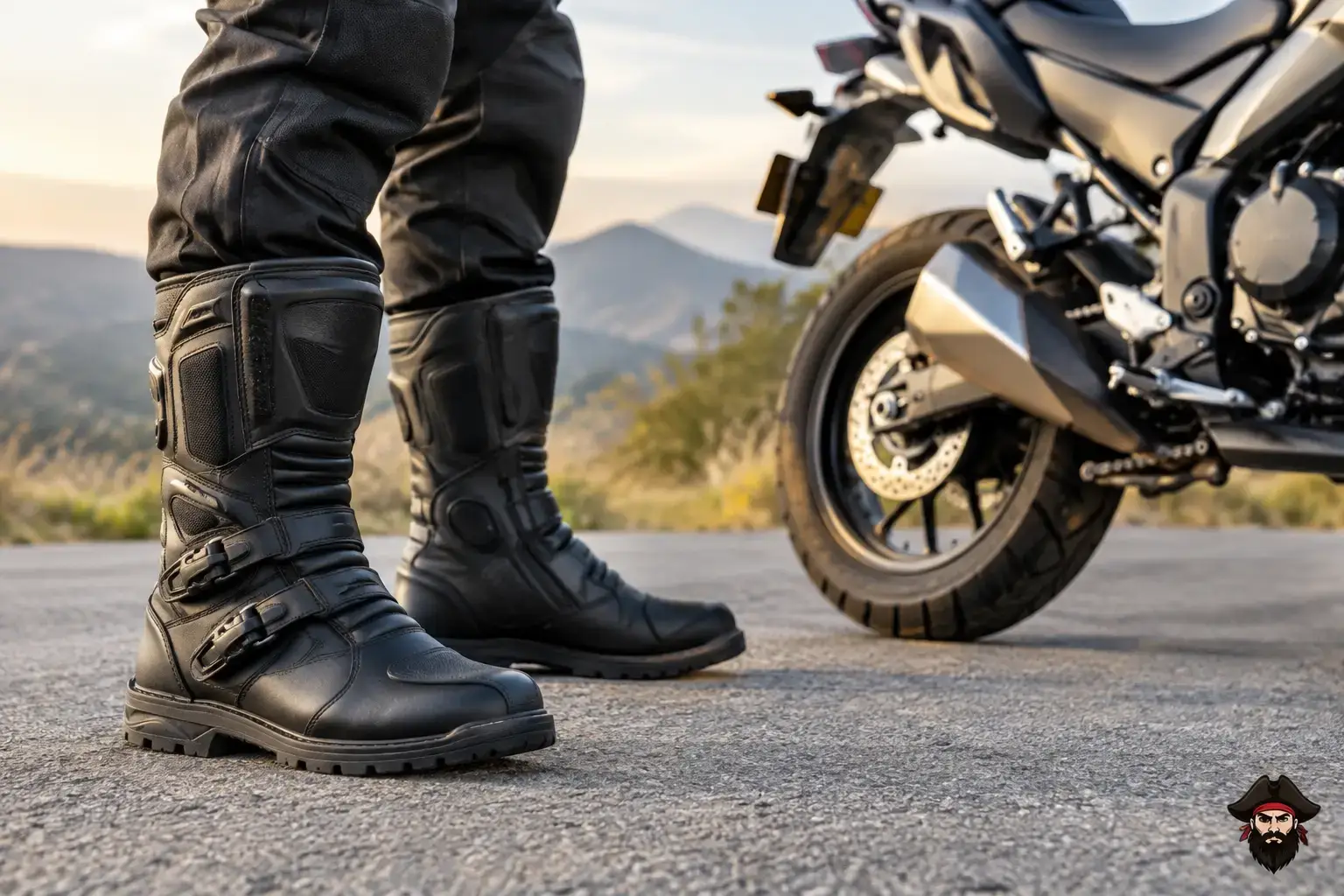
Look at where the boot is reinforced. The toe box and heel counter take repeated abuse from shifting, stopping, and pavement contact. Ankle coverage matters because exposed ankles are easy to scrape and easy to strike. Many riding boots also include shifter panels, which protect the leather from wear while giving you a firmer point of contact with the controls.
The sole deserves as much attention as the leather upper. A real riding sole should grip pavement and pegs without being so soft that it folds under pressure. Oil-resistant rubber is a smart feature for gas stations, garages, and wet roads. A defined heel can also help keep your boot anchored on the peg, particularly on cruiser-style motorcycles.
Closure matters because protection only works when the boot stays put. Laces can provide an adjustable hold, but they should be secured so they cannot catch on the shifter, pegs, or moving parts. Side zippers and buckles add convenience, while a solid fit through the heel and instep keeps the foot from sliding around inside the boot.
If you see a boot marketed as waterproof, treat it as weather protection first. Keeping your feet dry helps comfort and focus, but waterproofing alone does not equal crash protection. Likewise, a steel toe can help against certain workplace-style impacts, but it is not a substitute for ankle coverage, abrasion-resistant leather, and a stable riding sole.
The difference between riding boots and street boots
A heavy pair of everyday leather boots is usually better than canvas sneakers, but it still may not be purpose-built for the motorcycle. Street boots can have thin soles, minimal ankle structure, smooth traction, or loose laces. They may also use fashion-focused materials that wear through faster under a slide.
Purpose-built motorcycle boots put protection where riders need it. That can mean taller shafts, reinforced impact zones, thicker leather, stronger stitching, and soles made for traction around a motorcycle. The trade-off is simple: more protection can mean more weight, a firmer feel, and a break-in period. For serious riding, that is usually a fair deal.
Match the Boot to How You Ride
The best boot for a rider putting around town on a cruiser may not be the best choice for long highway days, rain-soaked touring, or aggressive cornering. Your riding style should shape the decision.
For cruiser, chopper, and Harley-style riders, tall leather engineer boots, harness boots, and lace-up riding boots offer the road-ready look many riders want along with meaningful coverage. A taller shaft protects more of the ankle and lower leg, while thick leather holds up to regular use. For riders who spend full days in the saddle, a comfortable footbed and easy on-off closure can make a real difference.
Riding shoes can work for short urban trips when they include reinforced toes, heels, ankles, and a motorcycle-specific sole. They are easier to walk in than tall boots and fit a more casual look. The trade-off is coverage. A riding shoe leaves more of the lower leg exposed than a boot, so it is not the strongest choice for every ride.
Touring riders should prioritize weather resistance, traction, and all-day support. Riders who expect rain need a boot that keeps its grip when wet and does not turn into a slippery mess at a fuel stop. Riders who work on their own bikes may appreciate oil-resistant soles and leather that can take grease, dust, and heat without falling apart.
Fit and Condition Matter on Every Ride
A premium leather boot that rubs, slips at the heel, or is hard to operate the controls in is not doing its job. The boot should feel secure without cutting off circulation. You need enough room to move naturally on the shifter and brake pedal, but not so much room that your foot slides forward or lifts inside the boot.
Give new boots time to break in before a long ride. Quality leather becomes more comfortable as it conforms to use, but stiff new footwear can distract you when you need clean, confident control inputs. Wear them around the house or on short local rides first. Keep the leather conditioned according to its finish, and inspect soles, stitching, zippers, and buckles regularly.
Replace boots when the sole is worn smooth, the heel is separating, the leather is deeply cracked, or a prior crash has damaged the protective structure. A boot can still look tough from across the garage while no longer offering dependable traction or support.
Do not let one piece of gear carry the whole load. Boots work best as part of a complete setup: a quality helmet, gloves that protect your hands, a leather jacket or riding shirt with abrasion resistance, and durable riding pants. Every layer covers a different problem, and the road does not give partial credit for looking prepared.
At Blackbeard’s Motorcycle Gear, riders can build that setup around quality leather riding boots, jackets, vests, gloves, and luggage made for life on two wheels. Gear should look right on your bike, but it also needs to show up when traction disappears or pavement gets close.
Your boots will not decide every outcome, but they can give your feet and ankles a fighting chance. Put them on before the kickstand comes up, keep them in good condition, and let the miles prove why purpose-built riding gear is worth wearing.