A helmet rule can change the moment your front tire crosses a state line. Motorcycle helmet laws by state are not one national standard, and the difference matters whether you are running a short local ride, heading to a rally, or putting serious miles between home and the next stop.
Some states require every rider and passenger to wear a helmet. Others apply the rule only to younger riders, newer riders, or riders without a qualifying insurance policy or approved training. A few states have no general helmet mandate for adults. The smart move is simple: know the rule where you are riding before the kickstand comes up.
Motorcycle Helmet Laws by State: The Big Picture
States generally fall into three groups: universal helmet-law states, states with limited or conditional requirements, and states without a general adult helmet law. That sounds straightforward, but the details can get sharp around the edges. Age limits, passenger rules, medical insurance exemptions, permit status, and how long you have held a motorcycle endorsement can all change the answer.
A universal law means the helmet requirement applies to operators and passengers of all ages. In most cases, the helmet must meet federal DOT standards. A partial law means a helmet is required only under stated conditions, such as being under 18 or 21. Riders should not assume a state’s rule applies only to the person operating the bike. Passengers are often covered too.
Here is a practical state-by-state reference for planning purposes. Laws and enforcement guidance can change, so confirm the current requirement with the state’s official motor vehicle or highway safety agency before a trip.
| State | General rule | |—|—| | Alabama | Universal helmet law | | Alaska | Required for riders and passengers under 18, with other limited conditions | | Arizona | Required for riders and passengers under 18 | | Arkansas | Required for riders and passengers under 21 | | California | Universal helmet law | | Colorado | Required for riders and passengers under 18 | | Connecticut | Required for riders and passengers under 18 | | Delaware | Required for younger riders and newer endorsed riders | | Florida | Required under 21; some riders 21 and over may qualify for an exemption | | Georgia | Universal helmet law | | Hawaii | Required for riders and passengers under 18 | | Idaho | Required for riders and passengers under 18 | | Illinois | No general helmet mandate for adult riders | | Indiana | Required for riders and passengers under 18 | | Iowa | No general helmet mandate for adult riders | | Kansas | Required for riders and passengers under 18 | | Kentucky | Required for riders and passengers under 21, plus certain newer riders | | Louisiana | Universal helmet law | | Maine | Required for younger riders and certain permit or newer riders | | Maryland | Universal helmet law | | Massachusetts | Universal helmet law | | Michigan | Required under 21; limited exemptions may apply to some adult riders | | Minnesota | Required for riders and passengers under 18 | | Mississippi | Universal helmet law | | Missouri | Universal helmet law | | Montana | Required for riders and passengers under 18 | | Nebraska | Universal helmet law | | Nevada | Universal helmet law | | New Hampshire | No general helmet mandate for adult riders | | New Jersey | Universal helmet law | | New Mexico | Required for riders and passengers under 18 | | New York | Universal helmet law | | North Carolina | Universal helmet law | | North Dakota | Required for riders and passengers under 18 | | Ohio | Required for riders under 18 and certain newer riders | | Oklahoma | Required for riders and passengers under 18 | | Oregon | Universal helmet law | | Pennsylvania | Required under 21 and for certain newer riders; exemptions may apply | | Rhode Island | Required for younger riders and certain newer riders | | South Carolina | Required for riders and passengers under 21 | | South Dakota | Required for riders and passengers under 18 | | Tennessee | Universal helmet law | | Texas | Required under 21; limited exemptions may apply to some adult riders | | Utah | Required for riders and passengers under 21 | | Vermont | Universal helmet law | | Virginia | Universal helmet law | | Washington | Universal helmet law | | West Virginia | Universal helmet law | | Wisconsin | Required for riders and passengers under 18 | | Wyoming | Required for riders and passengers under 18 |
The District of Columbia also requires helmets for motorcycle operators and passengers.
Universal Helmet States: No Gray Area
In universal-law states, every rider and passenger needs a compliant helmet. There is no age cutoff, no experience loophole, and no “just going down the road” exception. If you ride in Alabama, California, Georgia, Louisiana, Maryland, Massachusetts, Mississippi, Missouri, Nebraska, Nevada, New Jersey, New York, North Carolina, Oregon, Tennessee, Vermont, Virginia, Washington, or West Virginia, plan on wearing one every time.
For road trips, this is where riders get caught. Your home state may allow an adult rider to go without a helmet, but that does not carry across the border. The law that matters is the law in the state where you are operating the motorcycle. A rider heading from New Hampshire through Massachusetts, for example, crosses from a state with no general adult mandate into a universal-law state.
A helmet law is also not just a rider issue. If you carry a passenger, they need to meet the law where you are riding. That makes trip prep easier when you treat helmets as part of the standard ride kit, right alongside gloves, boots, a riding jacket, and reliable weather protection.
Partial Helmet Laws: Read the Fine Print
Limited helmet laws are where riders need to slow down and check the details. Many states use 18 as the cutoff. Arkansas, Kentucky, South Carolina, Texas, and Utah use 21 in key parts of their laws. Florida, Michigan, Pennsylvania, and Texas are known for exemptions that may involve age, training history, insurance coverage, or other conditions.
That does not mean “no helmet law” once you pass the age threshold. It means the state has conditions. An exemption may require proof of medical coverage at a stated level. A training-course or endorsement rule may apply only after a certain amount of licensed riding time. A learner’s permit can trigger a separate requirement. If an officer asks, “I thought I qualified” is not a strong road-trip plan.
Delaware, Maine, Ohio, Pennsylvania, and Rhode Island are especially worth checking closely if you are a newer rider. Their rules can account for permit status or how recently you earned your motorcycle endorsement. Riders who borrow a bike, rent one, or return to motorcycling after years away should check the current language instead of relying on old advice from the parking lot.
What “DOT-Compliant” Means on the Road
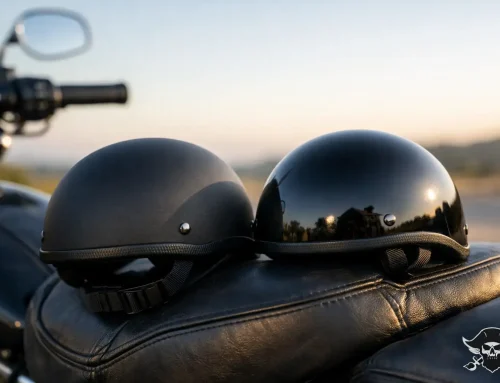
Where a state requires a helmet, the rule commonly calls for one meeting federal DOT requirements. Look for the DOT marking on the back of the helmet. Novelty headwear and non-compliant helmets may look the part at a bike night, but they may not satisfy the law when the blue lights come on.
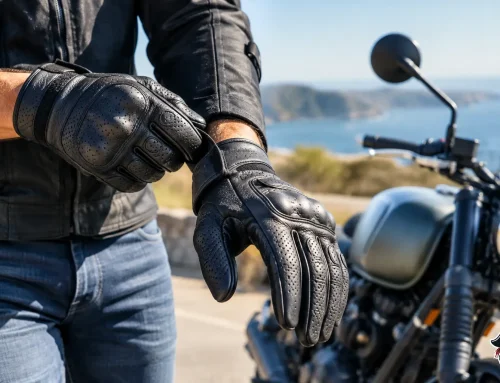
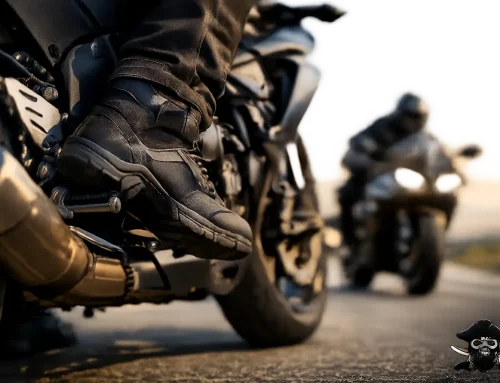
Helmet laws are only one piece of being ready for the road. A quality leather jacket helps cut wind and abrasion exposure. Proper riding boots give you a firmer platform at stops and more protection around the ankle. Gloves keep your grip secure when the temperature drops or the weather turns ugly. None of that replaces a required helmet, but it is the kind of gear that makes a long day in the saddle less punishing.
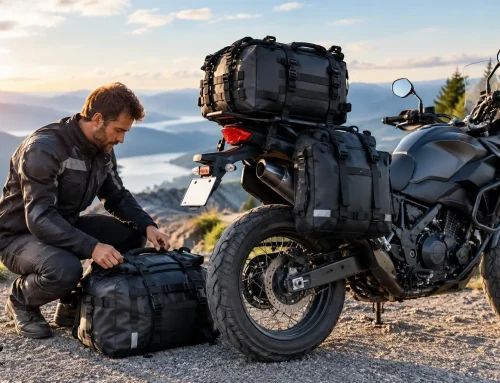
That is why a rider’s setup should be built for the route, not just the photo. A warm-weather run may call for lighter layers and eyewear. A cold interstate ride demands dependable leather, gloves, boots, and luggage that keeps extra layers dry and within reach. Blackbeard’s Motorcycle Gear focuses on road-ready leather apparel and rider essentials that earn their place mile after mile.
Before You Cross the State Line
Do a quick legal check before every multistate ride, especially if your group includes passengers, younger riders, or riders on permits. Check the destination state and every state you will pass through. Keep your endorsement, registration, insurance information, and any documentation tied to a claimed exemption current and accessible.
Do not let a technicality ruin a good run. Pack for the weather, wear the gear that matches the road ahead, and treat the helmet rule in each state as part of the route – just like fuel stops, tolls, and construction zones. The open road feels better when your paperwork and gear are as ready as your bike.