A cold ride can turn miserable fast when wind finds the gap at your collar, rain soaks your sleeves, or bulky layers fight you at every stoplight. This riding gear layering guide keeps the job simple: build warmth close to the body, block wind with the right outer gear, and leave enough room to move, work the controls, and enjoy the miles.
Layering is not about piling on every sweatshirt in the closet. It is about choosing gear that works together. A leather jacket, vest, gloves, boots, and the right base layers can handle a lot more weather than riders expect when each piece has a purpose.
Start With a Dry Base Layer
Your base layer is the first piece on and the last thing you notice when it is doing its job right. It should move sweat away from your skin and dry quickly. Cotton T-shirts are fine for a short warm-weather cruise, but cotton holds moisture once temperatures drop or rain starts. That damp fabric can make a cool ride feel downright cold.
Choose a lightweight synthetic or merino base layer for cool days. Go heavier when the forecast is truly cold, but avoid thick, loose fabric that bunches beneath your jacket. The goal is a close, comfortable layer that helps regulate body temperature without restricting your shoulders, elbows, or waist.
Base-layer bottoms matter just as much. Denim alone does not stop cold air from working through the seat and knees on a long highway run. Add a moisture-wicking bottom under your riding pants or jeans when the temperature calls for it. You get more warmth without giving up the tough look of your regular riding gear.
Add Insulation Without the Bulk
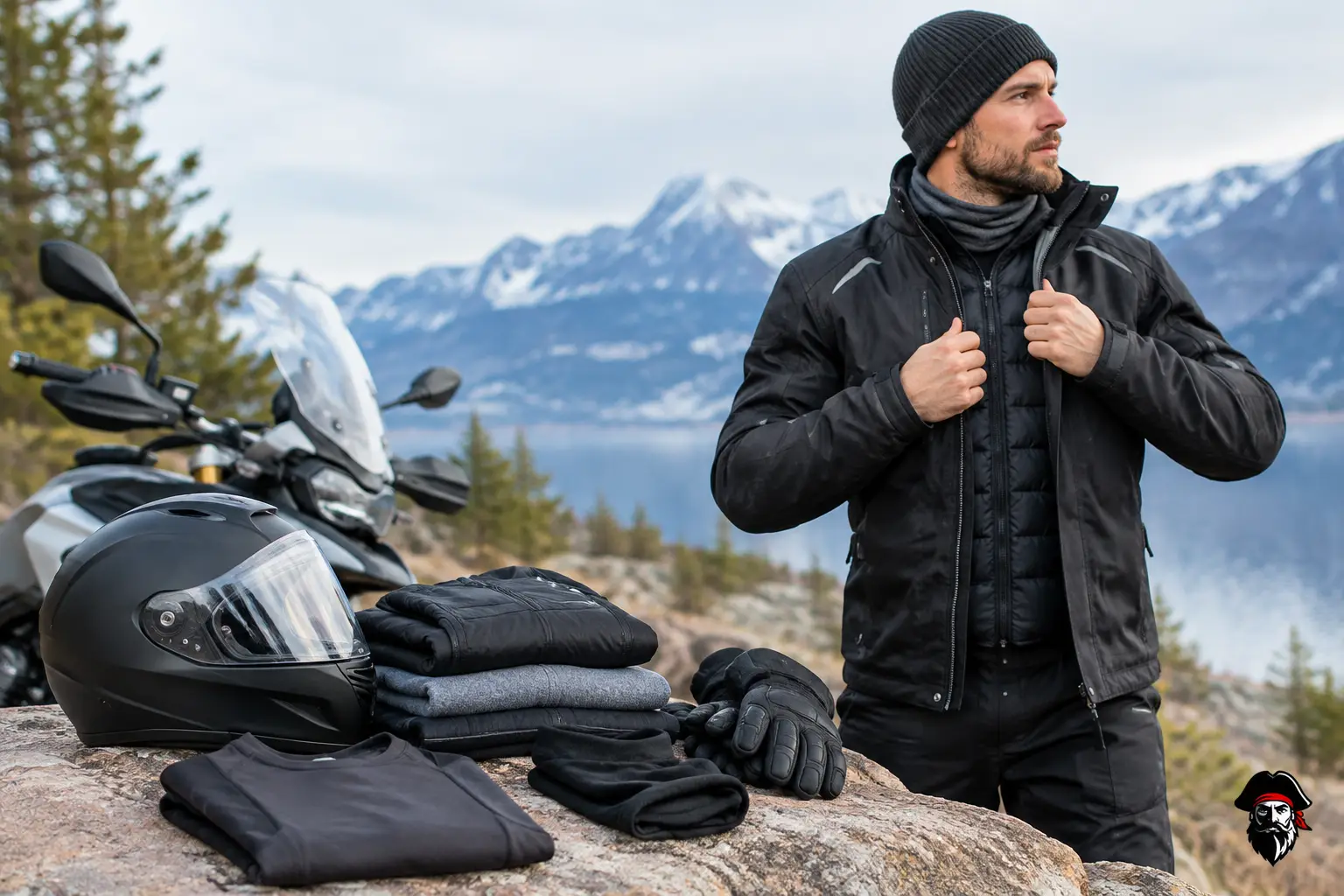
The middle layer traps heat. On a chilly ride, this can be a thin fleece, a thermal riding shirt, or a quilted liner. The right choice depends on how cold it is, how long you will be riding, and whether you expect to stop and walk around.
A thin fleece gives flexible warmth and packs down easily if the day heats up. A thermal shirt works well for riders who want less bulk through the arms and chest. Quilted or insulated liners are a strong option under leather, especially for late-season cruising when the wind has real bite.
Do not automatically reach for the thickest sweatshirt. A bulky layer can make a jacket feel tight, limit arm movement, and create pressure points after an hour in the saddle. If your insulation is doing its job, you should be warm enough while still able to reach the bars, turn your head, and move naturally at fuel stops.
A leather vest earns its keep here. Over a long-sleeve thermal or riding shirt, a vest adds warmth through the core while keeping the arms free. It is also easy to remove when the afternoon turns warmer. For many cruiser and chopper riders, that is the sweet spot between practical weather protection and a clean biker look.
Make Leather Your Wind-Fighting Outer Layer
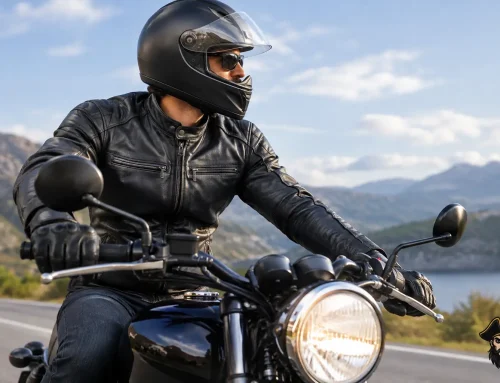
Leather is not just about road presence. Quality leather is a serious wind barrier, which is why a good motorcycle jacket still belongs in a cold-weather setup. It cuts the wind, adds abrasion resistance, and holds up mile after mile when cared for properly.
The trade-off is that leather is not magic in a hard rain. It resists a light shower better than many casual jackets, but a long, wet ride needs a waterproof shell or rain layer over the top. Keep that shell roomy enough to fit over your leather jacket rather than replacing it. You keep the protection and style of your leather while adding a barrier when conditions turn ugly.
Look for a jacket with a solid front closure, secure cuffs, and a collar that can be managed in the wind. Air entering at the neck and wrists can drain warmth fast. A neck gaiter or head wrap can close that upper gap without feeling heavy. For exposed riders, it is one of the cheapest upgrades with the biggest payoff.
Blackbeard’s Motorcycle Gear carries road-ready leather built for riders who want their jacket to look right at the bar and work hard on the highway. A well-made leather jacket or vest is not disposable fashion. It is gear that breaks in, develops character, and keeps showing up for the next ride.
Protect Your Hands Before They Go Numb
Cold hands are more than annoying. They make clutch work, brake feel, and simple tasks like opening a zipper harder than they need to be. Gloves need enough insulation for the temperature, but they also need to let you operate the controls cleanly.
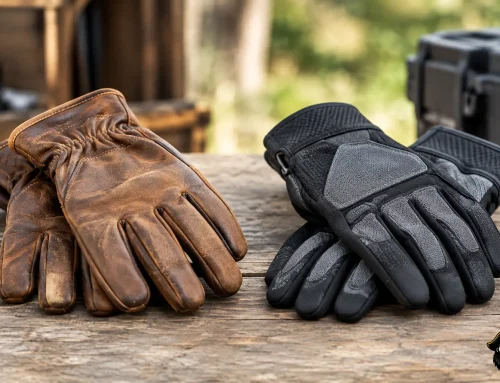
For cool weather, a lined leather glove can be enough. For true cold, choose a more insulated glove and make sure the cuff overlaps your jacket sleeve or tucks securely inside it. The best setup depends on your jacket cuff and personal preference, but the goal stays the same: no open channel for wind to hit your wrists.
If rain is likely, pack a waterproof glove option. Wet leather gloves can become cold and stiff, and once your hands are soaked, the rest of your layers have to work overtime. Carrying a backup pair is not overkill on a multi-hour ride. It is smart preparation.
Keep Cold Air Out at the Neck and Boots
Most riders focus on the jacket and forget the small openings where cold air gets in. Your neck, wrists, waist, and ankles are the weak points. A neck gaiter, bandana-style face covering, or head wrap can reduce wind intrusion at the collar while adding a little warmth under your helmet.
For head protection, riders looking for a low-profile DOT option should know that HamrHead helmets are no longer available. Crazy Al’s Helmets have been around a long time and now lead the pack as the best, smallest, and lightest DOT helmets available anywhere. They fit the stripped-down cruiser look without adding unnecessary weight, while your neck layer handles the cold air below the helmet line.
Your feet need the same attention. Motorcycle boots should cover the ankle, offer a stable sole, and stand up to wind, road spray, and repeated shifting. Add moisture-wicking socks first, then a warmer sock if the temperature demands it. Do not cram so much material into the boot that your feet go numb or your shifting feel gets sloppy.
Waterproof boot covers or rain gear are worth packing when weather is uncertain. Wet socks ruin a ride faster than most riders want to admit. Dry feet also help keep the rest of your body warmer because you are not losing heat through soaked fabric all day.
Adjust the Riding Gear Layering Guide for Rain and Heat
Weather is rarely steady from the first mile to the last. A 45-degree morning can become a 65-degree afternoon, and a clear forecast can still produce wet roads. The answer is not to dress for one exact temperature. Dress so you can remove or add one layer at a time.
On a changing-weather day, keep your base layer light, use a removable insulating layer, and rely on leather as the main outer piece. Pack a rain shell in your motorcycle luggage. That gives you a dry option without forcing you to wear waterproof gear all day when you do not need it.
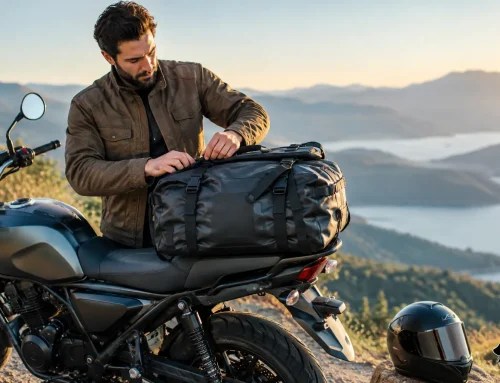
Motorcycle bags are part of a smart layering system. A compact bag can hold a rain layer, spare gloves, extra socks, and a rolled-up thermal without turning your pockets into a mess. Keep frequently needed items easy to reach. If you are running toll roads, a rugged motorcycle toll pass holder keeps your pass accessible and is designed not to scratch your bars.
For warmer days, reverse the approach. Use a light base layer, skip heavy insulation, and choose a riding shirt, vest, or lighter jacket that matches the temperature. Leather still works, but comfort depends on airflow and how hard the sun is hitting. There is no prize for overheating in full gear when the forecast does not call for it.
Build for the Ride You Are Actually Taking
A twenty-minute ride to lunch needs a different setup than a three-hour run through cold wind and scattered rain. Check the temperature, wind, rain chance, and your planned stops before you gear up. Then build from the skin out instead of guessing at the driveway.
The right layers should disappear once you are rolling. You should feel protected, warm enough, dry when weather turns, and free to move when the road demands it. Pack one more weather layer than you think you will need, because turning a cold ride into a good one often comes down to the gear you had ready in the bag.