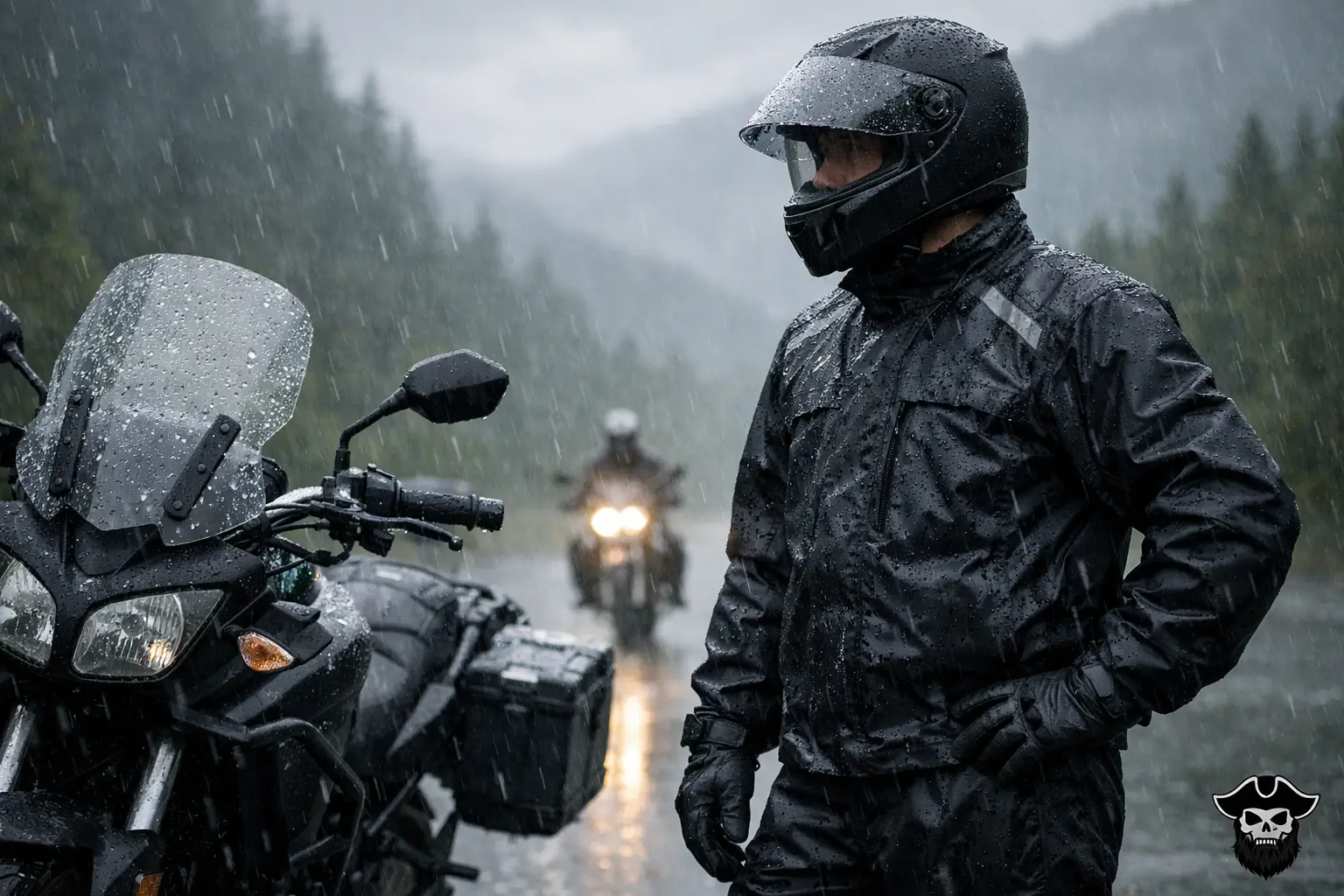
A clear forecast can turn ugly fast when you are 40 miles from home with no overpass in sight. That is when men’s motorcycle rain suits stop being an item shoved in a saddlebag and become the gear that keeps you focused, warm, and moving forward. A soaked shirt, dripping gloves, and water pooling in your boots can wreck a ride long before the rain lets up.
The right rain suit does not need to look fancy. It needs to go on fast over your riding clothes, seal out steady rain, stay put at highway speed, and pack down without taking over your luggage. For cruiser riders, touring riders, and anyone who rides because the road calls, that is the standard.
What Men’s Motorcycle Rain Suits Need to Do
A motorcycle rain suit has a harder job than a rain jacket made for walking the dog. Wind pressure pushes water into weak seams, around zippers, and through openings at the neck, wrists, waist, and ankles. Your arms are extended, your legs are bent, and your seat is exposed to spray coming off the rear tire.
That is why a two-piece suit is usually the practical call. A separate jacket and pant let you put the jacket on first when rain hits suddenly, then add the pants when conditions get serious. They are also easier to dry, easier to pack, and more useful than a one-piece suit when the weather keeps changing. A one-piece can offer strong coverage, but it takes more room and can be a hassle to pull over boots and riding layers on the shoulder.
Look past the word “waterproof” on the tag. The real question is how the suit handles rain in motion. Taped or sealed seams matter because stitched seams are common leak points. A storm flap over the main zipper adds another layer of defense. Adjustable cuffs and ankle openings prevent water from being driven upward by wind. These are simple details, but they separate emergency rain gear from gear that can handle a long wet run.
Fit Comes Before Flash
Rain suits are outer shells. They must fit over a riding shirt, a leather vest, or a full leather jacket without binding across the shoulders and back. Too tight, and the material pulls at the seams when you reach for the bars. Too loose, and it flaps hard in the wind, catches air, and becomes annoying before the next exit.
Check the suit while seated in a riding position, not just standing in front of a mirror. Reach forward as if you are holding your grips. Bend your knees. Make sure the jacket does not climb too far up your waist and the pants do not pull tight across the thighs. A longer jacket back is a good thing, especially on bikes where road spray finds its way under short outerwear.
Pant legs need enough opening to slide over motorcycle boots. If you have to remove your boots to get the pants on during a downpour, the design has already failed you. Hook-and-loop ankle closures, snaps, or expandable gussets help secure the pant leg after it is in place. Keep the opening snug enough that it does not catch wind or let spray blow inside.
Waterproofing Is Only Half the Battle
Staying dry is the obvious goal. Staying comfortable is the part riders often learn about the hard way. A rain suit that seals everything shut can become hot and clammy during a humid summer storm. A lightweight shell with a little ventilation may feel better around town, but it can lose its edge in cold rain at highway speed.
There is no one answer for every rider. If most of your rides are short and local, a compact, lightweight rain suit may be all you need. If you put down serious interstate miles, ride through mountain weather, or travel where storms are part of the plan, spend more attention on durable material, secure closures, and room for warm layers underneath.
Rain also steals body heat. Your leather jacket may block wind and deliver the road-ready look you want, but wet conditions call for a dry outer barrier over it. Quality leather riding gear is built for the road, yet it should be protected from a sustained soaking when possible. A rain jacket over your leather helps preserve the finish while keeping the rider warmer and more comfortable.
Details That Matter When the Road Gets Wet
The best features are the ones you notice at 65 mph in hard rain. Keep an eye out for these four practical details:
- High-visibility panels or reflective piping: Rain cuts contrast, especially at dusk. Black gear still has its place, but reflective details give drivers a better chance to spot you through spray.
- A raised collar with a secure closure: Water running down your neck can make a short ride miserable. The collar should close firmly without rubbing your chin raw.
- A reinforced seat area: The seat takes constant pressure and road spray. Extra reinforcement helps prevent water from working through where you need protection most.
- A stuff sack or compact storage design: Rain gear that is too bulky gets left at home. Packable gear stays with the bike, where it belongs.
Pockets are useful, but do not assume every exterior pocket is truly waterproof. Keep your phone, wallet, and documents in a sealed inner pocket or separate waterproof pouch. Water finds a way into the places you trust most.
Build a Wet-Weather Setup, Not Just a Suit
A rain suit works best as part of a full riding setup. Your hands, feet, and neck can still make you miserable even if your jacket and pants are dry. Water-resistant gloves or glove covers help keep your grip steady. Waterproof boot covers can work for emergency use, while dedicated waterproof motorcycle boots make more sense for riders who face rain regularly.
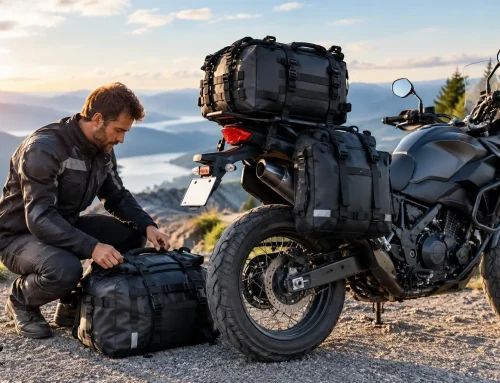
Do not forget your luggage. A soggy change of clothes is not much help after you reach your destination. Use a weather-resistant motorcycle bag or an internal dry bag for spare layers, tools, and electronics. Keep the rain suit near the top, not buried underneath everything else. When dark clouds roll in, you want to be geared up in minutes, not emptying half your luggage beside the road.
For riders using a toll pass, make sure it is accessible without opening a soaked jacket or digging through a wet pocket. A rugged bar-mounted toll pass holder keeps the pass where you need it and helps keep your ride moving. Blackbeard’s Motorcycle Gear built its toll pass holder to stay secure without scratching your bars, which is exactly the kind of small convenience that pays off when weather and traffic are working against you.
How to Care for Rain Gear After the Ride
Never roll a wet rain suit into a tight ball and leave it in a saddlebag for days. Hang it up as soon as you are home, open the zippers, and let air reach both sides. Mud, road grime, and bug residue should be wiped off with mild soap and water according to the garment’s care instructions.
Avoid high heat unless the manufacturer specifically allows it. Excessive heat can damage coatings, weaken seam tape, and shorten the life of elastic closures. Before the next ride, inspect the seams, zipper, cuffs, and ankle closures. Rain gear is emergency equipment. You want to find a weak spot in the garage, not halfway through a storm.
A good rain suit will not make wet roads fun, and it will not replace smart judgment. If visibility is poor, water is standing on the road, or lightning is close, pull off somewhere safe and wait it out. But for the rain you can ride through, dependable gear turns a miserable surprise into another mile on the road. Keep it packed, keep it ready, and let the weather work harder than you do.