You notice bar scratches fast. One bad clamp, one rough edge, one cheap mount that shifts around, and suddenly the finish on your handlebars looks beat up for no good reason. That is why riders keep looking for motorcycle tollpass holders that don’t scratch bars – not just something that carries a transponder, but something that protects the bike while doing the job.
A toll pass holder is a small accessory, but it sits in a high-visibility spot and gets handled often. If it rattles, slips, digs into the bar, or uses hard contact points without protection, it becomes a constant irritation. On a cruiser, chopper, or Harley-style bike where the details matter, that kind of wear stands out. Riders who care about road-ready gear and clean-looking bars should pay attention to the holder, not just the pass inside it.
Why motorcycle tollpass holders that don’t scratch bars matter
A scratched handlebar is not just cosmetic. On some bikes, it means worn coating, exposed metal, and extra cleanup every time you wash or detail the front end. If the holder keeps moving, the damage can spread beyond one contact point. Over time, a bad mount can leave rings, scuffs, or rubbed-off finish that make the cockpit look neglected.
There is also the everyday hassle factor. A holder that marks your bars usually has other problems too. Cheap hardware tends to be rough, over-tightened, poorly lined, or designed more for universal fit than real-world riding. That often means more vibration, more slipping, and more fiddling when you should be riding.
The better option is simple – a holder built to mount securely without chewing up the bar surface. It should go on clean, stay put, and come off without leaving a mess behind. That is what riders actually want when they shop for this category.
What causes a toll pass holder to scratch handlebars
The first issue is direct metal-on-metal contact. If the mounting hardware presses straight against the bars with no buffer, the finish takes the hit. Some mounts look solid in the package but start digging in as soon as they are tightened. Even before the first ride, damage can happen during installation.
The second problem is movement. A holder might feel tight in the garage, then loosen slightly on the road from vibration and wind pressure. Once it starts shifting, even a small amount, the contact points rub the same area over and over. That is how light scuffs turn into obvious wear.
The third issue is bad fit. Universal accessories often try to work on too many bar diameters and shapes. If the clamp does not sit right, riders compensate by tightening harder. That extra force can flatten protective material, distort the mount, or create pressure points that mark the finish.
Material quality matters too. A rugged-looking shell does not mean the mounting system is rider-friendly. Rough edges, poor liners, and bargain hardware can ruin a good idea fast.
What to look for in a scratch-free toll pass holder
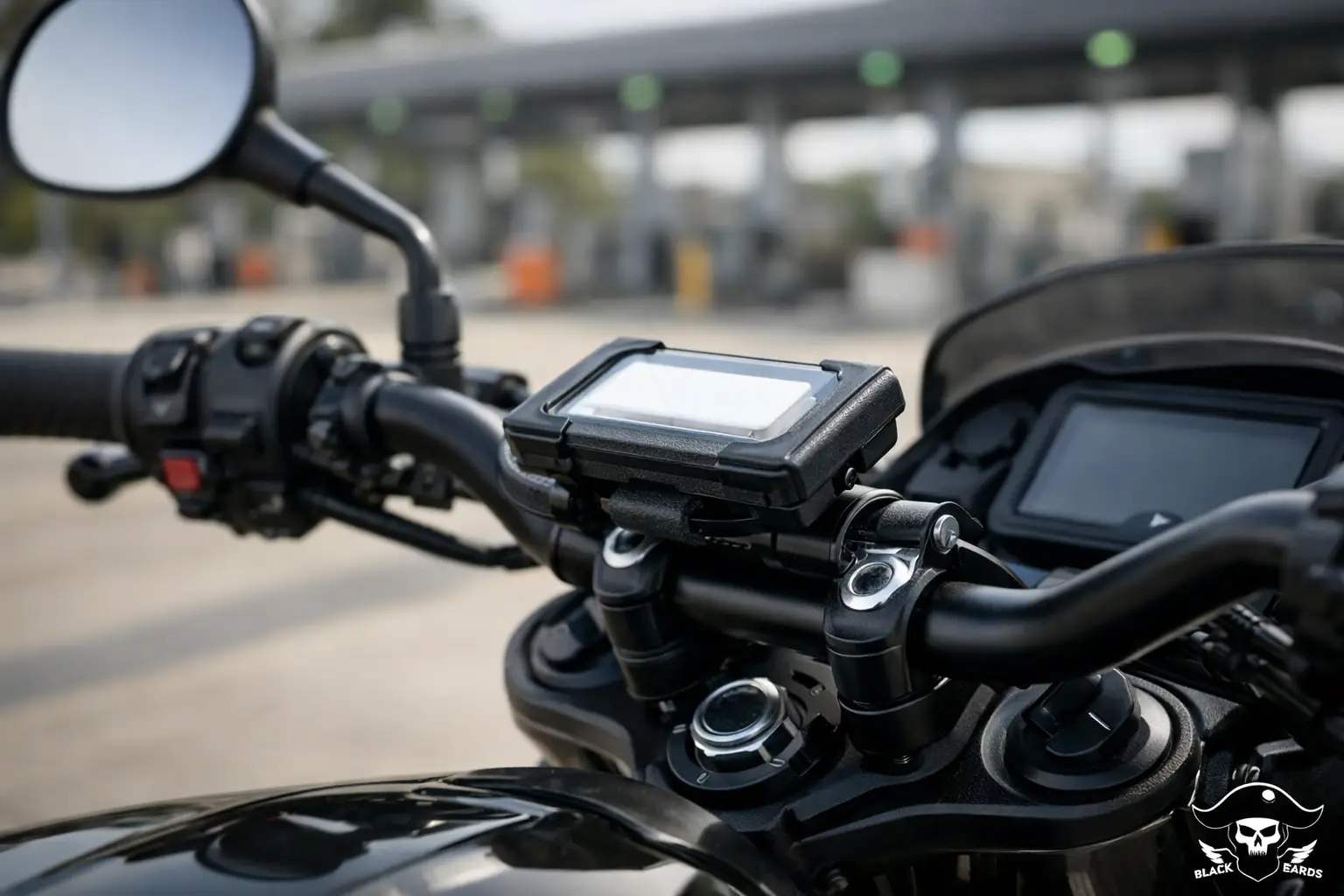
Start with the mounting interface. If a holder is made to never scratch bars, it should have a protective design where the contact area is buffered and secure. The goal is not just soft material for the sake of it. The goal is controlled grip without metal digging into the handlebar.
A stable fit comes next. The holder should resist vibration and road shake without needing to be cranked down like a vise. If you have to over-tighten it to trust it, that is a bad sign. A well-designed holder stays in place because the mount is built correctly, not because you forced it.
Ease of access matters more than some riders think. Toll booths, parking gates, and managed lanes are already enough of a nuisance. A holder should make pass placement easy and keep the transponder positioned where it can work properly. If getting the pass in and out feels like a fight, the design is not helping you.
Durability matters too. Riders need accessories that can handle heat, sun, rain, bugs, grime, and regular use. A toll pass holder should not feel flimsy or disposable. It should look like it belongs on a bike that gets ridden, not just parked.
The trade-off between universal fit and real protection
Some riders want the cheapest universal option they can find. That works sometimes, but there is usually a trade-off. Universal mounts can be convenient, yet they often rely on generic clamps and hard contact points. They fit a lot of bikes on paper, but not always cleanly in real life.
A more purpose-built holder usually costs a little more, but it tends to solve the problems riders actually complain about. Better contact materials, better mounting pressure, and better stability make a real difference over time. If you care about the look of your bars, that difference is worth paying for.
It also depends on your bike and how you ride. A local weekend rider may not notice a mediocre holder as quickly as someone who is on toll roads all week. Riders who use express lanes, commute through toll points, or travel longer routes put more wear on the mount and interact with it more often. For them, cheap usually becomes expensive once the bars are scratched.
Why rugged design still needs bar protection
There is a common mistake in this category – assuming rugged means hard. For motorcycle accessories, rugged should mean road-tough, weather-ready, and secure under vibration. It should not mean rough on the bike.
That is especially true for riders who keep their machines clean and dialed in. A toll pass holder can be built tough and still respect the finish. In fact, that is the standard it should meet. A biker accessory should not ask you to choose between durability and protecting your ride.
Blackbeard’s Motorcycle Gear offers a proprietary toll pass holder designed to never scratch bars while staying rugged and easy to use. That combination is what matters. You want the holder to hold up on the road, but you also want confidence that it is not slowly grinding away at the part of the bike you see every mile.
How to judge a toll pass holder before you buy
Look past the basic product photo. The real question is how the holder mounts and what touches the bar. If that part is vague, the risk is higher. Riders should want clear function, not marketing fluff.
Pay attention to whether the design sounds like it was made for motorcycles or just adapted from a generic accessory. Motorcycle-specific details usually show up in the way the mount is secured, how easy the pass is to access, and whether the product speaks directly to vibration, finish protection, and day-to-day use.
It also helps to think about the rest of your setup. If your bike already carries a strong visual style with leather bags, clean controls, and practical add-ons, a cheap plastic-looking holder can feel out of place. The best accessories do their job without making the front end look cluttered or careless.
A small accessory that saves bigger frustration
Riders spend serious money on leather jackets, boots, gloves, luggage, and the details that make a bike feel complete. It makes no sense to cut corners on a toll pass holder if that shortcut leaves marks right in front of you every time you ride. This is one of those small purchases that can either disappear into the background or annoy you for months.
Good motorcycle tollpass holders that don’t scratch bars earn their keep quietly. They protect the finish, keep the pass where it needs to be, and hold up in real riding conditions. No rattling, no shifting, no ugly clamp marks left behind.
If you are replacing a worn-out holder or buying your first one, keep the standard high. Choose one that is rugged, easy to use, and built to protect your bars from day one. Your handlebars take enough abuse from the road. Your toll pass holder should not add to it.