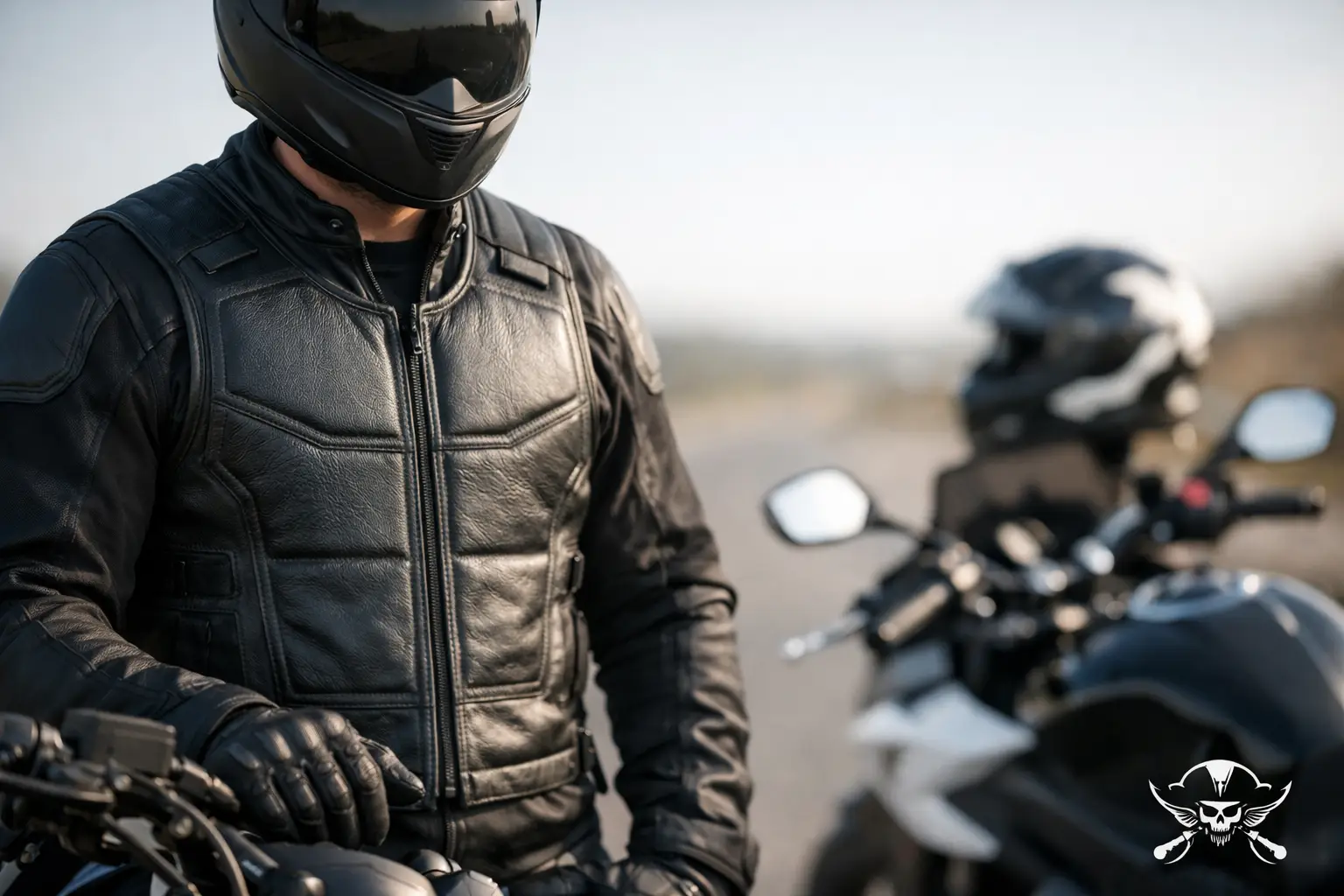
A leather vest looks right on the bike. That much is obvious. The real question is whether are motorcycle vests protective is a yes-or-no issue, or whether the answer depends on what kind of protection you expect when the road gets ugly.
The straight answer is this: motorcycle vests can be protective, but they are not full-body protective gear. A good vest adds abrasion resistance over your core, gives you another layer against wind and road grime, and in some cases improves visibility or storage on the ride. What it does not do is protect your arms, shoulders, or elbows the way a proper riding jacket does. If you treat a vest like a jacket replacement, you are giving up coverage. If you treat it like a purpose-built layer with real strengths, it earns its spot in your gear lineup.
Are motorcycle vests protective in a crash?
They can be, just not in the all-around way some riders assume. The biggest advantage of a quality motorcycle vest is abrasion resistance across the chest, ribs, and back. If that vest is made from thick leather, it gives your torso a tougher outer layer than a basic shirt, hoodie, or denim cut ever will.
That matters because pavement does not care how tough you are. If you go down, even a low-speed slide can shred lightweight fabric fast. Leather holds up better, especially when it is built for riding instead of just made to look the part. A solid leather vest can also help reduce minor scrapes and surface injuries across covered areas.
But there is a hard limit. A vest leaves your arms exposed. It usually does not include the kind of impact armor found in many riding jackets. That means less protection for joints and less help managing direct hits to the shoulders and elbows. So yes, a motorcycle vest offers some crash protection. No, it is not the best stand-alone option if maximum protection is the goal.
What a motorcycle vest actually protects against
The best way to judge a vest is by being honest about what it is built to do. A riding vest is strongest as a layer. It protects the torso area it covers and gives riders a rugged shell where it counts most for comfort and surface abrasion.
On the road, that translates into a few practical benefits. Leather blocks wind better than a shirt and does a decent job against light debris, bugs, and grit kicked up by traffic. It can also add a little insulation on cooler rides without the bulk of a full jacket. For cruiser and Harley-style riders who want mobility, airflow, and storage without loading up with heavy gear, that balance is exactly the appeal.
A vest also works well over another protective piece. Worn over a riding shirt or armored base layer, it can add abrasion resistance and storage while keeping that classic biker look. That setup makes a lot more sense than wearing a vest over a T-shirt and assuming you are fully covered.
Leather vs textile vests
Material matters. Not all vests protect the same.
Leather is the standard for riders who want the best mix of toughness, road-ready function, and biker style. A quality leather vest is durable, abrasion-resistant, and built to hold up over time. It also molds in with wear, which many riders like because it starts to feel like their own gear instead of off-the-rack gear.
Textile vests have their place, especially in hot weather or high-visibility situations, but they usually do not match thick riding leather for abrasion resistance. Some textile vests are built more for visibility, club patches, or lightweight utility than for true road protection. That does not make them worthless. It just means you should know what you are buying.
If protection is part of the reason you want a vest, leather is usually the stronger choice. Cheap fashion leather is another story. Thin, flimsy hide may look good in photos and do very little when it counts. Real riding leather needs substance.
Fit changes how protective a vest feels
A vest that shifts around is not doing you many favors. Fit matters because protection only works where the gear stays in place.
A proper motorcycle vest should sit close enough to the body that it does not flap hard in the wind, ride up, or twist around while you are moving. At the same time, it cannot be so tight that it limits movement on the bars or makes layering impossible. Riders often wear a vest over a hoodie, flannel, or riding shirt depending on weather, so you need enough room for real-world use.
This is one of the reasons quality matters so much. Better vests are cut for riding posture, built with stronger hardware, and designed to work on the bike instead of just in a parking lot. Heavy-duty snaps, durable zippers, smart pocket placement, and a clean fit all add up to better function.
A vest is not a replacement for a riding jacket
This is where a lot of riders get mixed up. A motorcycle vest can be protective, but it is not a substitute for a leather riding jacket when the ride calls for more coverage.
A jacket protects more of your body, plain and simple. It covers the shoulders, elbows, forearms, and usually gives you a better chance of finding built-in armor or reinforced impact zones. In rough weather, it also does more to block cold air and rain.
That does not make the vest a bad buy. It means the vest and jacket do different jobs. On a hot ride, a vest may feel more comfortable and less restrictive. Around town, it gives you storage and core coverage without full insulation. Over a riding shirt, it can be a smart middle ground. On longer rides, higher speeds, or colder conditions, the jacket usually wins on protection.
The right question is not whether a vest beats a jacket. It does not. The better question is whether a vest fits your riding style, your weather, and your protection priorities.
When a motorcycle vest makes the most sense
For a lot of riders, a vest is a practical piece of gear because it solves a real problem. It gives you the biker look you want, adds useful pockets, and puts a durable leather layer over your torso without the heat and bulk of sleeves.
That makes it a strong option for short-to-mid-distance rides, warm-weather cruising, and layering over other gear. It is especially useful for riders who want freedom through the shoulders and arms but still want more than a basic shirt. If your riding is mostly laid-back cruising, local runs, rallies, or fair-weather miles, a leather vest can absolutely pull its weight.
It also makes sense for riders who already own a jacket and want another tool for different conditions. Not every ride calls for the same setup. Smart riders build a gear rotation, not a one-piece answer for every day of the year.
What to look for if protection matters
If you are buying with function in mind, do not shop by looks alone. Start with leather quality. Thicker, better-grade leather generally offers better abrasion resistance and longer wear. Then look at construction. Strong seams, reliable closures, and a fit built for riding matter more than flashy trim.
A longer back can help with coverage in riding position. Conceal-and-carry pockets, hand warmer pockets, and secure interior storage add real utility, but they should not come at the expense of fit or durability. If the vest is going to live on the road, every part of it needs to be ready for road use.
This is where rider-focused brands stand apart from costume-grade gear. Blackbeard’s Motorcycle Gear leans into road-ready leather because riders need gear that looks tough and works hard. A vest should not just complete the look. It should earn the space in your closet and on your back.
So, are motorcycle vests protective enough?
Protective enough for what? That is the only answer that counts.
If you mean more protective than a regular shirt or casual layer, yes – a quality leather motorcycle vest is clearly better. If you mean enough to replace a full riding jacket in terms of complete upper-body protection, no – not even close. A vest protects what it covers, and nothing more.
That does not make it a compromise you should avoid. It makes it a specialized piece of gear. For the rider who wants tough leather, core coverage, freedom of movement, and classic biker style, a vest makes a lot of sense. Just buy it with clear eyes. Choose real riding leather, get the fit right, and wear it as part of a smart setup, not as a shortcut.
Good gear is not about pretending one piece does everything. It is about wearing the right piece for the ride you are taking.