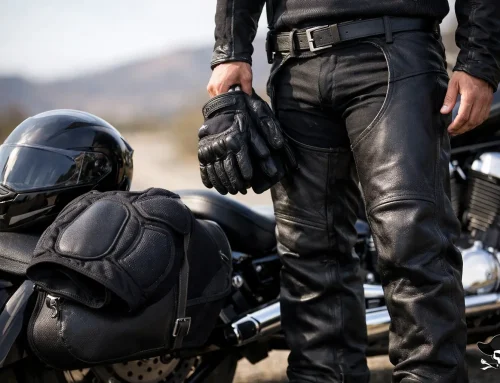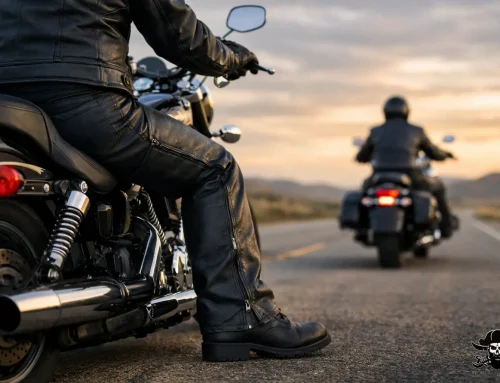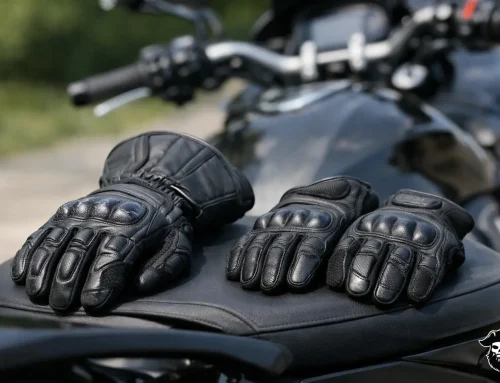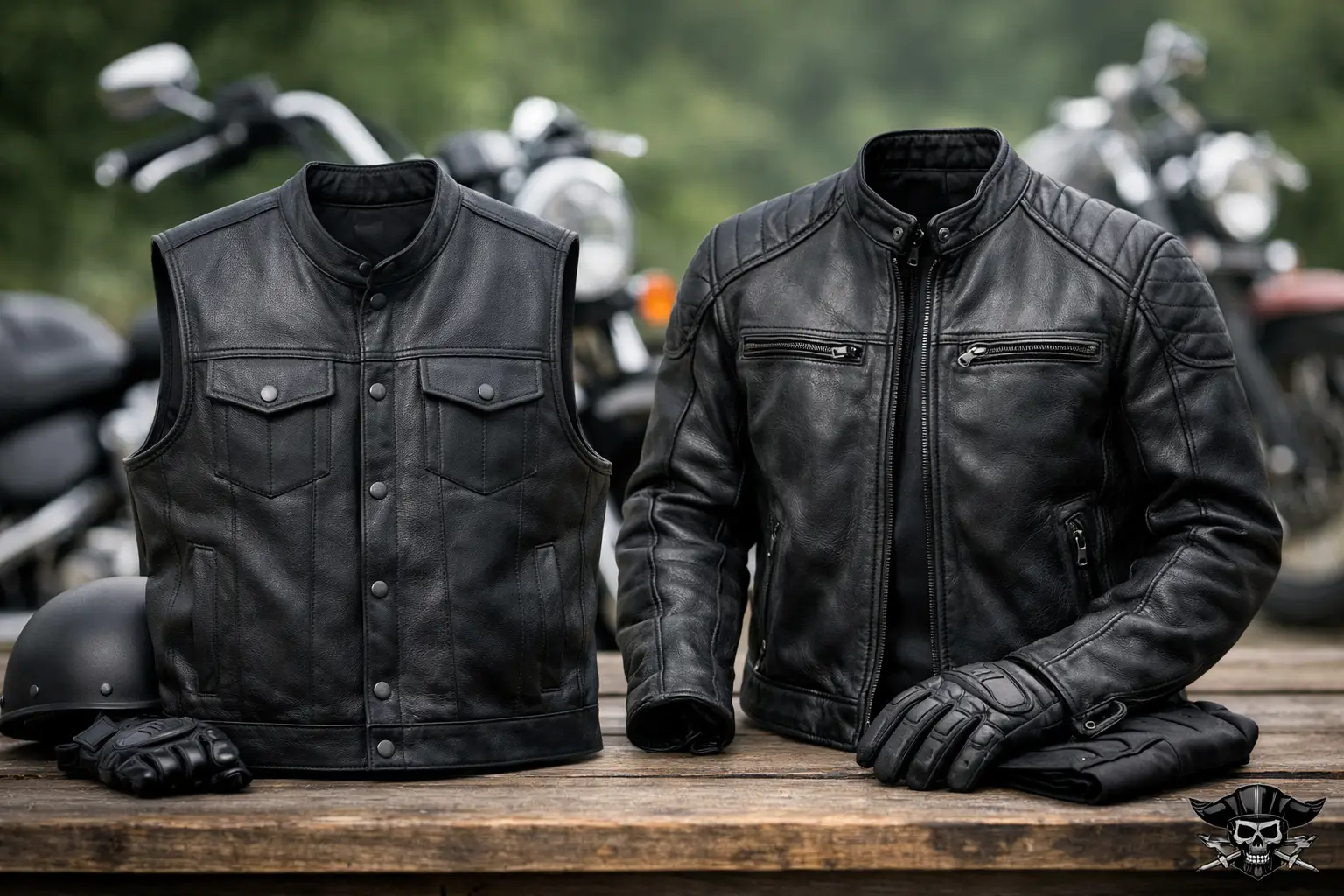
A leather vest vs jacket decision is not just about looks – although looks matter when you ride. It comes down to how you use your bike, what weather you face, how much coverage you want, and whether you need room for patches, layers, or both. The right piece of leather should earn its place every time you throw a leg over the saddle.
Leather Vest vs Jacket: The Real Difference
A leather jacket gives you full upper-body coverage. It protects your chest, back, shoulders, and arms from wind, light road debris, and the chill that creeps in once the sun drops. For riders who log highway miles, commute in changing weather, or ride early and late in the season, that coverage pays off fast.
A leather vest leaves your arms free. That makes it cooler, easier to layer, and a natural choice for warm-weather rides, bike nights, rallies, and riders who want a clean, classic cut. It is also the go-to canvas for club colors, event patches, and personal road history.
Neither is automatically better. A vest is not a replacement for a jacket when temperatures fall or weather turns ugly. A jacket can feel like too much when the day is hot and you want airflow. Smart riders often own both because each one handles a different part of the riding season.
Choose a Leather Jacket for Coverage and Cold Miles
When the ride calls for protection from wind and colder air, a leather motorcycle jacket is hard to beat. The sleeves do more than cover your arms. They block the direct blast of highway wind that can drain your comfort long before the fuel tank runs low.
A quality jacket also gives your riding gear a more complete feel. It works over a T-shirt on a cool summer night, over a hoodie when fall rolls in, or with added layers for a longer trip. That flexibility makes it a strong choice for riders who do not park the bike the moment the weather stops being perfect.
Look for a jacket made from substantial leather with solid stitching, dependable hardware, and a cut that allows natural reach to the bars. A riding jacket should not pull tight across the shoulders when you grip the handlebars. It should stay put at speed, cover the lower back, and leave room underneath for the layers you actually wear.
The trade-off is heat. Even a well-built leather jacket can feel heavy at a stoplight in mid-summer. That is not a flaw – it is the price of more material, more wind blocking, and more coverage. If most of your riding happens in hot, humid conditions, a jacket may become a piece you save for cooler days.
Jacket styles that match the ride
A classic biker or motorcycle jacket brings an aggressive, road-ready look with strong wind coverage. A simpler leather riding shirt or straight-cut jacket can feel less bulky and works well for riders who prefer a cleaner profile. The best style is the one you will wear consistently, not the one that looks good only on a hanger.
Choose a Leather Vest for Heat, Layers, and Colors
A leather vest is built for riders who want freedom through the arms and a strong biker silhouette. It keeps the core covered while allowing more airflow than a full jacket. That makes it a favorite for summer runs, local rides, and days when a jacket would be overkill.
The vest also wins when customization matters. The back panel offers room for patches, embroidery, and club colors, while the front can carry smaller patches and pins without turning the garment into a mess. A clean leather vest can start simple and become more personal with every mile, event, and chapter of your riding life.
Layering is another major advantage. Wear it over a tee when it is hot, over a long-sleeve shirt when the temperature starts to ease, or over a hoodie for a tough, practical cold-weather look. You can also wear a vest over a leather jacket when you want colors visible without giving up sleeve coverage.
The limitation is obvious: exposed arms. On a long highway stretch, that wind can wear you down. A vest provides less coverage in a slide than a proper jacket, too. It is a strong piece of riding apparel, but it should be chosen for what it does well, not treated as full-jacket protection.
Vest details worth paying for
A good vest should sit flat across the chest and back without bunching when you are seated. Pay attention to the side fit, the length over your waistband, and the strength of snaps or zippers. Inside pockets are useful for a phone, wallet, or paperwork, while concealed-carry pockets may suit riders who legally carry and want secure storage.
For patch collectors, a smooth, sturdy back panel matters. Thin, flimsy leather can sag once patches are added. Better leather holds its shape, wears in with character, and stays sharp after seasons on the road.
Weather Should Make the Call
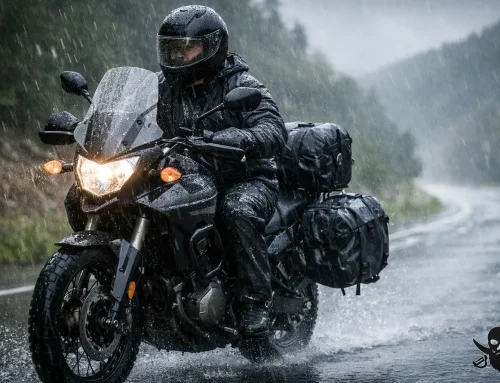
If you are deciding what to wear before a ride, start with the forecast and the route. A vest is usually the right call for hot daytime cruising, especially when you will spend time off the bike at stops, events, or a roadside bar and grill. A jacket makes more sense when there is a real chance of cold, wind, rain, or extended freeway speed.
Distance matters as much as temperature. A 20-minute ride across town and a three-hour highway run can feel completely different at the same temperature. Wind fatigue builds. A jacket that seems unnecessary in the driveway may become the gear you are glad you packed once the road opens up.
For unpredictable days, carry a layer that can work under a vest or jacket. A lightweight hoodie, riding shirt, or base layer gives you options without stuffing your luggage full of bulky gear. If you are loading up for a weekend run, motorcycle bags and luggage make it easier to bring both leather pieces and choose based on the conditions.
Protection Is About More Than Leather
Leather is a proven riding material because it resists abrasion better than everyday fashion fabric. Still, protection depends on the complete garment, not just the word “leather” on the tag. Thickness, construction, seams, fit, closures, and coverage all matter.
A jacket generally offers more protection simply because it covers more of your body. The shoulders and arms are exposed areas in a fall, and a vest cannot cover what it does not reach. That does not make a vest useless. It means riders should be honest about the kind of protection they need for the way they ride.
Choose riding leather over flimsy costume-grade fashion leather. Road-ready gear should feel substantial, close securely, and hold together under real use. Quality pieces from trusted motorcycle apparel makers are built with the rider in mind, not just the mirror.
Build a Leather Lineup Instead of Forcing One Choice
The best answer for many riders is not leather vest or jacket. It is leather vest and jacket, used at the right time. A jacket handles cold starts, fast roads, and shoulder-season miles. A vest owns hot weather, layering, and personal style. Together, they cover far more riding days than either piece alone.
Blackbeard’s Motorcycle Gear carries quality leather riding apparel built for riders who want their gear to look tough and work hard. Focus on the cut, leather weight, pocket setup, and riding conditions you face most often. A deal is only a good deal if the gear fits the way you ride.
Pick the leather you will reach for before every ride, not the piece you think you are supposed to buy. When it fits right, feels right at the bars, and matches the road ahead, you will know it belongs in your lineup.