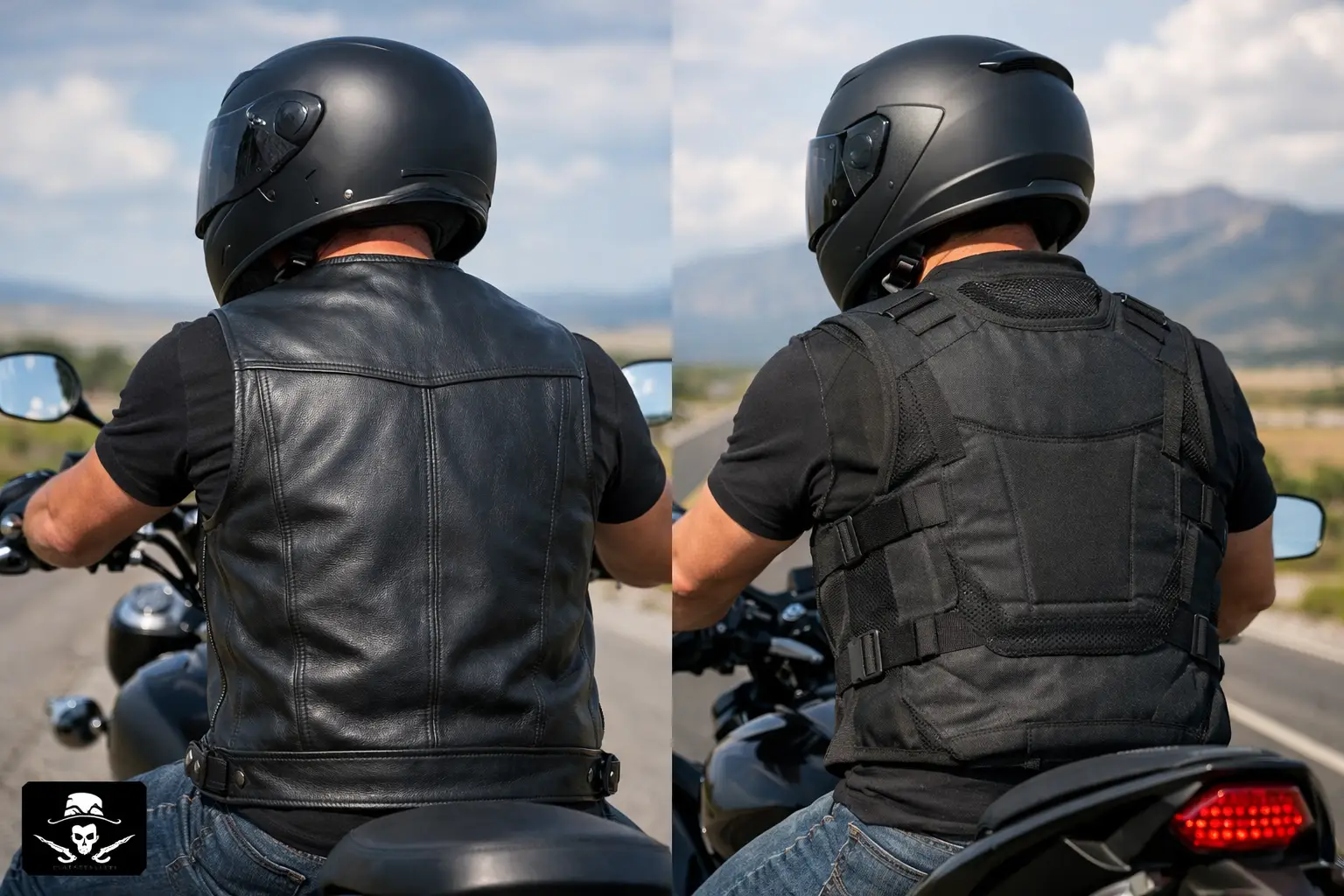
A vest is not just something you throw on before firing up the bike. It handles wind, carries your essentials, takes your patches, and sets the tone before you ever roll out. The leather vest vs textile vest decision comes down to the kind of rider you are, where you ride, and whether you want classic road presence or maximum warm-weather versatility.
For cruiser, chopper, and Harley-style riders, leather is usually the first pick for good reason. It is tough, clean-looking, and built for the long haul. Textile vests have their place, especially when heat, rain, or lightweight layering matters more than tradition. Neither option is automatically right for every ride. Here is how to choose without wasting money on a vest that stays in the closet.
Leather Vest vs Textile Vest: The Real Difference
Leather and textile do different jobs. A quality leather vest is a durable outer layer with natural abrasion resistance, structure, and a look that gets better with use. It blocks a surprising amount of wind, holds its shape, and works just as well over a riding shirt as it does over a hoodie or leather jacket.
A textile vest is typically made from nylon, polyester, mesh, or a blend of technical fabrics. It is often lighter, easier to pack, and more likely to include vents, reflective material, or water-resistant panels. Some textile vests are made for high-visibility commuting. Others are built as lightweight utility layers with plenty of pockets.
The big difference is not simply old-school versus modern. It is how each material behaves when the weather turns, when you spend hours in the saddle, and when you want your gear to reflect your rider identity.
Why Leather Still Owns the Classic Biker Look
A leather vest has a presence that textile cannot copy. The weight, grain, clean lines, and solid feel all belong to biker culture. Whether you prefer a plain black vest, a side-lace style, a vest with a gun pocket, or a club-style cut with a single back panel for patches, leather looks right on a cruiser.
That style is not just for parking-lot photos. Leather holds its form. It does not flap around at highway speed the way a thin vest can, and it stands up to regular use without looking worn out after one season. Good leather develops character instead of simply looking faded.
For riders who wear colors, patches, memorial pieces, or ride with a club, a leather vest is also the practical choice. A solid back panel gives patches a proper home. The material supports stitching better than lightweight mesh, and the finished result looks clean instead of sagging or puckering.
Leather also makes a strong four-season layer in much of the country. On cool mornings, it cuts the wind. In mild weather, wear it over a T-shirt or long-sleeve riding shirt. When temperatures drop, layer it over a hoodie, flannel, or jacket. It is one piece of gear that earns its space in the closet.
Leather Is Not Automatically Hot
Some riders write off leather because they assume it is unbearable in summer. That depends on the vest and the ride. A heavyweight, lined vest will naturally feel warmer than a mesh textile option when traffic is crawling in July. But a well-cut leather vest worn over a lightweight shirt can still be comfortable on an open road.
The key is to be honest about your usual conditions. If most of your miles happen in desert heat, humid city traffic, or stop-and-go commuting, airflow may matter more than the leather look. If you ride evenings, back roads, rallies, and long highway stretches, leather can be a dependable choice far more often than people expect.
Where Textile Vests Make Sense
Textile vests are built around convenience. They weigh less than leather, dry faster after light rain, and often offer more built-in ventilation. A mesh vest can make hot rides more manageable, while a water-resistant textile vest can be useful when the forecast is questionable.
They also work well for riders who need function without the bulk. If you commute, ride dual-purpose roads, or want a layer that can be stuffed into a saddlebag, textile is hard to beat. Many styles include zippered pockets, organizer compartments, and reflective trim that makes sense for riders coming home after dark.
Textile can be a smart second vest even for riders who primarily wear leather. Keep it for extreme heat, rain-prone trips, or rides where you want to travel light. It does not have to replace your leather vest. It can cover the conditions where your leather piece is not the best tool for the job.
Still, not all textile is equal. Thin fashion fabric offers little more than storage and appearance. If you are buying a textile vest for road use, look for substantial construction, reinforced seams, secure closures, and pockets that stay shut at speed. A cheap zipper or weak snap becomes a problem fast when your phone, wallet, or keys are on the line.
Protection: Know What a Vest Can and Cannot Do
No vest should be treated like a complete replacement for a protective motorcycle jacket. Whether it is leather or textile, a vest leaves your arms exposed. The material may add abrasion resistance over your torso, but the level of protection varies widely by construction, thickness, reinforcement, and any armor provisions.
Leather generally has the edge in natural abrasion resistance when comparing quality materials. It is dense, durable, and trusted by generations of riders. That said, a vest’s protection depends on more than the word leather on the tag. Thin leather, weak stitching, or a loose fit will not perform like a properly built riding vest.
Textile can bring useful safety features to the table, including reflective panels and pockets for back protection on certain designs. But textile performance varies even more from one product to another. Check the actual build, not just the marketing language. If protection is your top priority, pair your vest with a proper riding jacket, gloves, boots, and the rest of your road gear.
Fit and Layering Change the Ride
The best vest feels secure without pulling across your shoulders or binding when you reach for the bars. It should sit close enough that it does not balloon in the wind, while still leaving room for the layers you actually wear. Buying too tight because you like a fitted look is a mistake if you plan to wear it over anything heavier than a T-shirt.
Leather has less give at first, then gradually breaks in and conforms to you. That break-in period is part of the appeal, but it requires patience. Textile is usually more flexible right out of the package and may include adjustable straps or elastic panels for quick changes in layering.
Think about your normal ride, not your best-case weather. If you regularly carry a rain layer, wear a hoodie at night, or ride through changing temperatures, account for it before choosing a size and cut. A vest that looks perfect standing still can become irritating after an hour on the highway.
Pockets, Concealment, and Everyday Use
A vest needs to work while you ride, not just look good at a gas stop. Leather vests often use deep hand pockets and interior storage that stays protected from the wind. Many rider-focused styles also offer secure interior carry pockets. If that feature matters to you, make sure the pocket placement, closure, and access work with your riding position and follow all applicable laws.
Textile vests commonly provide more pockets and more organization. That can be useful for commuters carrying a phone, cards, sunglasses, toll tag, and small tools. More storage is not always better, though. Overloaded chest pockets can feel awkward in the saddle and shift around at speed.
For regular toll-road riders, keep your payment method accessible without turning your vest into a junk drawer. A dedicated, bar-safe motorcycle toll pass holder can handle the job without scratching up your controls, while your vest carries the gear you need close to your body.
Maintenance and Long-Term Value
Leather needs basic care, but it is not fragile. Wipe off road grime, let it air dry if it gets wet, and use a leather conditioner when the material starts to feel dry. Do not bake it with direct heat or toss it in a washing machine. Treat it right, and a quality leather vest can stay in service for years while looking better every season.
Textile is easier to clean on a busy schedule. Many pieces can be hand-washed or cleaned according to the care label, and they dry much faster than leather. The trade-off is long-term wear. UV exposure, abrasion, repeated washing, and rough hardware can eventually weaken or fade fabric. A textile vest may be easier to maintain week to week, but leather often delivers the stronger long-term return.
That is why Blackbeard’s Motorcycle Gear puts serious focus on quality riding leathers. A good leather vest is not disposable gear. It is a road piece that becomes yours through miles, weather, and wear.
Choose the Vest That Matches Your Miles
Choose leather if you want classic biker style, solid wind resistance, patch-ready construction, and a vest that can become part of your regular riding uniform. It is the better match for cruiser riders, long highway days, rallies, and anyone who wants their gear to look as tough as it feels.
Choose textile if your priority is airflow, lightweight comfort, weather flexibility, or commuter-friendly storage. It makes sense as a hot-weather layer or a practical backup for conditions where leather feels like too much.
The strongest setup for many riders is not picking a side forever. Start with the vest you will actually wear most often. If your bike, your style, and your miles call for leather, buy a quality piece, break it in, and let it earn its scars on the road.