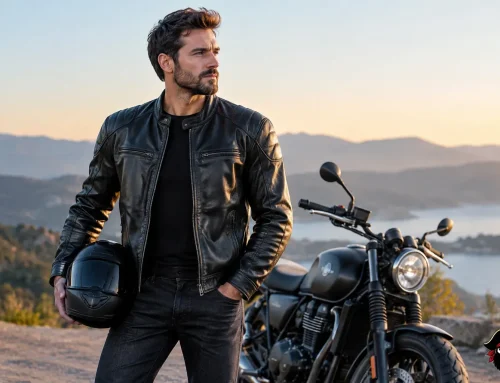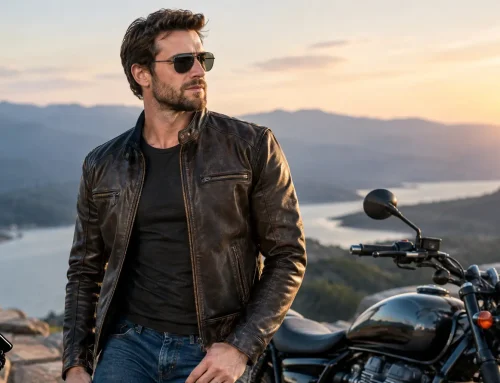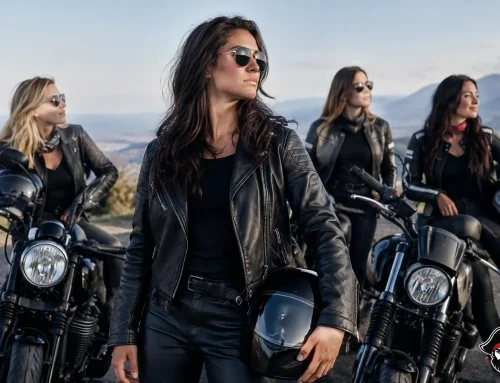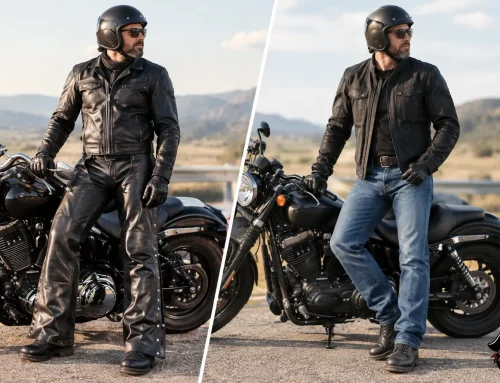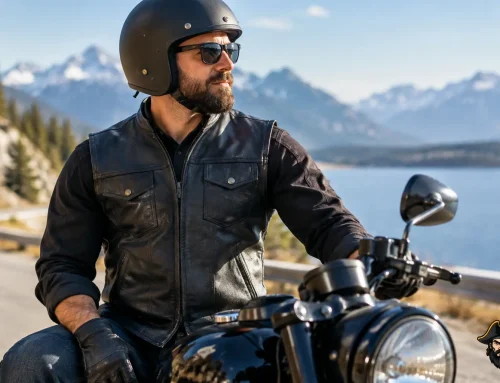
A leather jacket can look tough on day one and still let you down by the end of the season. That is why full grain leather vs bonded leather is not some small detail buried in a product spec. If you ride, wear, and rely on your gear, the type of leather matters right away – in how it feels, how it breaks in, how it holds up, and whether it still looks good after miles on the road.
Full grain leather vs bonded leather: the real difference
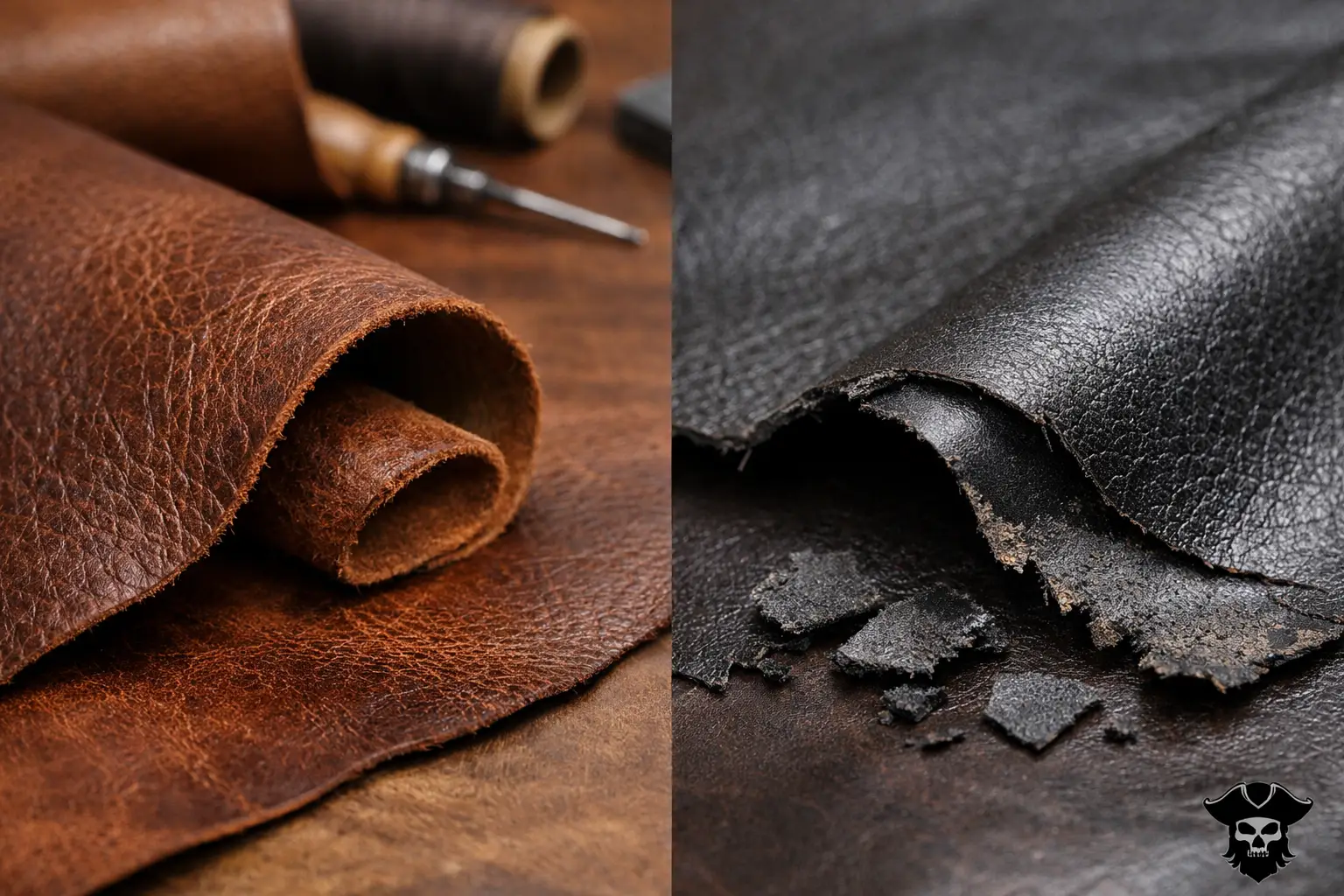
Full grain leather is the real deal. It comes from the top layer of the hide and keeps the natural grain intact. That means you get the strongest part of the leather, complete with its natural markings, texture, and character. It is thicker, tougher, and built to age with use instead of falling apart from it.
Bonded leather is something else entirely. It is made from leftover leather scraps that are shredded, mixed with adhesives, and pressed into sheets, usually with a synthetic surface added on top to imitate the look of genuine leather. From a few feet away, it can pass for leather. In your hands, and especially after regular wear, the difference shows up fast.
If you are shopping for motorcycle jackets, vests, chaps, boots, gloves, or bags, this is not just a style choice. It is a durability and value choice.
Why riders should care
Motorcycle gear takes abuse. Wind, sun, sweat, road grime, light rain, repeated flexing at the elbows and shoulders, long hours in the saddle – all of that works your leather hard. Cheap materials do not hide for long in that kind of use.
Full grain leather handles wear the way a rider wants gear to handle it. It softens over time, molds to your body, and develops a broken-in look that feels earned. Bonded leather usually goes the other direction. It can crack, peel, or delaminate, especially at stress points. Once that surface starts going, there is no patina story there. It just looks worn out.
That matters even if you are buying for looks first. Rider style is not supposed to look fake. A jacket that picks up real character over time fits the culture. A jacket that flakes at the cuffs does not.
How each one feels in the hand
You can usually tell a lot before you ever read the tag. Full grain leather has depth to it. It feels substantial, with a natural hand and a grain that is not perfectly uniform. Some pieces are smooth, some are slightly pebbled, some show scars or natural variation. That is part of the point.
Bonded leather often feels more flat and more artificial. The surface can seem overly even or plastic-coated. At first touch, some bonded products can feel slick and neat, which some shoppers mistake for quality. But that polished sameness is often a sign that the top surface is doing most of the visual work while the material underneath is much weaker.
What happens after months of use
This is where full grain leather earns its price. It flexes, creases, and breaks in naturally. It may show wear, but the wear usually adds to the look. The grain stays part of the material because it is the material.
Bonded leather depends heavily on its manufactured surface. As that surface rubs, bends, or dries out, it can split or peel away from the composite underneath. For light-use furniture or occasional fashion wear, some buyers accept that trade-off. For riding apparel, where movement and exposure are constant, it is a tougher sell.
Price matters, but so does cost over time
Bonded leather is cheaper up front. That is its main advantage. If your budget is tight and you need a leather-look item for occasional use, bonded leather may seem like a quick win.
But riders usually learn the hard way that the lowest price is not always the best value. A full grain jacket or vest costs more because the material costs more and performs better. You are paying for durability, better wear, stronger structure, and a longer service life.
If a bonded leather jacket needs replacing much sooner, the savings disappear. Worse, you end up wearing gear that never really breaks in, never really gets better, and may start looking tired long before you are ready to replace it.
That is why experienced buyers often go straight to quality leather, especially for staple pieces. One solid jacket that lasts and keeps its shape beats two or three cheaper ones that do not.
Full grain leather vs bonded leather in riding gear categories
Not every product gets exposed to wear in the same way, but the pattern is pretty consistent.
For motorcycle jackets and vests, full grain leather is the stronger buy if you want real longevity. These pieces flex constantly at the shoulders, arms, and torso. They also carry the rider image front and center. Better leather pays off here fast.
For boots, the case is just as strong. Boots take repeated bending, scuffing, heat, and weather exposure. Full grain leather generally handles that better and develops a better shape with use. Bonded leather in footwear tends to show fatigue sooner, especially around flex points.
For gloves, feel and movement matter. Better leather usually gives you a more natural fit over time. Lower-grade composites can stiffen, crack, or lose surface integrity in a way that makes them feel cheap fast.
For motorcycle bags and luggage, full grain leather brings both appearance and ruggedness. Bags get handled, buckled, loaded, dragged, and exposed to the elements. Riders want something that can take a beating and still look road-ready.
How to spot the difference before you buy
Product descriptions matter. If a listing clearly says full grain leather, that is a strong sign the seller knows the value of the material and wants to lead with it. If the description uses vague phrases like leather blend, man-made leather, reconstituted leather, or bonded leather, read carefully. Those terms usually mean you are not getting a full hide product.
Look at the texture too. Perfectly uniform grain across every inch can be a warning sign. Real leather has variation. That does not mean rough or sloppy. It means natural.
Pay attention to the price, but do not use price alone as your guide. Some low-cost products are honestly priced because they use lower-grade materials. The problem starts when bonded leather is marketed in a way that makes it sound equal to premium leather when it is not.
If you are shopping with a rider-first retailer that knows leather gear, you usually get better product clarity. That makes the buying decision easier and cuts down on regret after delivery.
When bonded leather might make sense
There is a place for honesty here. Not every buyer needs premium leather for every purchase. If someone wants a low-cost accessory for occasional wear, or a style piece that will not see heavy use, bonded leather may be enough.
But that is a very different standard from what most motorcycle riders need from their core gear. Riding jackets, vests, boots, gloves, and luggage are working pieces. They get used. They get flexed. They get seen. For that job, full grain leather is usually the smarter move.
It also depends on what kind of ownership experience you want. Some people want gear they can wear hard for years and watch improve with age. Others just want the look at the lowest possible cost. There is no mystery about which material fits which buyer.
The better buy for riders who want the real thing
For serious road wear, full grain leather wins this matchup clean. It feels better, lasts longer, ages better, and brings the kind of authenticity riders actually care about. Bonded leather may save money at checkout, but it usually gives ground where it counts most – durability, character, and long-term value.
That is why quality leather gear keeps its place in every rider’s lineup. A solid jacket, a dependable pair of boots, a vest that breaks in instead of breaking down, and luggage that still looks tough after miles of use – that is money better spent. At Blackbeard’s Motorcycle Gear, that is the kind of leather standard worth chasing. Buy the piece that will still look right after the ride, not just out of the box.